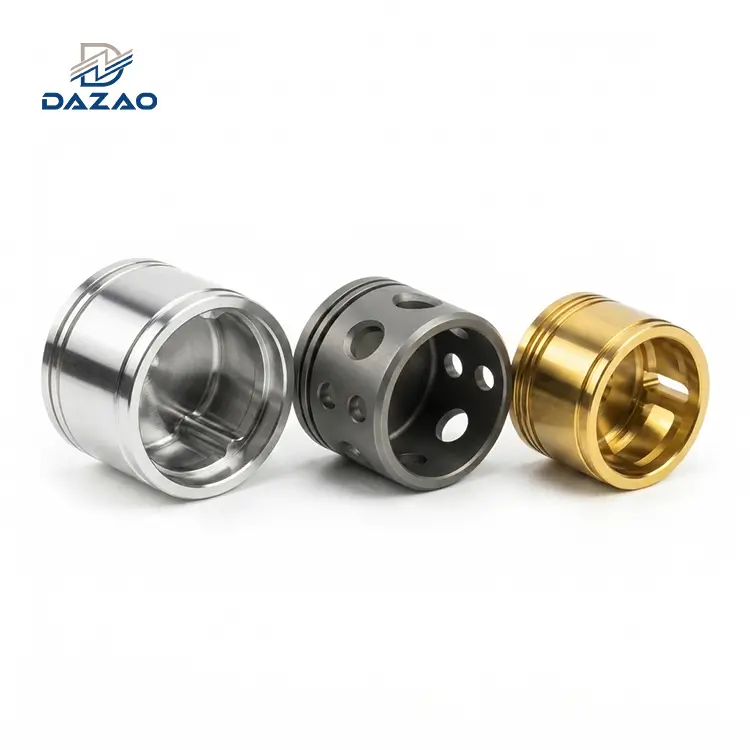

For precision CNC milling, high structural rigidity, and tight tolerances (±0.0005 in / ±0.013 mm), specify Al6061-T6. It delivers 43% higher yield strength (276 MPa vs 193 MPa) and superior chip breaking. For complex sheet metal forming, tight-radius bending without cracking (down to 1t internal radius), high-integrity welding, and saltwater corrosion exposure, specify Al5052-H32.
Real Machine Shop Failures: 6061 vs 5052 Selection Pitfalls
Selecting between 6061 vs 5052 aluminum is not a matter of general material superiority. It is governed strictly by the primary manufacturing process (subtractive CNC machining versus plastically deformed sheet metal fabrication) and the end-use mechanical environment. When evaluating the best aluminum for CNC machining projects, mechanical engineers must weigh yield strength against chip formation dynamics. Misspecifying these alloys creates severe production bottlenecks and scrap rates on the factory floor.

Case Study 1: 6061-T6 Sheet Metal Bending Fracture Analysis
An industrial robotics OEM submitted CAD drawings specifying Al6061-T6 sheet metal (2.5 mm thickness) for an internal electronics chassis. The design incorporated six 90-degree bends with an internal radius of R=2.0 mm (0.8t). During the press brake operation on a 100-ton CNC brake, the outer tensile fibers along the bend lines exceeded the fracture strain limit of the precipitation-hardened matrix.
Over 78% of the initial batch exhibited macro-cracking along the grain direction, resulting in 180 scrapped enclosures. The root cause was an improper alloy callout: 6061-T6 possesses low room-temperature ductility (10% to 12% elongation) due to its dense Mg2Si precipitate network, requiring a minimum bend radius of 3t to 6t. Switching the print to 5052-H32 sheet metal dropped the scrap rate to 0% while maintaining required dimensional tolerances.
Case Study 2: 5052-H32 CNC Milling Gummy Chip and Tap Failure
A medical diagnostics hardware client sought to reduce raw stock procurement expenses by standardizing on 5052 aluminum plate for a high-precision optical mount requiring 42 tapped holes (M2.5 ×0.45) and a 35 mm deep pocket with thin walls (1.2 mm).
Because 5052 aluminum machinability is characterized by high ductility, low shear strength, and extreme thermal stickiness, the material generated continuous, gummy ribbon chips. The chips welded to the cutting edges of three-flute carbide end mills, creating built-up edge (BUE) defects and surface tearing (Ra>3.2 μm). Furthermore, five M2.5 cutting taps broke in the blind holes due to chip pack, scrapping high-value near-net-shape components.
Subsequent reallocation to 6061-T6 custom CNC parts allowed cutting speeds (vc) to increase from 180 m/min to 450 m/min, reduced tool wear by 65%, and achieved a clean Ra 0.8 μm surface finish without secondary manual deburring.
At Xiamen Dazao Machinery, our DFM engineering protocol reviews every print at the quoting stage. We identify whether your part architecture favors 6061 vs 5052 aluminum for CNC machining or sheet metal fabrication before raw stock is cut.
Metallurgy and Temper Breakdown: 6061-T6 vs 5052-H32
The mechanical divergence between 6061 vs 5052 aluminum originates at the atomic level. Al6061 is a precipitation-hardenable wrought alloy belonging to the 6xxx series (Al-Mg-Si system). Al5052 is a non-heat-treatable alloy of the 5xxx series (Al-Mg system) that derives its mechanical properties strictly through solid solution strengthening and strain hardening (cold working).
Chemical Composition Matrix and Alloying Element Effects
|
Element |
Al 6061 (wt %) |
Al 5052 (wt %) |
Metallurgical Role & Impact |
|
Magnesium (Mg) |
0.80 – 1.20 |
2.20 – 2.80 |
Forms Mg2Si in 6061; provides solid solution strengthening in 5052. |
|
Silicon (Si) |
0.40 – 0.80 |
Max 0.25 |
Combines with Mg to create intermetallic precipitation phases. |
|
Chromium (Cr) |
0.04 – 0.35 |
0.15 – 0.35 |
Suppresses grain growth; controls recrystallization temperature. |
|
Copper (Cu) |
0.15 – 0.40 |
Max 0.10 |
Increases strength in 6061; reduces marine corrosion resistance. |
|
Iron (Fe) |
Max 0.70 |
Max 0.40 |
Impurity phase; forms FeAl3 or α-AlFeSi, affects anodizing clarity. |
|
Zinc (Zn) |
Max 0.25 |
Max 0.10 |
Trace element; limits galvanic corrosion potential. |
|
Manganese (Mn) |
Max 0.15 |
Max 0.10 |
Grain structure modifier and dispersoid former. |
|
Titanium (Ti) |
Max 0.15 |
-- |
Grain refiner added during billet casting. |
|
Aluminum (Al) |
Balance (95.8 – 98.6) |
Balance (95.7 – 97.7) |
Base matrix. |
Thermal Precipitation Aging vs Strain Hardening Mechanics
6061-T6 Metallurgy
The T6 temper involves a three-stage thermal cycle:
1. Solution Heat Treatment: Heated to 530°C (985°F) to dissolve all Mg and Si into a homogeneous solid solution α-Al matrix.
2. Water Quenching: Rapidly quenched below 100°C in under 15 seconds to freeze solute atoms in a supersaturated solid solution (SSSS).
3. Artificial Aging: Held at 160°C to 180°C for 8 to 18 hours. Solute clusters evolve from Guiner-Preston (GP-I and GP-II) zones into metastable needle-like β′′ (Mg5Si6) precipitates.
These coherent β′′ nanostructures generate localized lattice strain fields that pin dislocation movement, driving the yield strength of 6061-T6 up to 276 MPa.
5052-H32 Metallurgy
Because 5052 aluminum lacks sufficient silicon to form coherent silicide precipitates, it cannot be hardened by thermal aging.
1. Cold Working (H3x): The alloy is strain-hardened by cold rolling at room temperature. This increases dislocation density from ∼109 cm−2 to >1011 cm−2, where intersecting dislocations form dense tangles (dislocation forests) that increase hardness.
2. Stabilization Annealing (H32): Cold rolling leaves residual internal stresses that can alter dimensions over time. The material is subjected to a low-temperature thermal stabilization treatment (approximately 120°C to 150°C). This process causes partial recovery without recrystallization, stabilizing the mechanical properties and leaving the alloy in a quarter-hard state with 12% to 18% elongation.

Thermal and Electrical Physical Property Comparison
|
Physical Property |
6061-T6 |
5052-H32 |
Engineering Implication |
|
Density (ρ) |
2.70 g/cm3 |
2.68 g/cm3 |
5052 is 0.74% lighter; minor factor in mass budgets. |
|
Modulus of Elasticity (E) |
68.9 GPa |
70.3 GPa |
5052 exhibits slightly higher elastic stiffness. |
|
Thermal Conductivity (k) |
167 W/m⋅K |
138 W/m⋅K |
6061 transfers heat 21% faster; ideal for heatsinks. |
|
Coefficient of Thermal Expansion (α) |
23.2 μm/m⋅K |
23.8 μm/m⋅K |
Critical for calculating thermal growth in optical housings. |
|
Electrical Conductivity |
40% IACS |
35% IACS |
6061 is preferred for high-current busbars and grounds. |
|
Solidus / Liquidus Temp |
582°C / 652°C |
607°C / 649°C |
5052 has a narrower melting range, aiding weld pool control. |
For complete workpiece setup and spindle speeds across all wrought alloys, review our technical aluminum CNC machining guide before running parts.
Mechanical Properties and Structural Strength: 6061 vs 5052
When evaluating 6061 vs 5052 strength, engineers must examine the complete stress-strain profile rather than relying solely on ultimate tensile strength (Rm). Structural failure in precision engineering occurs at the onset of plastic yield (Rp0.2), not at final rupture.
Yield Strength, Hardness, and Tensile Data Matrix
|
Mechanical Parameter |
6061-T6 |
5052-H32 |
Delta (%) |
Testing Standard |
|
Yield Strength (Rp0.2) |
276 MPa (40.0 ksi) |
193 MPa (28.0 ksi) |
+43.0% (6061) |
ASTM B557 |
|
Ultimate Tensile Strength (Rm) |
310 MPa (45.0 ksi) |
228 MPa (33.0 ksi) |
+36.0% (6061) |
ASTM B557 |
|
Elongation at Break (A50mm) |
12% (sheet) / 17% (bar) |
12% – 18% |
Comparable |
ASTM B557 |
|
Brinell Hardness (HBW 10/500) |
95 HBW |
60 HBW |
+58.3% (6061) |
ASTM E10 |
|
Rockwell B Hardness (HRB) |
60 HRB |
28 HRB |
+114% (6061) |
ASTM E18 |
|
Fatigue Endurance Limit (SN) |
96.5 MPa (5×10⁸ cyc) |
117 MPa (5×10⁸ cyc) |
+21.2% (5052) |
RR Moore Rotating Beam |
|
Shear Strength (τ) |
207 MPa (30.0 ksi) |
138 MPa (20.0 ksi) |
+50.0% (6061) |
ASTM B565 |
|
Fracture Toughness (KIC) |
29 MPa⋅m1/2 |
N/A (High Plasticity) |
Higher in 5052 |
ASTM E399 |
Stress-Strain Elastic Reserves and Beam Deflection Dynamics
The yield-to-tensile ratio (λ=Rp0.2/Rm) reveals the plastic deformation reserve of each alloy:
· For 6061-T6: λ=276/310≈0.89. The material exhibits minimal plastic deformation between initial yielding and ultimate fracture. This narrow window requires higher safety factors in dynamic structural assemblies subjected to impact loading.
· For 5052-H32: λ=193/228≈0.84. Combined with non-age-hardened grain boundaries, 5052 provides greater work-hardening energy absorption before catastrophic micro-void coalescence occurs.
Practical Beam Deflection and Load Example
Consider a simply supported beam with an applied mid-span point load F=2500 N, length L=600 mm, width b=40 mm, and thickness h=10 mm.
1. Section Modulus (Z) and Moment of Inertia (I):


2. Maximum Bending Moment (Mmax):

3. Maximum Outer Fiber Stress (σmax):

Under this load, both alloys will undergo plastic deformation. However, scale the load down to F=800 N(σmax=180 MPa):
· 6061-T6: σmax(180 MPa)p0.2(276 MPa). Factor of Safety (SF) against permanent set is:

· 5052-H32: σmax(180 MPa)≈Rp0.2(193 MPa). Factor of Safety (SF) is:

Cyclic Fatigue Life and Vibrational Shock Resistance
Although 6061-T6 aluminum strength is higher under static tension and shear, 5052 aluminum performs exceptionally well under high-cycle vibration and cyclic fatigue.
With a rotating beam endurance limit of 117 MPa at 5×10⁸ cycles (compared to 96.5 MPa for 6061-T6), 5052-H32 resists fatigue crack initiation under steady vibratory loads. It is widely used for dynamic marine fuel tanks, automotive inner door structures, and industrial acoustic enclosures subjected to continuous harmonic vibration.
CNC Machining Performance: 6061 vs 5052 Machinability
The machinability rating of 6061-T6 is standardized at 80% to 90% (relative to 2011-T3 free-machining aluminum at 100%), whereas 5052-H32 rates at 50% to 60%. This delta translates directly into distinct chip formation dynamics, tool wear rates, and achievable surface roughness (Ra) values on 3-axis and 5-axis CNC equipment.

Chip Formation, Shear Angle, and Built-Up Edge (BUE) Formation
· 6061-T6 Chip Mechanics: The Mg2Si precipitates increase the matrix shear strength, forcing the primary shear zone to fracture cleanly under high-speed milling. Chips break into short, tight C-shapes or 6-turn needles that evacuate smoothly through standard chip conveyors without bird-nesting on the spindle.
· 5052-H32 Chip Mechanics: The absence of hard intermetallic shearing agents causes severe strain hardening at the cutting edge. Under high shear strain, 5052 exhibits extreme plastic deformation, producing continuous, ductile ribbon chips. The high localized frictional heat causes aluminum micro-welding onto the rake face of carbide inserts, forming Built-Up Edge (BUE) that alters the effective tool radius and scores the workpiece surface.
Speeds, Feeds, and Tool Geometry Parameter Table
|
Machining Parameter |
6061-T6 (Milling / Turning) |
5052-H32 (Milling / Turning) |
Engineering Impact |
|
Cutting Speed (vc) |
400 – 800 m/min (Roughing) |
150 – 300 m/min (Roughing) |
6061 achieves 2.5x higher material removal rates (MRR). |
|
Feed per Tooth (fz) |
0.10 – 0.25 mm/tooth |
0.05 – 0.12 mm/tooth |
Low feeds in 5052 prevent tool deflection from chip packing. |
|
Surface Finish (Ra) |
Ra 0.4 μm−0.8 μm |
Ra 1.6 μm−3.2 μm |
6061 achieves optical and sealing face finishes out of the machine. |
|
Tool Coating Substrate |
Uncoated micro-grain carbide / TiB2 |
DLC (Diamond-Like Carbon) / ZrN |
5052 requires ultra-slick low-friction DLC coatings to stop BUE. |
|
Tool Geometry |
35° to 45° Helix, 12° Rake Angle |
45° to 55° High Helix, 18° to 22° Rake |
5052 requires razor-sharp, polished positive rake edges. |
|
Coolant Requirements |
6% – 8% Emulsion concentration |
10% – 12% Emulsion + High Pressure |
5052 requires rich lubricity to flush ductile stringers. |
For specialized feed tables and spindle speed recommendations on this alloy, consult our in-depth 6061 aluminum CNC machining guide covering high-speed milling.
Engineering Pain Point 1: M2-M4 Micro-Thread Tapping Failures
In high-density electronics and optomechanical housings, tapping small blind holes (M2, M2.5, M3, M4) is a frequent cause of part rejection.
· The 5052 Tapping Hazard: When using standard cutting taps on 5052 CNC parts, the ductile material flows into the tap flutes rather than shearing cleanly. The material galls against the relief angle of the tap teeth, causing torque spikes that snap the tap inside the hole. Thread formers (roll taps) also struggle in 5052-H32 due to uneven material flow and high friction, resulting in incomplete crest formations and thread stripping.
· The Dazao Production Protocol for 5052: When engineering prints mandate CNC features on 5052 plate, Dazao Machinery uses oversized, DLC-coated spiral-point taps with neck relief, run at a reduced spindle speed (<300 RPM) with a 12% synthetic emulsion concentration. To prevent tool gumming and thread galling on softer grades, follow our dedicated 5052 aluminum CNC machining guide for chip load parameters. For 6061-T6, standard spiral-flute taps operate reliably at 1200+ RPM with near-zero breakage rates.
Engineering Pain Point 2: Asymmetrical Stress Warpage in Thin Plates
When machining deep pockets or large weight-reduction pockets in thin plates (<6.0 mm remaining base thickness), both alloys react differently to internal stress redistribution:
· 5052-H32 Warpage Mechanism: Because 5052-H32 achieves its temper via cold rolling, high residual compressive stresses exist at the surface layers with balancing tensile stresses in the core. Asymmetrical face milling strips away the compressive surface layer, causing the unmachined bottom face to contract and creating severe convex or concave bowing (oil-canning) that exceeds ±0.20 mm flatness tolerances.
· 6061-T651 Stress Relief: For precision-machined baseplates and fixtures, Dazao Machinery specifies 6061-T651. The 51 temper denotes mechanical pre-stretching by 1.5% to 3.0% after solution heat treatment, which relieves over 90% of internal residual stresses. Flatness tolerances of ±0.025 mm across 300 mm spans remain stable after heavy CNC cavity hogging. Engineers designing thin ribs and deep pockets should reference our aluminum CNC machining design guide to eliminate post-machining stress warpage.
Sheet Metal Bending and Cold Formability: 6061 vs 5052
For sheet metal enclosures, stamped chassis, and cold-formed brackets, 5052-H32 is the industry benchmark, whereas 6061-T6 presents severe forming constraints that require tight process controls.

Minimum Inside Bend Radius (R-Value) by Sheet Thickness
The minimum allowable inside bend radius is expressed as a multiple of material thickness (t). Attempting to force an undersized punch radius induces localized necking and grain boundary tearing on the outer bend radius.
|
Sheet Thickness (t) |
5052-H32 90∘ Transverse |
5052-H32 90∘ Longitudinal |
6061-T6 90∘ Transverse |
6061-T6 90∘ Longitudinal |
|
1.0 mm (0.040 in) |
0.5t (0.5 mm) |
1.0t (1.0 mm) |
1.5t (1.5 mm) |
2.5t (2.5 mm) |
|
2.0 mm (0.080 in) |
1.0t (2.0 mm) |
1.5t (3.0 mm) |
2.5t (5.0 mm) |
4.0t (8.0 mm) |
|
3.0 mm (0.120 in) |
1.0t (3.0 mm) |
1.5t (4.5 mm) |
3.0t (9.0 mm) |
5.0t (15.0 mm) |
|
6.0 mm (0.240 in) |
1.5t (9.0 mm) |
2.0t (12.0 mm) |
4.0t (24.0 mm) |
6.0t (36.0 mm) |
Engineering Pain Point 3: Grain Direction Cracking and Springback Variance
1. Grain Orientation Sensitivity: During sheet rolling, alloy grains elongate along the rolling direction (longitudinal axis). Bending 6061-T6 sheet metal parallel to this rolling direction concentrates tensile stress across fewer grain boundaries, triggering cracking even at 3t radii. If 6061-T6 must be formed, bend lines must run perpendicular (90∘) to the grain direction. 5052 sheet metal exhibits lower grain anisotropy, permitting both transverse and diagonal forming with minimal micro-fracture risk.
2. Springback Dispersions in Automated Assembly: Because 6061-T6 has a higher yield strength (276 MPa vs 193 MPa), its elastic strain recovery during press brake unloading causes a large springback angle (4∘ to 7∘), compared to 1.5∘ to 3∘for 5052-H32. In multi-bend precision enclosures, batch-to-batch yield strength variations of ±15 MPa in 5052 cause angular deviations of ±0.8°. Dazao utilizes dynamic laser angle measuring systems on our CNC press brakes to compensate stroke depth in real time, locking final flange angles to ±0.25°.
TIG and MIG Weldability: HAZ Strength Degradation
Both alloys can be joined via Gas Tungsten Arc Welding (GTAW/TIG) and Gas Metal Arc Welding (GMAW/MIG), but their post-weld joint efficiencies differ markedly.
Solidification Hot Cracking and ER5356 vs ER4043 Wire Selection
· Solidification Cracking in 6061: 6061 sits near the peak hot-shortness zone on the Al-Mg-Si crack sensitivity curve. Autogenous welding (welding without filler metal) causes solidification cracking along the weld centerline. To dilute the weld pool and suppress cracking, ER4043 (Al-Si5) or ER5356 (Al-Mg5) filler wire is required.
· Weld Pool Stability in 5052: 5052 contains 2.5% Mg and minimal Si, placing it well outside the critical solidification cracking range. It welds smoothly with ER5356 or ER5183 filler wire, yielding uniform bead wetting and minimal spatter.
Heat-Affected Zone (HAZ) Softening and Tensile Strength Loss
· 6061-T6 HAZ Softening: The weld thermal cycle (temperatures exceeding 250°C) dissolves and over-ages the coherent β′′ precipitates in the HAZ. The yield strength drops from 276 MPa down to 110–140 MPa, a structural loss of approximately 50%. To recover full T6 mechanical strength, the entire welded assembly must undergo solution heat treating, water quenching, and artificial aging in a furnace. This thermal cycle frequently causes severe geometric distortion in complex weldments.
· 5052-H32 HAZ Retention: Because 5052 is non-heat-treatable, the HAZ experiences only partial thermal annealing (recovery to the O temper). The yield strength drops modestly from 193 MPa to 155–170 MPa, preserving 80% to 90% of base strength without any post-weld thermal operations. This makes 5052 the standard alloy for welded fluid tanks, pressure vessels, and architectural ducting.
Corrosion Resistance and Surface Finishing: Anodizing Quality
Salt Spray Resistance and Marine Grade 5052 Performance
· Marine Grade Superiority of 5052: Designated as true marine aluminum 5052, this alloy contains no copper (<0.10%) and 2.5% magnesium. It forms a dense, self-healing oxide layer that resists aggressive chloride-ion penetration. In ASTM B117 salt spray testing, 5052 demonstrates over 1000 hours of exposure without pitting. It is standard for ship hulls, offshore electronics boxes, and coastal infrastructure.
· Galvanic Vulnerability of 6061: 6061 contains 0.15% to 0.40% copper. Copper intermetallics (Al2Cu and Al2CuMg) precipitate along grain boundaries, generating localized micro-galvanic cells. In unanodized states exposed to marine environments, 6061 is prone to intergranular corrosion and severe surface pitting.
Type II and Type III Anodizing Oxide Layer Transparency
· 6061 Anodizing Quality: 6061 is an exceptional alloy for Type II decorative anodizing and Type III hardcoat anodizing (MIL-A-8625). The low alloy solute content allows formation of a crystal-clear, transparent hexagonal aluminum oxide layer (Al2O3). It accepts organic and inorganic dyes uniformly, producing deep, vibrant blacks, blues, reds, and golds with uniform gloss.
· 5052 Anodizing Quality: When anodizing 5052, the higher magnesium content dissolves unevenly into the sulfuric acid electrolyte, producing a yellowish or hazy gray cast in clear anodizing. While 5052 accepts black dye satisfactorily for industrial use, bright decorative colors often appear muddy and dull.
Engineering Pain Point 4: Mixed 6061 and 5052 Anodizing Color Mismatch
A frequent quality control failure in industrial enclosure manufacturing occurs when an assembly combines a 6061 CNC front panel with a 5052 sheet metal welded body, and the combined unit is sent to an anodizing line for batch black anodizing.
· The Visible Result: The 6061 front bezel emerges with a deep, high-gloss jet-black finish, while the 5052 chassis exhibits a dark charcoal, matte gray-black tint with subtle clouding. The visual contrast across the mating seam leads to quality rejections on consumer and high-end medical products.
· Dazao Engineering Mitigation:
1. If cosmetic matching is required across mixed alloys, specify fine bead blasting (120-grit glass bead at 4.5 bar) followed by an identical etching cycle, or finish the assembly with a thermoset architectural powder coat (Qualicoat Class 2) or polyurethane paint.
2. If anodizing is functionally mandatory, design the product with intentional visual contrast (such as a natural clear 6061 bezel against a black 5052 chassis) to make alloy-specific finish variations part of the aesthetic. To prevent surface defects and visual discrepancies across multi-part enclosures, check our aluminum surface finishing guide covering chemical pretreatments.
Manufacturing Cost Analysis: 6061 vs 5052 Cost per Part
Evaluating 6061 vs 5052 cost based on raw commodity spot prices ($/kg) leads to inaccurate budget projections. Total landed cost must account for cutting tool consumption, CNC spindle run time, secondary deburring, scrap rates, and post-processing cycles.
Total Part Cost Model: Raw Material, Tool Wear, and Cycle Time
|
Cost Driver |
6061-T6 Component |
5052-H32 Component |
Commercial Impact |
|
Raw Material Stock (Extrusions / Bar) |
Benchmark Base Cost |
+10% to +25% (Lower bar market volume) |
6061 bar stock has standard warehouse availability. |
|
Raw Material Stock (Thin Sheet <3.0 mm) |
+5% to +15% over 5052 |
Benchmark Base Cost |
5052 is the standard, high-volume rolling sheet grade. |
|
CNC Machining Cycle Time |
Benchmark Baseline (1.0x) |
1.8x to 2.5x longer run time |
5052 requires lower feed rates and clearance cycles. |
|
Cutting Tool Longevity |
100% standard tool life |
40% to 60% tool life reduction (BUE wear) |
5052 accelerates tool changes and insert wear. |
|
Sheet Metal Press Brake Labor |
Higher setup scrap risk (3t limits) |
Rapid, zero-fracture processing (1t limits) |
5052 lowers sheet metal fabrication labor costs. |
|
Welding & Post-Processing |
High (Requires fixturing/PWHT) |
Low (Direct weld integrity preserved) |
5052 cuts structural weld fabrication costs. |
· CNC Machining Takeaway: Specifying 6061-T6 for CNC milled components delivers a 30% to 45% reduction in net part cost compared to 5052, because faster material removal rates and longer tool life outweigh minor raw material price differences.
· Sheet Metal Takeaway: Specifying 5052-H32 for sheet metal bracketry and enclosures lowers manufacturing costs by 20% to 35% compared to 6061-T6 by eliminating pre-bend annealing cycles, reducing bend cracking scrap, and simplifying welding setups.
Material Selection Matrix: 6061 or 5052 Engineering Guide
Use this engineering decision hierarchy to select between 6061 vs 5052 aluminum based on primary manufacturing operations and operating conditions.
Definite Application Scenarios for 6061-T6 and 5052-H32
Choose 6061-T6 When:
· Precision CNC Milled Structural Parts: Robot arm links, multi-axis motion stages, automation mounting plates, and sensor blocks requiring tolerances within ±0.013 mm (±0.0005 in).
· Thermal Management Components: High-performance pin-fin heat sinks and liquid cooling cold plates requiring high thermal conductivity (167 W/m⋅K).
· Threaded Assemblies: Heavy-load structural components with high-density tapped bolt patterns.
· High-Grade Decorative Enclosures: Unibody electronics housings and premium front panels requiring consistent Type II or Type III color anodizing.
Choose 5052-H32 When:
· Complex Sheet Metal Enclosures: Server rack chassis, industrial electrical cabinets, and operator consoles with multiple tight-radius bends and hems.
· Welded Tanks and Enclosures: Fuel cells, hydraulic reservoirs, fluid manifolds, and acoustic dampening baffles.
· Marine and Chemical Hardware: Saltwater pump brackets, vessel dashboard panels, offshore communication cases, and coastal architectural covers (marine aluminum 5052).
· Deep Drawn Components: Seamless drawn cans, cylindrical shields, and stamp-formed pans.
Dazao Precision Manufacturing and DFM Quality Assurance
Xiamen Dazao Machinery, established in 2000, operates ISO9001:2015 and IATF16949:2016 certified manufacturing facilities focused on custom precision engineering. We bridge the gap between design engineering and shop-floor execution. Our facility operates multi-axis equipment supporting precision CNC machining services for demanding aerospace and medical housings. For complex formed enclosures, Dazao provides complete custom sheet metal fabrication utilizing automated CNC press brakes with laser angle verification.

Spectrometer Material Verification and CNC Machining Capabilities
· Front-End DFM Drawing Reviews: Our mechanical engineering team reviews all customer CAD geometry before cutting chips or forming sheet. We catch material misapplications, bend radius violations, and anodizing mismatch risks during quoting.
· 100% Raw Material Verification: Every lot of 6061 and 5052 stock includes a verified Material Test Report (MTR). Chemical compositions and mechanical properties are validated using optical emission spectrometers and calibrated hardness testers to prevent recycled-scrap contamination.
· Integrated In-House Capacity: We operate high-speed 3-axis, 4-axis, and 5-axis CNC machining centers alongside high-precision fiber laser cutting, CNC press brakes with dynamic angle compensation, robotic TIG/MIG welding, and automated surface treatment lines.

Frequently Asked Questions: 6061 vs 5052 Aluminum
01.Why do M3 cutting taps frequently snap in 5052 aluminum compared to 6061-T6?
02.How can 6061-T6 sheet metal be bent 90 degrees without cracking along the bend line?
03.Why do 6061 machined bezels and 5052 sheet metal panels show color mismatches in the same anodizing bath?
04.Why does welded 6061-T6 lose half its mechanical strength near the weld joint?
05.Why does a thin 5052 plate warp into a bow shape after CNC pocket milling?
06.Why does 6061 pit severely in marine splash zones while 5052 remains undamaged?