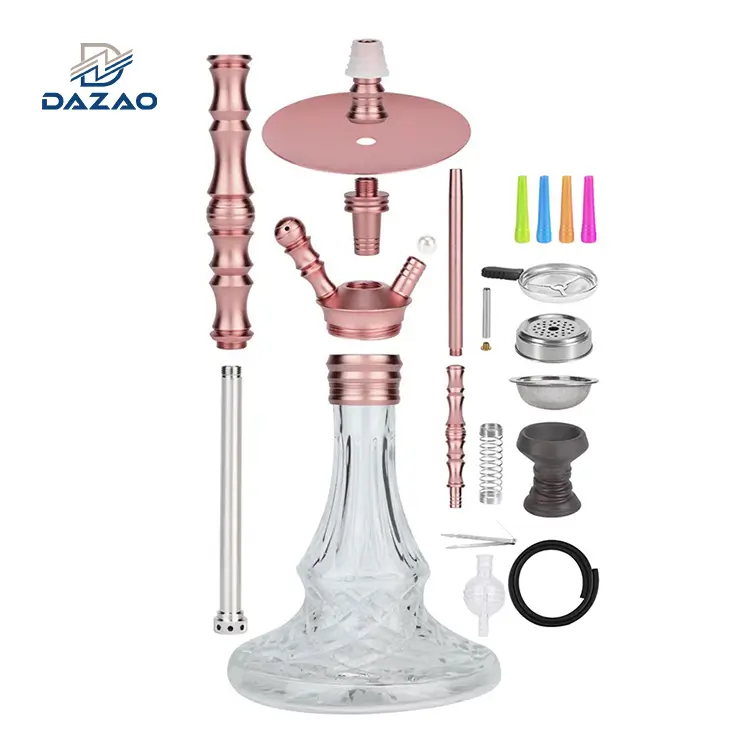

Precision CNC Machining Service for Hookah and Shisha Parts
High-precision engineering solutions eliminating draw resistance, thermal joint leakage, and heat management hotspots.
Core Engineering Bullet Points:
Monolithic 6061-T6, SS304, and Ti-6Al-4V production runs.
Internal stem surface finish verified at Ra ≤ 0.8 μm.
Dual-temperature pressure testing at 20°C and 60°C.
100% thread fit inspection with go/no-go plug gauges.
5-day rapid prototyping with zero mold tooling setup.
Minimum order quantity starting from 1 unit for validation.
Full thermal topology optimization for CNC aluminum HMDs.

Product Overview and Advanced Machining Capabilities
Delivering multi-axis turning and continuous 5-axis milling for high-performance smoking hardware.
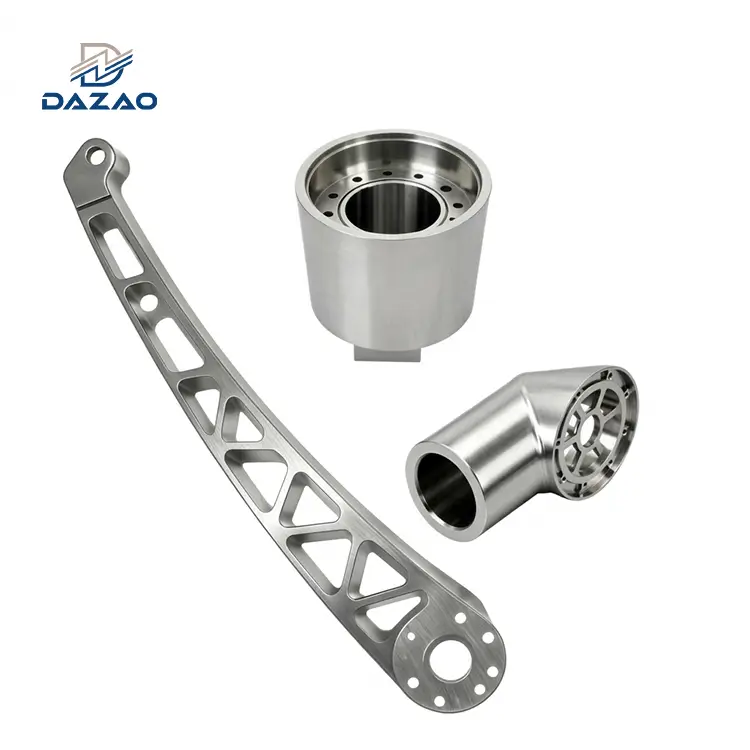
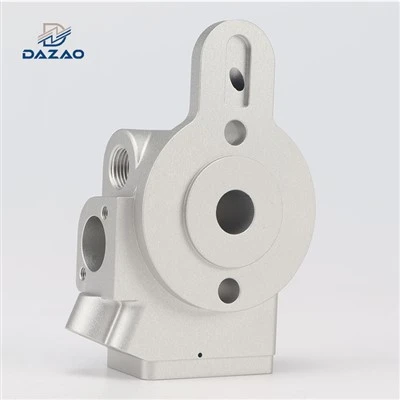
Dazao delivers full-scale shisha parts machining utilizing multi-axis mill-turn centers and simultaneous 5-axis CNC machining for shisha components. We produce hookah stems, downstems, base hearts, purge valves, diffusers, charcoal trays, and Heat Management Devices (HMD) from solid bar billets.
Every component undergoes precision bore drilling, thread pre-compensation, and controlled surface finishing. We eliminate core functional defects in high-draw hookah assemblies-including internal toolmark air resistance, elevated-temperature joint leakage, and uneven coal burning.
Multi-Axis Milling and Swiss Turning Capabilities
Complex geometries such as helical evacuation ports, multi-port base cores, and ergonomic mouthpieces are machined in single setups to maintain true position tolerances within ±0.010 mm.
Monolithic Billet Architecture versus Die Casting
All structural components are CNC machined from solid wrought billets rather than porous castings, preventing micro-crack propagation, moisture absorption, and flavor contamination over extended operational cycles.

Failure Root-Cause Analysis and Engineering Solutions
Practical engineering countermeasures derived from rigorous dimensional and pneumatic field verification.
Hydro-Abrasive Bore Finishing for Draw Resistance Calibration
· Failure Analysis: Gun-drilled 300 mm aluminum downstems exhibited microscopic spiral tool marks. Under volumetric draw tests, these ridges caused boundary layer air turbulence, producing up to 20% draw resistance variations and high customer return rates.
· Engineering Countermeasure: Implemented mandatory hydro-abrasive extrusion polishing on all stems exceeding 200 mm length. Internal bore finishes are held to Ra ≤ 0.8 μm. First article inspections undergo differential air pressure calibration to verify that draw resistance variations remain within ±5%.
Thermal Expansion Compensation for Zero-Leakage Threaded Joints
· Failure Analysis: Standard mechanical G-thread tolerances passed room-temperature immersion testing but showed 15% joint failure rates during operational use. Thermal conductivity from coal trays elevated base joint temperatures to 80°C, causing unequal aluminum expansion and seal leakage.
· Engineering Countermeasure: Established temperature-compensated thread pre-turning with engineered negative allowance tolerances. Production validation incorporates a dual-temperature pressurized decay test (submerged nitrogen at 20°C and 60°C). Thread leakage is reduced to 0%.
Thermal Topology Optimization for Uniform Charcoal Combustion
· Failure Analysis: Standard 3-axis slotting on aluminum HMDs created localized heat sinks. Charcoal blocks burned unevenly across the platform, causing premature coal burnout and localized tobacco overheating.
· Engineering Countermeasure: Redesigned air paths with multi-axis radiused flow channels to distribute heat flux across the floor plate. Every new HMD configuration is qualified using an infrared thermal imaging camera to verify that temperature variance across the combustion surface remains ≤ 5°C.

Technical Specifications and Process Capabilities
Exacting dimensional tolerances, certified alloy grades, and verified inspection parameters.
|
Parameter |
Specification |
Inspection Method / Tool |
|
Material Grades |
AL6061-T6, AL7075-T6, SS304, SS316L, Ti-6Al-4V (Grade 5), C3604 Brass |
OES Spectrometer, Mill Test Reports (MTR) |
|
Machining Capabilities |
3-Axis, 4-Axis, 5-Axis Milling, Swiss CNC turning |
DMG MORI 5-Axis, Mazak Integrex Mill-Turn |
|
Max Work Envelope |
Milling: 850 × 700 × 500 mm; Turning: Ø350 × 600 mm |
Digital Calipers, Laser Trackers |
|
Dimensional Tolerance |
Down to ±0.005 mm (Actuator bores, O-ring lands, critical threads) |
Hexagon 3D CMM, Mitutoyo Linear Height Gauges |
|
Internal Surface Finish |
Ra 0.4 μm to Ra 0.8 μm (Deep bores and downstems) |
Mitutoyo Surftest SJ-410 Roughness Tester |
|
Thread Precision |
G-Thread, Metric M-Thread, NPT, Quick-Lock Multi-Start |
Class 6H / 6g Thread Plug and Ring Gauges |
|
Seal Integrity Standard |
Zero bubble release under 0.2 MPa differential pressure at 20°C & 60°C |
Dual-Chamber Submerged Pneumatic Fixture |
|
Thermal Delta (HMDs) |
Baseplate operational temperature differential ≤ 5°C |
Fluke Precision Thermal Imaging Radiometer |
|
Surface Treatments |
Type II and Type III Hardcoat Anodizing, Bead Blasting, PVD |
Fischer Micro-Derm X-Ray Coating Thickness |
|
Prototype Lead Time |
5 business days (DFM engineering review included) |
Fast-Track Production Routing |
|
Standard Production |
10 to 15 business days (Subject to volume and finishing) |
ERP Monitored Workcell Scheduling |
Engineering Material Selection Matrix
Material properties tailored for corrosion resistance, lightweight handling, and heat distribution.
· 6061-T6 aluminum alloy: Standard material for CNC milled hookah heart components, decorative stems, and HMD platforms. Accepts Type II color anodizing and bead blast texturing. Delivers high thermal dissipation and low overall assembly mass.
· 304 Stainless Steel: Specified for assemblies requiring complete chemical wash resistance, drop impact resilience, and high wear resistance on critical thread interfaces.
· Ti-6Al-4V (Grade 5 Titanium): Selected for limited production platforms. Offers superior strength-to-weight performance, low thermal conductivity at the mouthpiece, and biocompatibility.
· C3604 Free-Cutting Brass: Applied in internal purge valve seats, quick-release couplers, and weighted core inserts requiring low friction engagement.
Quality Assurance and Pneumatic Inspection Protocols
AS9102-level dimensional metrology, dual-temperature leak tests, and CMM validation.
1. Incoming Material Verification: Every lot of raw aluminum and stainless bar stock is verified through optical emission spectrometry to confirm alloy constituents before saw-cutting.
2. First Article Inspection (FAI): Full AS9102-format dimensional verification on Mitutoyo 3D CMM inspection systems, thread pitch verification with optical comparators, and HMD heat distribution sign-off.
3. In-Process Process Control: Real-time air gauging for internal bore diameters and automated tool wear offset compensation across continuous Swiss turning runs.
4. 100% Functional Pressure Testing: Base adapters, purge valve housings, and multi-piece stem connections undergo 0.2 MPa submerged decay tests to confirm seal retention under thermal shifts.
5. Protective Export Packaging: Ultrasonic degreasing, silicone thread cap installation, individual bubble wrap isolation, and reinforced carton packing prevent transit damage.
Core Application Sectors and Sub-Assembly Categories
Precision-engineered hardware assemblies for luxury hookah and vapor device applications.

Hookah Stem Assemblies
Multi-axis turned and deep-bored downstems with custom external patterns and integrated purge ports.

CNC Milled Hookah Heart Bases
Monolithic multi-port chassis blocks featuring balanced hose connections, pressure-release seats, and threaded base adapters.

Thermal Management Devices (HMD)
CNC aluminum heat managers with internal airflow channels, heat-retention sidewalls, and rotating vent lids.

Precision Connectors and Hose Adapters
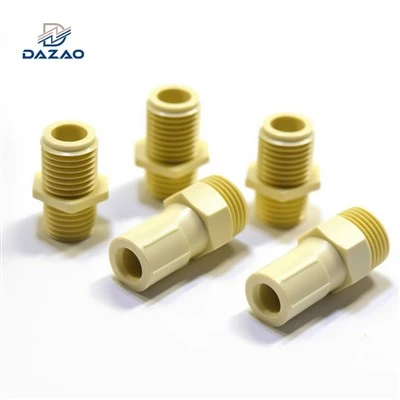
Quick-disconnect magnetic couplings, multi-start thread adapters, and silicone hose barbs.

Diffusers and Aeration Caps
Multi-hole circular arrays manufactured through high-speed micro-drilling for low-vibration bubble dispersal.

Custom Mouthpieces and Grips
Ergonomic aluminum and titanium handpieces with deep-bore axial holes, knurled textures, and laser-etched profiles.
FAQs

01.How do you prevent flavor ghosting in CNC machined metal stems?
02.How do you eliminate thread galling and heat seizing on base joints?
03.What causes excessive draw resistance in long downstems, and how is it corrected?
04.Why do charcoals black out in standard HMDs, and how does CNC design solve this?
05.How are purge valve seats machined to prevent sticking and air leakage?
06.How does CNC diffuser hole geometry reduce bubbling vibration and noise?
Submit technical drawings for 24-hour design feedback and rapid prototype scheduling.
Upload your 2D and 3D CAD files (STEP, IGES, or DXF) to our engineering team.
We deliver full DFM feedback, volumetric material optimization, and firm price quotes within 24 hours.
Contact Us

Hot Tags: Hookah CNC machining service,shisha parts machining,aluminum HMD machining,shisha components milling, CNC Machining Aluminum Parts, CNC Machining Metal Parts, CNC Machining Six Axis Robotic Accessories, cnc milling parts, CNC Plastic Parts, Precision CNC Milling Parts