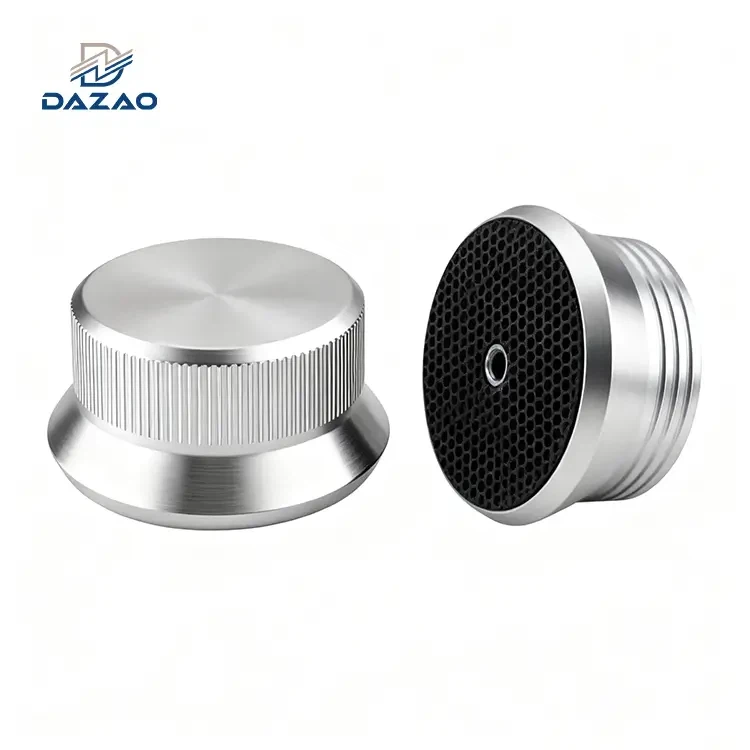
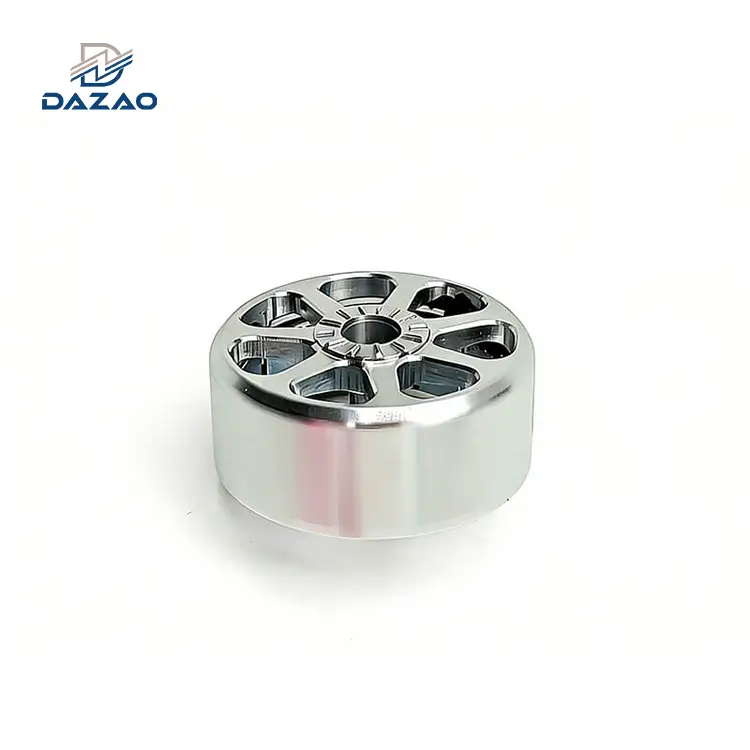
Precision CNC Machined Aluminium FPV Motor Housings
Eliminate High-RPM Jello and Crash-Induced Bell Deformation with Certified G1 Balancing and Reinforced Threads
Core Engineering Bullet Points:
Thin-wall profiles down to 0.80mm with zero post-machining residual stress.
ISO 1940-1 Grade G1.0 dynamic balancing verified after surface treatment.
Factory-installed Helicoil 304 inserts increasing thread shear strength by 500%.
Bearing seat concentricity held within 0.005mm via single-clamping turning.
Rapid functional testing prototypes dispatched within 4 working days.
100% automated optical runout and coordinate dimension validation.

Precision Machining Architecture for High-KV Brushless Powertrains
Engineered Wrought Billet Production Delivering Superior Structural Integrity Over Conventional Castings
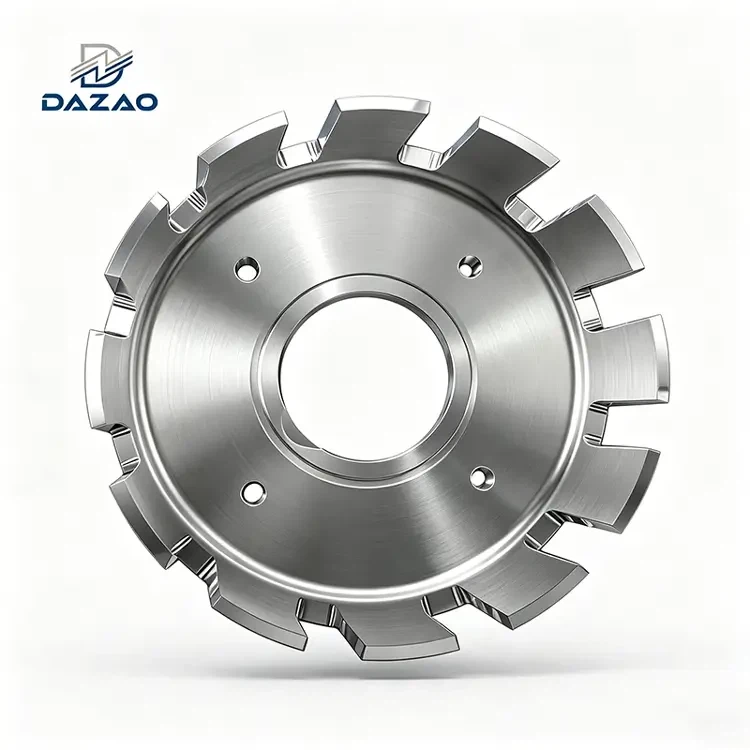
Dazao delivers precision cnc machining Aluminium FPV engine housing assemblies engineered specifically for high-load, multi-rotor propulsion. Utilizing high-speed multi-axis CNC turning services, we machine rotor bells and stator bases directly from certified solid AL6061-T6 and AL7075-T6 wrought billets. This solid-billet subtractive method completely eliminates internal porosity, structural voids, and mass variations that frequently degrade cast motor shells during high-speed rotation.
Our manufacturing lines apply specialized tooling to produce thin wall aluminum cnc machining components down to a 0.80mm nominal wall thickness. Combining single-setup lathe turning with precision 5-axis CNC milling, we maintain bearing pocket concentricity and shaft journal alignment within 0.005mm. We support standard stator frame envelopes from 14xx to 40xx, providing production solutions for competitive racing platforms, cinematic freestyle drones, and autonomous industrial UAVs.

Technical Specifications & Machining Tolerances
Comprehensive Manufacturing Limits, Alloy Standards, and Metrological Thresholds
|
Engineering Dimension |
Production Specification |
Metrology Standard & Tooling |
|
Material Grades |
AL7075-T6, AL6061-T6, AL6082-T6, Ti-6Al-4V |
Direct Raw Material MTR, ASTM B221 |
|
Machining Capabilities |
5-Axis Turn-Mill Centers, High-Speed CNC Lathes |
DIN ISO 2768-mK Precision Standards |
|
Supported Motor Envelopes |
14xx, 18xx, 22xx, 23xx, 28xx, 31xx, 40xx stators |
Compatible with 3.0mm, 4.0mm, 5.0mm shafts |
|
Critical Bore Tolerances |
Bearing Bores: ±0.005mm; OD Features: ±0.010mm |
Multi-Jet Air Gauging, Zeiss Contura CMM |
|
Geometric Tolerances |
Concentricity ≤0.010mm, Total Radial Runout ≤0.010mm |
Ultra-Precision Formtester Dial Gauges |
|
Minimum Wall Thickness |
0.80mm (0.031 in) on thin-profile bell skirts |
High-Magnification Optical Profile Projector |
|
Surface Roughness |
Internal Bearing Pockets: Ra 0.4 µm; Profiles: Ra 0.8 µm |
Mitutoyo Surface Roughness Profilometer |
|
Dynamic Balance Rating |
ISO 1940-1 Grade G1.0 @ 30,000 to 50,000 RPM |
Multi-Plane Micro Dynamic Balancer |
|
Fastener Reinforcement |
M2, M3, M4 tapped holes; Pre-installed Helicoil inserts |
Go/No-Go Thread Gauges (Class 6H/2B) |
|
Surface Treatments |
MIL-A-8625 Type II Anodize, Type III Hardcoat |
Eddy-Current Coating Gauge (±2.0µm limit) |
|
Lead Times |
Prototypes: 4 working days; Production: 7–12 days |
Full AS9102 First Article Inspection (FAI) |
|
Production Run Volume |
1 unit for prototype testing up to 100,000+ units |
Layered Protective Cellular Export Trays |
Our facilities adhere strictly to aerospace-grade aluminum machining guidelines, ensuring verified tensile strength across every production run.

Root-Cause Engineering Resolutions & Process Controls
Practical Machining Modifications Derived from High-Impact Testing and Dynamic Deflection Data
Case 1: Mitigating Post-Machining Residual Stress in Thin-Wall AL7075 Rotor Bells
· Identified Failure Mode: Machining 2306 motor bells down to a 0.80mm skirt thickness in a single continuous cutting sequence concentrated residual stress in the alloy. After 14 days of room-temperature storage, the thin skirt experienced a 0.030mm out-of-round deflection. This shift degraded dynamic balancing from ISO G1.5 to G3.0, introducing severe high-frequency vibration and camera sensor distortion during flight.
· Engineering Corrective Standard: We instituted a Three-Stage Stress-Relief Protocol: rough turning, followed by high-temperature stress-relief soaking, semi-finishing, secondary low-temperature artificial aging, and final finish-turning. Every batch undergoes a mandatory 7-day room-temperature stabilization hold followed by a secondary CMM roundness check. Long-term roundness deviation remains within 0.005mm.
Case 2: Preventing Base Fastener Pull-Out in Extreme Dynamic Crashes
· Identified Failure Mode: Direct M3 internal threads tapped into 6061-T6 aluminum stator bases showed recurring thread shearing after 8 to 10 high-velocity impact testing cycles.
· Engineering Corrective Standard: We standardized Pre-Installed Helicoil 304 Stainless Steel Thread Inserts across all freestyle and high-impact stator bases. The hole geometry, thread depth, and perimeter web thicknesses were re-engineered using finite element stress analysis. This upgrade increased thread pull-out resistance by over 500% while keeping impact-related thread stripping rates below 3%.
Case 3: Eliminating Dynamic Imbalance Caused by Anodizing Layer Variances
· Identified Failure Mode: Dynamic balancing conducted prior to color anodizing resulted in high-RPM balancing drift. Because micro motor bells weigh only 8 to 15 grams, an anodic oxide coating variance of 5 µm between the top cap and lower skirt shifted the rotational center of gravity.
· Engineering Corrective Standard: We updated the sequence to a Post-Anodizing Dynamic Calibration Procedure. Bells undergo rough turning, semi-finishing, and complete anodizing and surface finishing services before final bearing journal machining and dynamic balance trimming. Coating thickness variance is held to ≤2.0 µm, guaranteeing absolute ISO G1.0 compliance on finished units.
Engineers validating new motor architectures can utilize our rapid CNC prototyping service to test these stress-relief standards directly on prototype airframes.

Technical Comparison: Monolithic CNC Machining vs. Conventional Die-Casting
Structural, Metallurgical, and Mechanical Property Comparison for UAV Motor Designers
|
Functional Parameter |
Dazao Monolithic 5-Axis CNC Turning |
Conventional Die-Casting & Stamping |
|
Rotational Dynamic Balance |
ISO 1940-1 Grade G1.0 Verified |
Unstable (Typically Grade G6.3 to G16) |
|
Material Density & Porosity |
100% Void-Free Wrought Bar Billet |
Internal Porosity, Slag Inclusions, Micro-Voids |
|
Structural Tensile Strength |
AL7075-T6 Yield Strength: ~503 MPa |
Brittle Cast Aluminum: 180 to 240 MPa |
|
Wall Thickness Uniformity |
0.80mm ±0.010mm Controlled Profile |
Inconsistent Wall Sections (>1.50mm Minimum) |
|
Tooling Investment & Setup |
Zero Hard Tooling Fees, 4-Day DFM Setup |
$3,500 to $8,500 Die Molds, 35-Day Lead Time |
|
Thread Stripping Resistance |
Helicoil Reinforced Stainless Steel Threads |
Raw Cast Aluminum Threads Prone to Stripping |

Material Properties & Geometric Selection Guidelines
Component Matching Guidelines Based on Aerodynamic Drag, Mass Budgets, and Kinetic Impact Profiles
1. Raw Material Selection
· AL6061-T6 (Yield Strength: ~276 MPa): Standard specification for commercial multirotors, surveying drones, and cinematic platforms. Provides uniform anodizing characteristics and high thermal dissipation.
· AL7075-T6 (Yield Strength: ~503 MPa): Recommended for racing and freestyle applications requiring maximum resistance to bell deformation during gate strikes.
2. Structural Component Geometry
· Rotor Motor Bells: Precision-machined with radial cooling vents or low-drag stepped faces. Magnet retaining steps and bearing seats are turned in one sequence to eliminate uneven flux air-gaps.
· Stator Motor Bases: Machined with structural cross-bracing, wire pass-through channels, and standard 12x12mm, 16x16mm, or 19x19mm mounting patterns.

Metrology & Quality Assurance Protocols
Multi-Stage Dimensional Verification, Dynamic Balancing, and Material Traceability Workflows
· Incoming Raw Material Verification: Optical emission spectrometry for chemical composition verification alongside ultrasonic flaw detection to ensure bar stock integrity per ASTM B221.
· In-Process Dimensional Inspection: Critical bearing journals and stator alignment pilot diameters undergo continuous monitoring via calibrated air plug gauges with 0.001mm resolution.
· CMM GD&T Conformance: Automated coordinate measuring machines verify runout, perpendicularity, and true position against 2D engineering drawings.
· High-Speed Dynamic Balancing: Finished bells undergo two-plane dynamic balancing at speeds up to 50,000 RPM, achieving ISO 1940-1 Grade G1.0 balance standards.
· Surface Metrology & Hardness: Micro-hardness testers and eddy-current instruments verify that anodizing layer depth remains within the targeted ±2.0µm limit.
Application Sectors & Operating Environments
Precision Propulsion Components Supporting Demanding Aerospace and Robotics Deployments

FPV Racing and Freestyle Drone Propulsions
Ultra-lightweight rotor shells capable of continuous 45,000 RPM operation without dynamic balance degradation.

Cinematography Heavy-Lift Multirotors
Low-vibration stator bases and balanced motor housings that eliminate vibration-induced camera artifacts.

Industrial & Tactical UAV Assemblies
Weather-sealed uav motor enclosure cnc machining service parts engineered for extended operational flight hours.

Robotics Joint & Gimbal Actuators
Compact 5 axis CNC machining for robotics motor housing platforms engineered for multi-axis servo alignment.

Sub-Micro Brushless Propulsion
Specialized high tolerance micro cnc turning parts for compact UAVs and specialized optical tracking assemblies.

Aftermarket Drone Maintenance
Direct-fit fpv drone motor replacement bell custom components matching exact factory mechanical interfaces.
Get A Quote for CNC Machined Aluminium FPV Drone Motor Housings
FAQs

01.How do you prevent high-RPM video vibration and Jello in drone motor bells?
02.Why do 7075 aluminum motor bells resist crashes better than 6061 or cast shells?
03.How do you stop motor mounting screw threads from stripping in aluminum bases?
04.How do you ensure tight bearing fits without shaft play or axial slop?
05.Can color anodizing throw off the dynamic balance of lightweight motor bells?
06.What is the typical lead time for custom drone motor prototypes?
Accelerate Your Drone Motor Production with Dazao Precision Engineering
Submit your 2D and 3D CAD drawings (STEP, IGES, or DXF) to our engineering desk.
Receive an objective DFM manufacturability review, tolerance stack-up analysis, and a transparent manufacturing quotation within 24 hours.
Contact Us

Hot Tags: cnc machining Aluminium FPV engine housing,7075 aluminum FPV motor bell,precision CNC parts for brushless motors,thin wall aluminum cnc machining components,drone motor housing