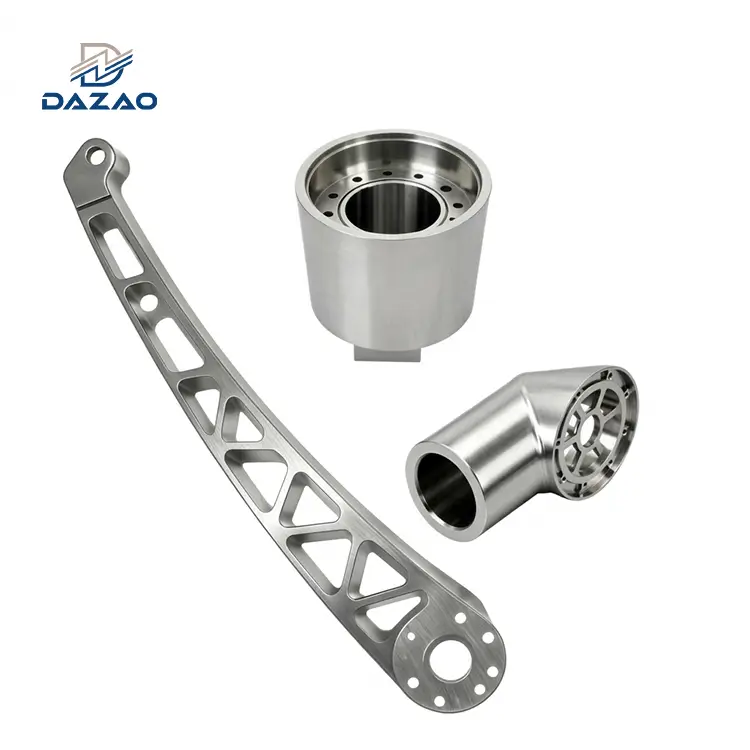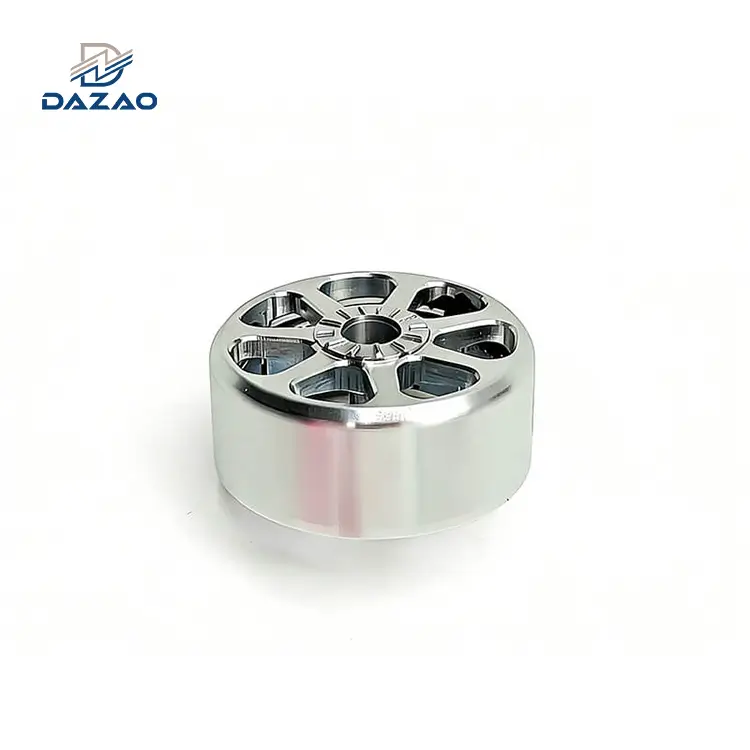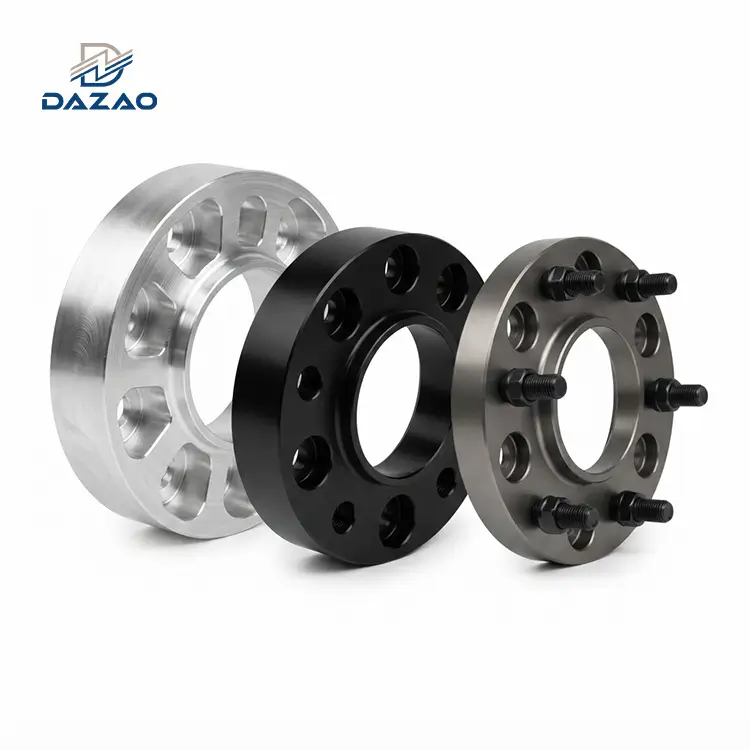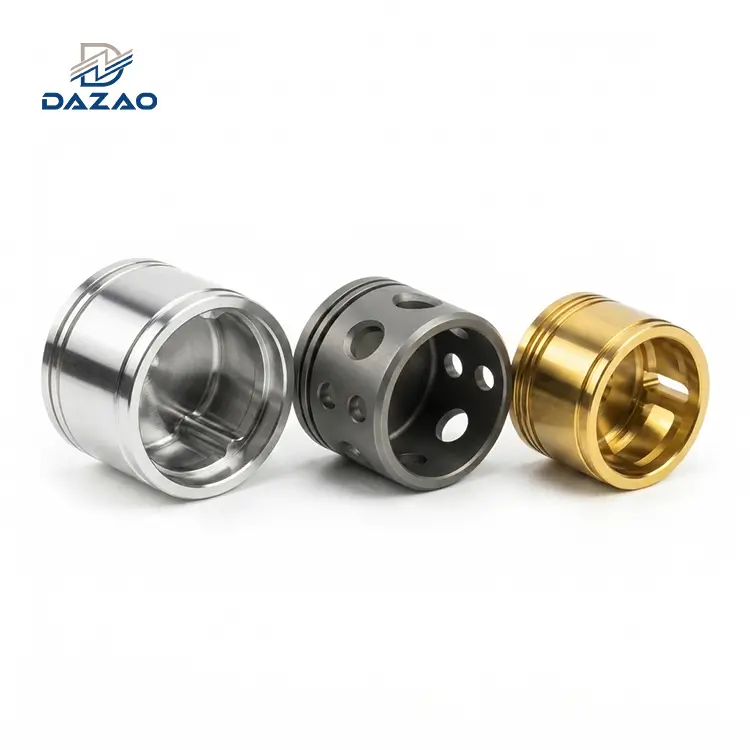

Selecting the best marine grade aluminum requires matching alloy chemistry, temper designation, and CNC machining parameters to specific operational zones: splash, atmospheric, or continuous subsea immersion. While 5083 marine grade aluminum (specifically in H116 or H321 temper) provides superior resistance to saltwater pitting and welded-joint degradation, 5086 marine grade aluminum offers higher fatigue strength under dynamic wave loads.
5052 marine aluminum serves non-structural sheet metal enclosures, and 6061-T6 serves high-precision multi-axis CNC parts when protected by MIL-A-8625 Type III hardcoat anodizing. Catastrophic field failures typically stem from three shop-floor oversights: alloy sensitization above 65°C, micro-burrs in seal grooves acting as crevice corrosion sites, and salt-crust bridging across non-isolated 316 stainless steel fasteners.
Selecting marine grade aluminum for mission-critical subsea robotics, marine defense hardware, and offshore sensor systems involves strict mechanical, electrochemical, and manufacturing trade-offs. Standard 6000-series structural alloys frequently suffer severe pitting or stress corrosion cracking when submerged in electrolyte-rich seawater (3.5% NaCl) under continuous hydrostatic pressure.
Conversely, switching to high-magnesium 5000-series alloys introduces severe manufacturing hurdles during high-speed CNC milling: built-up edge (BUE), chip recutting, and thermal distortion. While non-marine alloys focus purely on high-speed material removal rates, general aluminum CNC machining must be adjusted to prevent edge tearing in ductile marine alloys.

At Xiamen Dazao Machinery, over two decades of 5-axis machining for global marine, robotics, and energy clients have demonstrated that alloy chemistry represents only 40% of corrosion performance. The remaining 60% is dictated by temper verification (ASTM B928 compliance), CNC tool engagement geometry, surface micro-topography (Ra values), and galvanic isolation geometry.
Comparative Metallurgy of Marine Aluminum Alloys: 5083 vs 5086 vs 5052 vs 6061
The term marine aluminum alloys refers primarily to non-heat-treatable aluminum-magnesium (5xxx series) and heat-treatable aluminum-magnesium-silicon (6xxx series) formulations engineered for passive oxide layer stability (Al2O3) in chloride-dense environments.

5083-H116 / H321: High-Strength Subsea Immersion Alloy
5083 marine grade aluminum is an Al-Mg-Mn alloy containing 4.0% to 4.9% Magnesium, 0.4% to 1.0% Manganese, and 0.05% to 0.25% Chromium.
· Corrosion Resistance Mechanism: Magnesium in solid solution shifts the pitting potential (Epit) electro-negatively while stabilizing the protective passive film against chloride ion breakdown.
· Mechanical Profile: Delivers exceptional ultimate tensile strength (275 to 350 MPa) and retains high fracture toughness down to cryogenic temperatures (-196°C).
· Target Applications: Marine aluminum housings for subsea depth sensors, ROV pressure vessels, and marine aluminum plate structures for structural hull bulkheads.
5086-H116: Dynamic Fatigue & Structural Shock Resistance
5086 marine grade aluminum contains 3.5% to 4.5% Magnesium and 0.2% to 0.7% Manganese.
· 5083 vs 5086 Aluminum: 5086 has slightly lower static tensile strength than 5083, but it features a higher work-hardening exponent and superior strain-life fatigue limits. It is less susceptible to exfoliation corrosion in cyclic splash zones.
· Target Applications: Marine aluminum brackets subject to violent hydrodynamic shock loads, boat transoms, and mast base assemblies.
5052-H32: Cold Formability for Marine Enclosures & Sheet Metal
5052 marine aluminum contains 2.2% to 2.8% Magnesium and 0.15% to 0.35% Chromium.
· Performance Limits: Exhibiting lower yield strength (95 to 195 MPa depending on temper), 5052 cannot support heavy bolting preloads or high-pressure hydraulic interfaces. However, its low yield-to-tensile ratio allows tight cold-forming radius bends (R/t=1.0 to 1.5) without micro-cracking.
· Target Applications: Marine electrical junction enclosures, hydraulic fluid reservoirs, and low-stress brackets. For detailed bending radii, feed rates, and tooling parameters for sheet fabrication, read our dedicated 5052 aluminum CNC machining guide.
6061-T6: Precision Machinability vs Saltwater Pitting Vulnerability
6061 marine aluminum relies on Mg2Si precipitation hardening (0.8% to 1.2% Magnesium, 0.4% to 0.8% Silicon).
· Engineering Reality: 6061-T6 provides exceptional machinability (free-cutting chips, high dimensional stability, yield strength ≥240 MPa). However, un-coated 6061-T6 in direct contact with flowing or stagnant seawater undergoes localized micro-galvanic pitting around intermetallic Fe3SiAl12 phases.
· Implementation Rule: 6061-T6 is only designated as aluminum for saltwater applications if the entire component undergoes hardcoat anodizing (MIL-A-8625 Type III) followed by dedicated chemical sealing. For full cutting parameters, chip evacuation strategies, and heat treatment tempers, refer to our 6061 aluminum CNC machining guide.
Marine Aluminum Alloys: Mechanical & Corrosion Performance Matrix
To evaluate how these four marine alloys compare against 2000-series aerospace or 7000-series high-strength alloys, consult our aluminum grades for CNC machining guide.
|
Alloy & Temper |
Yield Strength (0.2% Offset, MPa) |
Ultimate Tensile Strength (MPa) |
Elongation at Break (%) |
ASTM B117 Salt Spray Rating (Uncoated) |
CNC Machinability Index (6061-T6 = 100) |
Relative Raw Material Cost Multiplier |
|
5083-H116 |
215 – 240 |
305 – 340 |
12 – 16 |
Outstanding (< 0.015 mm/yr) |
55 |
1.35x |
|
5083-H321 |
210 – 235 |
300 – 335 |
12 – 15 |
Outstanding (< 0.015 mm/yr) |
55 |
1.35x |
|
5086-H116 |
195 – 225 |
275 – 310 |
10 – 14 |
Superior (< 0.020 mm/yr) |
60 |
1.40x |
|
5052-H32 |
190 – 215 |
230 – 260 |
8 – 12 |
Very Good (< 0.035 mm/yr) |
50 |
1.05x |
|
6061-T6 |
240 – 275 |
290 – 315 |
10 – 14 |
Moderate (> 0.085 mm/yr) |
100 |
1.00x |
Three Critical Marine Aluminum Failure Vectors Uncovered on the Shop Floor
Standard technical data sheets omit the physical failure mechanisms that emerge when components transition from CAD models to operating offshore environments.
Temper Sensitization: 5083-O/H111 Intergranular Corrosion Above 65°C
A critical blind spot in marine hardware procurement is ordering standard 5083 stock (such as 5083-O, H111, or H32) for components exposed to elevated operational temperatures.

· Metallurgical Mechanism: In 5xxx alloys containing >3.5% Mg, continuous exposure to temperatures above 50∘C to 65∘C causes supersaturated solid-solution magnesium to migrate toward grain boundaries. It precipitates as continuous films of the anodic β-phase (Mg2Al3).
· Electrochemical Rupture: The β-phase has an open-circuit potential of approximately −1.24 V (vs. Standard Calomel Electrode), whereas the surrounding aluminum matrix sits at −0.75 V. In the presence of seawater or condensation containing chloride, the β-phase dissolves rapidly, creating catastrophic Intergranular Corrosion (IGC) and Exfoliation Corrosion (ASCC).
Mg2Al3+6Cl−→2Mg2++3Al3++6Cl−+12e−
· Dazao Root-Cause Case: A maritime client used 5083-H111 for engine-room bilge sensor housings operating at 68∘C. Within nine months, internal fluid pressure caused the threaded caps to shear off along sensitized grain boundaries.
· Engineering Mandate: For marine components subject to temperature cycles, specify ASTM B928 compliant 5083-H116 or 5083-H321. These tempers undergo specialized strain-hardening and stabilization processes that disperse the β-phase into discontinuous, isolated globules. Quality assurance must include ASTM G67 Nitric Acid Mass Loss Testing (NAMLT), verifying mass loss below 15 mg/cm2.
CNC Micro-Burrs & Gummy Tool Engagement: Crevice Corrosion in O-Ring Glands
The high ductility of marine aluminum 5083 and 5052 causes them to adhere to tool cutting edges, forming Built-Up Edge (BUE). This causes torn surface profiles and leaves microscopic burrs along O-ring sealing edges.
· Crevice Corrosion Initiation: In stagnant saltwater, a micro-burr or surface defect (Ra>1.6 μm) creates a micro-crevice beneath an elastomeric seal. Seawater inside the crevice becomes depleted of dissolved oxygen:
Cathodic Reaction in Bulk Solution: O2+2H2O+4e−→4OH−
Anodic Reaction Inside Crevice: Al→Al3++3e−
· Autocatalytic Acidification: To maintain electrical neutrality, chloride ions (Cl−) migrate into the micro-gap. Hydrolysis of aluminum chloride (AlCl3+3H2O→Al(OH)3+3HCl) drives the internal pH down to 2.0–3.0, dissolving the base metal underneath the seal.
· Dazao Machining Countermeasures:
1. Tooling: Mirror-polished Diamond-Like Carbon (DLC) coated micro-grain carbide end mills with a high rake angle (+15∘ to +20∘) to eliminate BUE.
2. Sealing Glands: O-ring grooves and sealing faces are milled via high-speed orbital paths with high-pressure through-spindle coolant (70 bar) to achieve surface finishes of Ra≤0.4 μm (16 μin), followed by mechanical abrasive brush deburring under 50x magnification.
Galvanic Salt-Bridge Shorting: 316 Stainless Fasteners in Aluminum Bodies
Standard engineering practices specify 316 Stainless Steel (A4) fasteners for securing marine aluminum brackets and marine aluminum housings. However, standard flat nylon washers often fail to prevent galvanic corrosion in active marine environments.

· The Failure Mechanism: During wet-dry cycles in the marine splash zone, seawater evaporates and deposits a solid crust of conductive salt (NaCl+MgCl2) across the perimeter of the flat nylon washer. This creates an electrolytic bridge between the 316 SS bolt head (−0.05 V potential) and the 5083 aluminum body (−0.75 V potential).
· The Structural Result: The large cathodic area of the stainless fastener drives rapid galvanic dissolution of the aluminum counterbore, causing loose joints and seal breaches.
· Dazao Design Guidelines for Galvanic Isolation:
1. Step-Counterbore Design: CNC mill a stepped pocket and fit a custom flanged T-sleeve (POM / Delrin or PTFE) to physically extend the creepage distance across the interface.
2. Thread Isolation: Install passivated screw thread inserts or apply an anti-corrosion barrier coating (such as TEF-GEL fluoropolymer paste) to eliminate direct metal-to-metal thread contact.
Precision CNC Machining Parameters for Marine Aluminum Components
Achieving tight geometric tolerances on CNC machined marine parts requires dedicated control of cutting dynamics, clamping strategies, and thermal stabilization.
Tool Geometry, DLC Coatings, and Thermal Management
|
Operation |
Tool Selection |
Rake Angle (γ) |
Relief Angle (α) |
Cutting Speed (Vc,m/min) |
Feed per Tooth (fz, mm/z) |
Coolant Delivery |
|
5083 Roughing |
3-Flute Solid Carbide (DLC Coated) |
+18∘ |
12∘ |
450 – 750 |
0.15 – 0.25 |
High-Volume Flood (8–10% Synthetic Emulsion) |
|
5083 Finishing |
2-Flute Ultra-Polished Uncoated Carbide |
+20∘ |
15∘ |
600 – 1100 |
0.04 – 0.08 |
70 Bar Through-Spindle Coolant Mist |
|
6061-T6 Heavy Milling |
3-Flute ZrN Coated Carbide |
+15∘ |
10∘ |
800 – 1400 |
0.20 – 0.35 |
Internal Through-Spindle Flood |
|
O-Ring Gland Finish |
Single-Point Form Tool / Custom Ball End |
+12∘ |
14∘ |
300 – 500 |
0.02 – 0.04 |
Air/Oil Micro-Lubrication (MQL) |
Residual Stress Control in Deep-Pocket Underwater Housings
Deep-pocket subsea housings machined from thick marine aluminum plate stock are prone to post-machining warping due to unbalanced internal stresses. When executing complex geometries, utilizing specialized 5-axis CNC machining setups helps maintain reference plane integrity.
1. Roughing Stage: Mill pocket cavities symmetrically, leaving a uniform 0.50 mm stock allowance on all interior and exterior walls.
2. Stress-Relief Annealing: For critical components, run a controlled low-temperature cycle (150∘C for 2 hours) to relax residual stresses without triggering β-phase precipitation.
3. Finish Machining: Re-clamp using hydraulic soft jaws with torque-limited retention, taking balanced 0.10 mm finishing passes to hit critical runout tolerances (≤0.015 mm).
Thread Forming vs Tapping: Pull-Out Strength & Coating Allowance
Tapped threads in marine aluminum fittings can gall and strip under repeated assembly torque.
· Roll Forming Superiority: On 5083 and 5052 alloys, Dazao implements cold-forming taps rather than cutting taps. Cold forming preserves continuous grain lines, burnishes root radii, and yields up to a 30% increase in internal thread shear pull-out strength.
· Plating Allowance: Internal thread pitch diameters must be machined to a Class 6G tolerance to accommodate the 25 to 50 μm dimensional growth introduced by subsequent hardcoat anodizing.
Surface Finishing & Corrosion Protection Chains for Marine CNC Parts
Selecting the correct alloy is only the first layer of marine defense. For a comprehensive breakdown of mechanical blasting, polishing, and chemical pretreatment baths, review our aluminum surface finishing guide. The longevity of marine aluminum CNC parts depends heavily on secondary surface passivation, conversion chemistry, and seal sealing mechanics.
Type III Hardcoat Anodizing: 5xxx Alloys vs 6061-T6
Anodizing behaves differently across 5xxx and 6xxx series alloys due to their underlying intermetallic constituents:

· 5083 & 5086 Anodizing Behavior: High magnesium concentrations (>3.5% Mg) alter the growth dynamics of the anodic aluminum oxide (Al2O3) layer. In sulfuric acid baths (MIL-A-8625 Type II and Type III), magnesium partially dissolves while un-dissolved manganese intermetallics disperse within the oxide matrix. This produces a cloudy, dark-gray to yellowish-bronze appearance. While corrosion resistance is preserved, achieving uniform cosmetic black or colored dyes is difficult.
· 6061-T6 Hardcoat Anodizing (MIL-A-8625 Type III, Class 1/2): 6061-T6 yields a dense, uniform oxide layer. For continuous exposure in marine splash and tidal zones, Dazao mandates a coating thickness of 50 μm±5 μm (0.002 in). This provides a surface micro-hardness of 400 to 500 HV, resisting both chloride-induced pitting and abrasive damage from suspended sand particles.
Hydrothermal Sealing: Nickel Acetate vs PTFE vs Boiling Water
An unsealed or poorly sealed anodic layer acts as an open sponge, accelerating pitting via capillary absorption of chloride ions. The hydrothermal sealing process hydrates the porous amorphous alumina into boehmite (AlOOH), swelling the pore walls shut.
|
Sealing Method |
Process Parameters |
ASTM B117 Salt Spray Hours to Pitting |
Taber Abrasion Resistance (Loss per 10,000 cycles) |
Primary Marine Application |
|
Boiling Deionized Water |
96∘C–100∘C, pH 5.5–6.5, 45 min |
1,000 – 1,500 hrs |
18 mg loss |
Low-wear deck hardware, cosmetic covers |
|
High-Temp Nickel Acetate |
88∘C–92∘C, 5.0–8.0 g/L NiAc, 30 min |
3,000 – 5,000 hrs |
12 mg loss |
Marine aluminum housings, subsea sensor chassis |
|
PTFE / Teflon Impregnation |
Sub-micron fluoropolymer dispersion into pores prior to thermal seal |
4,000 – 6,000 hrs |
8 mg loss (Lowest friction coefficient: μ≈0.12) |
High-friction marine valve bodies, actuator slides |
MIL-DTL-5541 Passivation & ISO 12944 C5-M Coating Systems
Where electrical conductivity or grounding paths are required across marine aluminum components (such as EMI/RFI shielded avionics or marine communication enclosures), anodizing is unsuitable due to its high dielectric breakdown voltage (>1,000 V).
· Chemical Conversion: Apply MIL-DTL-5541 Type II Class 3 (hexavalent chromium-free trivalent conversion). This generates a nanoscale zirconium- or titanium-based passive barrier that provides up to 336 hours of ASTM B117 salt spray resistance while maintaining low contact resistance (<5,000 μΩ/in2).
· Duplex Marine Coatings (C5-M / CX Marine Environments): For permanent immersion or high-salinity wave-impact zones, apply a multi-tier paint system compliant with ISO 12944 C5-M:
1. Base Pretreatment: MIL-DTL-5541 Type II Class 1A conversion layer.
2. Intermediate Primer: High-solids, two-component polyamide epoxy-zinc phosphate primer (75 μm DFT).
3. Topcoat: Aliphatic polyurethane finish (50 μm DFT) to resist UV degradation and chemical washout.
Subsea & Marine CNC Component Design Guidelines
Marine Aluminum Brackets: Water-Shedding & Stress Relief
Structural marine aluminum brackets experience high fatigue loads coupled with intermittent saltwater spray. Fabricating these structures through multi-axis CNC milling services allows complex drainage geometry to be integrated directly into the component.

· Alloy Selection: Use 6061-T6 (with 50 μm hardcoat anodizing) for complex thin-rib geometries requiring high stiffness, or 5083-H116 plate when welding or deep immersion is involved.
· Design Guidelines:
1. Eliminate flat horizontal surfaces where seawater can pool. Mill all upward-facing bracket surfaces with a minimum 3∘ water-shedding slope.
2. Chamfer or radiuse all internal pocket corners to R≥1.5 mm (0.060 in) to eliminate stress concentrations that drive stress corrosion cracking.
Marine Aluminum Housings: O-Ring Gland Tolerances & Leak Testing
Underwater pressure vessels operating down to 3,000 meters require strict dimensional accuracy and zero-defect seal faces.
· Alloy Selection: 5083-H321 or 5083-H116 forged billeting.
· Sealing Interface Control:
1. O-Ring Gland Tolerances: Machine piston and face seal glands per AS568 standards with cross-sectional depth tolerances held to ±0.025 mm (±0.001 in).
2. Surface Topography: The sealing gland wall and bottom finish must maintain Ra 0.4 μm (16 μin) without cutter lead-in/lead-out witness marks.
3. Factory Leak Validation: At Dazao, finished subsea housings undergo helium mass spectrometer leak detection testing (vacuum mode, leak sensitivity <1×10⁻⁸ mbar⋅l/s) followed by 24-hour hydrostatic chamber testing at 1.5x working depth pressure.
Marine Aluminum Fittings & Flanges: Flatness & Anti-Galling Controls
Marine fluid systems cannot tolerate flange warping or thread galling under hydraulic pressure.
· Alloy Selection: 5086-H116 or 5083-H112 for cold-extruded and turned fittings.
· Machining Tolerances:
Flange face flatness must be maintained within 0.020 mm across diameters up to 250 mm.
Flange sealing surfaces require a controlled spiral phonographic serration (Ra 3.2 μm to 6.3 μm) to anchor elastomeric gaskets under compression.
· Thread Anti-Galling: Machine NPT and BSPP pipe threads on high-precision CNC lathes using single-point inserts rather than threading dies to ensure thread flank form accuracy.
Marine CNC Machining RFQ Technical Specification Checklist
When submitting drawings and RFQs for marine aluminum CNC parts, providing incomplete specifications can lead to material substitution, incorrect temper designations, and early field failures. Include the following eight parameters in your technical drawing notes:
Alloy Formulation & Standards Compliance
· Standard Callout: Specify the full national or international material standard. Do not write simply "Al 5083" or "Marine Grade Aluminum".
· Drawing Note Example: Material: Aluminum Alloy 5083 per ASTM B928/B928M (High Magnesium Alloy for Marine Service) or EN 573-3 EN AW-5083.
· Procurement Rule: Mandate an EN 10204 Type 3.1 Material Test Report (MTR) with every production batch. The MTR must verify actual chemical composition (Mg: 4.0–4.9%, Mn: 0.4–1.0%, Cr: 0.05–0.25%, Fe: ≤0.40%) and reject non-certified secondary remelt stock.
Temper Designation & Sensitization Resistance Testing
· Standard Callout: Specify corrosion-stabilized tempers for high-magnesium 5xxx alloys operating in marine splash, bilge, or submerged conditions.
· Drawing Note Example: Temper: H116 or H321 per ASTM B928. Material must pass Intergranular Corrosion (IGC) testing per ASTM G67 (NAMLT mass loss < 15 mg/cm²) and Exfoliation Corrosion testing per ASTM G66 (ASSET).
· Engineering Rule: Prohibit standard O (annealed), H111, or unverified H32 tempers for any component exposed to ambient temperatures exceeding 50∘C to prevent continuous β-phase (Mg2Al3) grain boundary precipitation.
Critical Sealing Surface Geometry & Micro-Topography
· Standard Callout: Define Geometric Dimensioning and Tolerancing (GD&T) alongside arithmetic surface roughness (Ra) and peak-to-valley height (Rz) on all dynamic and static seal interfaces.
· Drawing Note Example: Sealing Face Surface Finish: Ra ≤ 0.4 µm (16 µin), Rz ≤ 1.6 µm per ISO 4287. Surface must be free of radial tool marks, cutter lead-in/lead-out steps, and micro-burrs under 50x optical inspection. Flange Face Flatness: 0.020 mm MAX.
· Machining Rule: O-ring grooves must specify continuous orbital or circular milling paths to eliminate longitudinal leak paths across the sealing contact band.
Pre-Plating Thread Pitch Diameter Tolerances
· Standard Callout: Account for post-machining surface treatment dimensional growth when defining internal and external threads.
· Drawing Note Example: Internal Threads: 6G Pitch Diameter Tolerance before surface treatment to accommodate 50 µm ± 5 µm Hardcoat Anodize layer thickness. Final Gauged Thread Tolerance after Anodizing: Class 6H per ISO 965-2.
· Manufacturing Rule: Specify cold roll forming (thread forming) for 5083, 5086, and 5052 alloys over cut tapping to preserve grain flow lines and increase thread shear yield limits by 25% to 30%.
Surface Treatment, Coating Thickness & Sealing Chemistry
· Standard Callout: Reference complete military or international coating standards, including class, thickness, and post-anodizing sealing chemistry.
· Drawing Note Example: Finish: Hardcoat Anodize per MIL-A-8625 Type III, Class 1 (Non-Dyed, Natural Dark Finish). Coating Thickness: 50 µm ± 5 µm (0.0020 in ± 0.0002 in). Hydrothermal Seal: High-Temperature Nickel Acetate Seal (88°C–92°C, 30 min min) or PTFE impregnation. Minimum Corrosion Resistance: 3,000 hours per ASTM B117 neutral salt spray without pitting.
· Conductive Grounding Note (if required): Selective Chemical Conversion: MIL-DTL-5541 Type II, Class 3 on grounding pads; all remaining external surfaces MIL-A-8625 Type III Class 1.
Tooling Contamination Prevention & Post-Machining Decontamination
· Standard Callout: Prevent cross-contamination of microscopic iron particles during manufacturing, which triggers localized galvanic micro-pitting in saline environments.
· Drawing Note Example: Tooling Protocol: Carbide tooling only; zero cross-use of cutting tools previously used on ferrous alloys. Cleaning: Post-machining ultrasonic degreasing followed by citric acid passivation/neutralization to eliminate embedded metallic particulates.
Non-Destructive Testing (NDT) & Pressure Integrity Protocols
· Standard Callout: Define factory pressure testing, helium leak testing, and surface crack detection parameters for underwater enclosures.
· Drawing Note Example: NDT Requirement: 100% Fluorescent Penetrant Inspection (FPI) per ASTM E1417 / AMS 2644 on critical load-bearing ribs. Pressure Verification: 100% Hydrostatic Proof Pressure Testing at 1.5x Maximum Operating Depth for 24 hours. Helium Mass Spectrometer Leak Rate: < 1.0 x 10⁻⁸ mbar·l/s.
Preservation & Ocean Transit Packaging Protocols
· Standard Callout: Prevent premature corrosion during overseas freight shipment caused by trapped humidity and salt-laden ocean air.
· Drawing Note Example: Packaging: Cleaned parts must be individually sealed in Vapor Corrosion Inhibitor (VCI) heat-sealed bags with activated silica gel desiccant packs per MIL-D-3464. Apply non-chlorinated protective peelable film to critical sealing faces.
Marine CNC Drawing Callout Summary Matrix
|
Specification Item |
Target Callout Parameter |
Reference Standard |
Mandatory Verification Document |
|
Material Chemistry |
Al5083 (Mg 4.0–4.9%, Fe ≤0.40%) |
ASTM B928 / EN 573-3 |
EN 10204 Type 3.1 MTR |
|
Temper State |
H116 or H321 (Sensitization-Proof) |
ASTM B928 / ASTM G67 |
NAMLT Mass Loss<15 mg/cm2 |
|
O-Ring Gland Finish |
Ra≤0.4 μm, Zero Radial Cutter Marks |
ISO 4287 / ASME B46.1 |
Surface Profilometer Tracing Report |
|
Thread Tolerance |
Class 6G (Pre-plate)→Class 6H (Final) |
ISO 965-2 |
Go / No-Go Thread Plug Gauge Record |
|
Hardcoat Anodizing |
Type III Class 1 (50 μm±5 μm) |
MIL-A-8625 / ISO 10074 |
Eddy-Current Thickness Test Report |
|
Pore Sealing |
Nickel Acetate or PTFE Impregnation |
ASTM B117 / ASTM B680 |
3,000-Hour Salt Spray / Acid Dissolution Data |
|
Leak Integrity |
<1×10⁻⁸ mbar⋅l/s@ Vacuum |
ASTM E498 |
Helium Mass Spectrometer Cert |
|
Preservation |
VCI Sealed Barrier Packaging |
MIL-STD-2073-1 / MIL-D-3464 |
Packaging QA Inspection Sign-Off |
Precision Marine CNC Machining Services at Xiamen Dazao Machinery
Manufacturing components for marine, subsea, and offshore environments requires strict material verification, precise multi-axis toolpaths, and verified surface finishes.

Founded in 2000, Xiamen Dazao Machinery operates certified ISO9001:2015 and IATF16949:2016 facilities equipped with 3-axis, 4-axis, and 5-axis CNC machining centers (DMG MORI, Mazak, and Brother). Our engineering team works directly with marine equipment manufacturers to resolve DFM challenges, manage temper verifications (ASTM B928 / ASTM G67), control tight geometric tolerances (±0.005 mm), and apply certified marine finishes.

Frequently Asked Questions: Marine Grade Aluminum & CNC Machining
01.What causes 5083 aluminum to corrode rapidly in warm marine engine compartments?
02.How can chip welding and gummy tool engagement be prevented when CNC machining 5083?
03.Why do nylon flat washers fail to stop galvanic corrosion with 316 stainless bolts?
04.Why does 5083 aluminum look dark and cloudy after hardcoat anodizing?
05.Can 6061-T6 aluminum survive long-term saltwater immersion without pitting?
06.What is the mechanical difference between 5083 and 5086 aluminum for boat brackets?