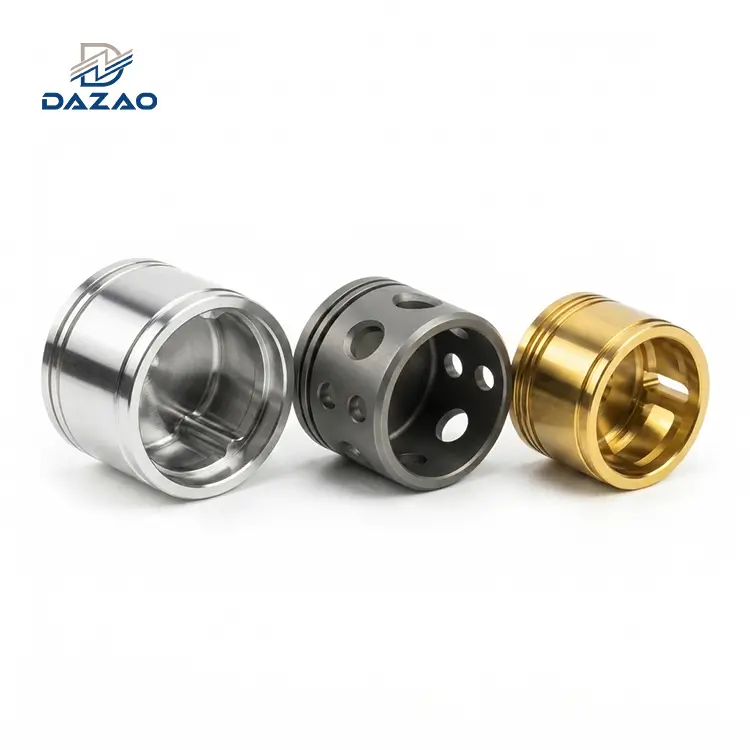

When evaluating aluminum vs brass for CNC machining, select 6061-T6 aluminum for lightweight structural frames, thermal enclosures, and large milled housings where part mass and raw material volume dominate production economics. Select C36000 free-machining brass for high-volume Swiss turned components, micro-fluidic fittings, pneumatic valve bodies, and high-cycle threaded assemblies. While raw brass costs roughly 2.8 to 3.2 times more per pound than 6061 aluminum, brass yields up to a 40% reduction in cycle time and recovers up to 75% of scrap value from chips, frequently resulting in a lower net unit cost for small, high-removal CNC turning parts.
Raw Material Price vs Finished Part Cost: Breaking the Material Selection Fallacy
Evaluating aluminum or brass for machining solely by raw material pricing per kilogram leads to flawed unit-cost forecasting and severe manufacturing bottlenecks. In industrial procurement, 6061 aluminum bar stock typically trades at $3.20 to $4.50 per kilogram, while C360 brass trades between $9.00 and $11.50 per kilogram. This raw material delta leads buyers to default to aluminum for cost-reduction initiatives. When selecting the best aluminum for CNC machining projects, engineers must evaluate the complete manufacturing ecosystem rather than stock metal pricing alone.
On the shop floor at Dazao Machinery, material cost represents only one variable in the total cost-per-part equation. The true cost of a precision CNC component comprises:
1. Cycle Time Cost: Spindle runtime calculated at machine-hour rates ($60 to $150 per hour depending on 3-axis, 5-axis, or multi-axis Swiss lathe configurations).
2. Tooling Wear and Consumables: Insert edge breakdown, tap breakage rates, and tool replacement downtime.
3. Secondary Deburring and Operations: Manual or thermal deburring required to eliminate burrs from ductile alloys.
4. Scrap Metal Resale Credit: Revenue recovered by returning clean, segregated machining chips to recyclers.
Following our industrial aluminum CNC machining guide, the basic economic equation governs every production batch:
Total Part Cost = (Raw Material Weight × Material Price) + (Cycle Time × Machine Rate) + Tooling Cost + Secondary Finishing - (Chip Weight × Scrap Buyback Rate)

When engineers prototype parts without accounting for alloy-specific tool interactions, standard 6061-T6 often creates unexpected failure modes during pilot production. Continuous, stringy aluminum chips wrap around live tooling, causing automated Swiss lathes to halt for manual chip clearing. Conversely, specifying C36000 brass allows continuous, unattended 24/7 machining due to clean chip fracture. Understanding these shop-floor realities prevents expensive engineering change orders once high-volume production begins.
Machinability and Cycle Time Economics: 6061-T6 Aluminum vs C36000 Brass
Evaluating brass vs aluminum CNC machining requires analyzing chip formation mechanics, permissible cutting speeds, and tool deflection forces.

Chip Formation and Tool Wear: Segmented Brass vs Ribbon Aluminum
Machinability ratings use C36000 as the 100% industry benchmark. Alloys are indexed against C360 based on allowable cutting speeds, tool wear rates, and surface finish consistency.
· C36000 Brass (100% Machinability): Contains 2.5% to 3.0% finely dispersed elemental lead. This lead acts as an internal solid lubricant and chip breaker. Under shear stress from a carbide insert, the material fractures cleanly into small, discontinuous needle chips. Cutting forces remain low, heat dissipation into the tool is minimal, and tool wear occurs primarily through gradual micro-abrasion.
· 6061-T6 Aluminum (~80% Machinability): As outlined in our standardized 6061 aluminum CNC machining guide, this alloy is a highly ductile aluminum-magnesium-silicon composition. Under high surface speeds, 6061 tends to form a Built-Up Edge on tool cutting faces if high-lubricity coolant or specialized polished carbide inserts (such as DLC or diamond-like carbon coatings) are not deployed. Chips form long, continuous ribbons that can score critical part diameters.
· 7075-T6 Aluminum (~70% Machinability): Higher shear strength and zinc content increase cutting resistance and tool deflection, demanding reduced feed-per-tooth compared to C36000.
CNC Feed, Speed, and Machinability Ratings Benchmark
|
Machining Parameter |
C36000 Free-Machining Brass |
6061-T6 Aluminum |
7075-T6 Aluminum |
|
Machinability Index (%) |
100% (Baseline Standard) |
80% |
70% |
|
Surface Speed (SFM) - Rough Turning |
500 to 1000+ |
600 to 1200 |
400 to 800 |
|
Feed per Revolution (IPR) |
0.006 to 0.015 |
0.004 to 0.010 |
0.003 to 0.008 |
|
Chip Morphology |
Segmented / Needle (Self-breaking) |
Continuous / Ribbon (Bird-nesting risk) |
Segmented / Curly |
|
Tool Life Multiplier |
2.5× to 4.0× baseline |
1.0× baseline |
0.6× to 0.8× baseline |
|
Built-Up Edge (BUE) Tendency |
Extremely Low |
High (requires high lubricity) |
Moderate |
Scrap Recovery Economics: How Brass Chip Buyback Offsets Raw Stock Cost
For high-volume threaded components and small turned parts (diameters under 25 mm) where material removal exceeds 60% of original bar stock volume, brass frequently achieves a lower net aluminum vs brass machining cost than aluminum. These economic trade-offs are detailed in our detailed aluminum CNC machining cost guide.
Consider an industrial pneumatic connector manufactured at Dazao Machinery using high-volume precision CNC turning services in lots of 20,000 units:
· Starting Stock: Diameter 20.0 mm bar stock × 35 mm length.
· Finished Part Volume: Equivalent to 35% of starting stock (65% chip removal).
· Starting Part Mass: Aluminum = 29.7 grams | Brass = 93.5 grams.
Material Scrap Calculation Example (20,000 pcs):
· 6061-T6: 386 kg scrap generated. Chip buyback rate = ~$0.90 per kg. Total rebate = $347.40
· C36000: 1,215 kg scrap generated. Chip buyback rate = ~$6.20 per kg. Total rebate = $7,533.00
Because C36000 brass tolerates spindle feeds at maximum machine limits without bird-nesting or edge welding, cycle time drops from 42 seconds (in 6061-T6) to 26 seconds (in C36000). The scrap resale credit combined with machine-hour savings fully offsets the higher initial bar stock expense.
Aluminum vs Brass for Threaded Parts: Galling Failures and Insert Costs
Thread design is one of the most critical structural differentiators when analyzing aluminum vs brass for threaded parts.

Cold-Welding and Stripping Risks in 6061 Aluminum Direct Tapping
Threads in 6061-T6 aluminum are susceptible to mechanical galling when engaged with standard 304 or 316 stainless steel fasteners. Galling is a severe form of adhesive wear caused by local micro-welding across mating thread asperities:
1. Under clamping torque, the native passive aluminum oxide layer ruptures under high contact stress.
2. Bare metallic aluminum comes into direct contact with the stainless steel surface.
3. High friction and localized shear stresses cause atomic transfer and micro-welds between thread flanks.
4. Upon fastener rotation, these micro-welds shear unevenly, seizing the screw, stripping internal thread profiles, and scrapping the entire component.
To prevent galling and achieve precision aluminum CNC machining tolerances in tapped features, engineers must incorporate secondary thread reinforcements:
· Helicoil Wire Inserts: Requires a specialized STI (Screw Thread Insert) tap, manual or semi-automated insertion, tang break-off, and secondary dimensional inspection.
· Keensert / Key-locking Inserts: Requires counterboring, tapping, and mechanical drive-pin staking operations.
Aluminum Thread Total Cost = Basic Tapping Cost + STI Tap Tooling Premium + Insert Component Cost ($0.15 to 0.85perhole)+SecondaryLabor(0.85perhole)+SecondaryLabor(0.30 to $1.20 per hole) + Rejection Risk
Self-Lubricating Internal Threads in C360 Brass Fittings and Valve Bodies
In contrast, C36000 brass features a low coefficient of friction against steel (μ ≈ 0.18 to 0.22, compared to μ ≈ 0.45 to 0.60 for untreated aluminum against steel).
1. Direct Threading: C360 brass accepts direct single-point threading or high-speed tapping down to micro-thread sizes (M1.2 to M3.0) without tearing or flaking.
2. Repeated Service Cycles: Brass internal threads withstand repeated assembly and disassembly cycles (100+ cycles) without flank galling, material pickup, or requirement for thread inserts.
3. Pneumatic and Hydraulic Sealing: For NPT, BSPP, and metric taper threads in valve bodies and brass fittings, brass deforms elastically at the micro-level under torque, creating an airtight, metal-to-metal seal that resists spiral leakage paths far more reliably than raw aluminum.
Thread Shear Strength, Pull-Out Force, and Assembly Labor Comparison
|
Thread Characteristic |
6061-T6 Direct Tap |
6061-T6 with Helicoil Insert |
C36000 Direct Tap |
|
Galling Risk (with SS Fastener) |
Extremely High |
Low (Steel-on-Steel) |
Very Low |
|
Pull-out Shear Strength (M6x1.0) |
~9.2 kN |
~14.8 kN |
~13.6 kN |
|
Assembly Operations Count |
1 (Direct Tap) |
4 (Tap, Insert, Break Tang, Inspect) |
1 (Direct Tap) |
|
Tap Breakage Rate in Blind Holes |
Moderate (Chip pack risk) |
High (Specialized STI tap) |
Near Zero (Needle chips) |
|
Recommended Minimum Engagement |
1.5 × Nominal Diameter |
1.0 × Nominal Diameter |
1.0 × Nominal Diameter |
RoHS Compliance and Lead-Free Brass: The Hidden CNC Machining Penalty
While C36000 brass delivers unmatched machining efficiency, global environmental mandates introduce severe supply chain constraints. Directives including EU RoHS, REACH, and the US Safe Drinking Water Act (NSF/ANSI 61 and NSF/ANSI 372) limit lead content in potable water and consumer electronic components to under 0.1% to 0.25% by weight.
Specifying traditional 6061 aluminum vs C360 brass for regulated assemblies triggers compliance failures. However, substituting lead-free brass alloys introduces severe manufacturing penalties that alter project economics.

Cutting Resistance and Tool Degradation in Silicon and Eco Brass
Lead-free alternatives like C69300 (Eco Brass / Silicon Brass) or C27450 replace lead with elements like silicon, bismuth, or phosphorus to induce chip breakability. These chemical modifications introduce severe CNC challenges:
· Abrasive Silicon Phases: In C69300, silicon combines with copper to form hard intermetallic phases that abrade carbide cutting edges rapidly. Flank wear rates increase by 300% to 450% relative to C36000.
· Elevated Cutting Resistance: Shear forces required to deform lead-free brass increase by roughly 40%, generating higher heat at the tool-workpiece interface. Spindle speeds must be reduced from 800+ SFM to 300-450 SFM to avoid insert thermal degradation.
· Burr Formation and Chip Wrapping: Alloys lacking silicon (such as pure copper-zinc alpha brasses) produce continuous, tough burrs on cross-drilled holes, requiring automated brush deburring or manual deburring operations.
Surface-Treated 6061-T6 Aluminum as a Cost-Effective Lead-Free Alternative
When engineering teams must achieve strict lead-free regulatory compliance under tight cost targets, Dazao Machinery frequently advises replacing brass entirely with surface-treated 6061-T6 aluminum.
Manufacturing Cost Comparison for Potable Fluid Valve (10,000 unit batch):
· C36000 Leaded Brass: Base Line ($4.20 per part) -> Non-compliant for potable water
· C69300 Lead-Free Brass: $7.85 per part (+87% cost increase via cycle time and tool wear)
· 6061-T6 Aluminum + Electroless Nickel Plating (ENP 15µm): $5.10 per part (+21% cost over C360, 35% cheaper than C69300)
By switching to 6061-T6 aluminum treated with high-phosphorus electroless nickel plating or Type III hard anodizing with an NSF-compliant PTFE seal, manufacturers achieve full compliance, low part weight, and corrosion resistance without the machining penalties of silicon-doped brasses.
Strength, Rigidity, and Weight: Aluminum vs Brass Structural Performance
Mass and specific strength dictate the boundary between aluminum and brass across structural and mobile mechanisms.
Weight-Sensitive Applications: Robotics, Drones, and Handheld Housings
· 6061-T6 Aluminum Density: 2.70 g/cm³ (0.0975 lb/in³)
· 7075-T6 aluminum Density: 2.81 g/cm³ (0.1015 lb/in³)
· C36000 Brass Density: 8.50 g/cm³ (0.307 lb/in³)
When comparing aluminum vs brass weight, brass is 3.15 times denser than standard aluminum alloys. In aerospace, robotics, drone gimbals, and handheld electronic housings, this mass differential eliminates brass from structural consideration. Unsprung mass in automotive suspensions and inertia in multi-axis robotic arms require the high strength-to-weight ratio provided by structural aluminum. When ultimate tensile capacity is required, our high-strength 7075 aluminum CNC machining guide details how 7075 matches carbon steel properties at one-third the mass.
Mechanical Property Comparison Matrix
|
Mechanical Property |
6061-T6 Aluminum |
7075-T6 Aluminum |
C36000 Free-Machining Brass |
C26000 Cartridge Brass |
|
Tensile Strength, Ultimate (MPa) |
310 |
572 |
400 |
425 |
|
Tensile Strength, Yield (MPa) |
276 |
503 |
310 |
200 |
|
Elongation at Break (%) |
12% to 17% |
9% to 11% |
15% to 20% |
40% to 60% |
|
Modulus of Elasticity (GPa) |
68.9 |
71.7 |
97.0 |
110.0 |
|
Brinell Hardness (HB) |
95 |
150 |
130 |
100 |
|
Specific Strength (kN·m/kg) |
115 |
204 |
47 |
50 |

High-Mass Engineering Benefits: Vibration Damping and Kinetic Inertia
Evaluating aluminum vs brass strength involves more than tensile yield numbers. High mass provides key functional advantages:
1. Vibration Damping and Harmonic Absorption: The higher density and internal acoustic damping of brass suppress chatter in precision instrument housings, metrology optical mounts, and high-fidelity audio transducer bases.
2. Rotational Inertia: Flywheels, mechanical governors, and balancing counterweights benefit from the high mass-to-volume ratio of brass, minimizing spatial envelopes while maximizing kinetic energy storage.
3. Tactile Value and Perceived Quality: Consumer luxury goods, high-end automotive interior knobs, and medical monitoring control interfaces utilize brass for its solid weight and smooth actuation feel.
Thermal and Electrical Conductivity: Heat Sinks vs Electrical Connectors
Thermal and electrical transport properties diverge sharply between copper-based and aluminum-based alloys, influencing thermal management and electronic hardware selection.
Heat Sink Dissipation Efficiency: 6061 Aluminum vs C360 Brass
· 6061-T6 Aluminum Thermal Conductivity: 167 W/m·K
· 6063 Aluminum (Extruded/Milled): 201 W/m·K
· C36000 Brass Thermal Conductivity: 115 W/m·K
· Pure Copper (C11000): 390 W/m·K
A common design misconception regarding aluminum vs brass heat conductivity is that because pure copper outperforms aluminum, brass must also outperform aluminum. In reality, alloying copper with 35% to 37% zinc disrupts the crystal lattice, degrading thermal conductivity down to 115 W/m·K (roughly 31% lower than 6061-T6 aluminum).
Specific Heat Dissipation Ratio (Thermal Conductivity / Density):
· 6061-T6 Aluminum: 167 / 2.70 = 61.85 (W·m²)/(kg·K)
· C36000 Brass: 115 / 8.50 = 13.53 (W·m²)/(kg·K)
Aluminum provides 4.5 times more thermal dissipation efficiency per unit weight than brass. For heat sinks, power semiconductor cooling plates, and LED engine housings, complex components machined via multi-axis CNC milling services prioritize aluminum alloys exclusively.
Contact Resistance and Oxidation: Brass Terminals vs Aluminum Pins
· 6061-T6 Electrical Conductivity: ~43% IACS (International Annealed Copper Standard)
· C36000 Brass Electrical Conductivity: ~26% IACS
Evaluating aluminum vs brass electrical conductivity reveals an interesting paradox. Although 6061-T6 aluminum has a higher bulk electrical conductivity than C36000 brass, aluminum forms a thin, tough native oxide film within milliseconds of atmospheric exposure. Aluminum oxide is an electrical insulator with a dielectric breakdown strength exceeding 10^6 V/m.
· The Aluminum Contact Problem: Untreated aluminum electrical contact pads create high interface resistance, leading to localized heating, voltage drops, and contact degradation unless plated with nickel, tin, or silver.
· The Brass Interface Advantage: C360 brass forms a soft, semi-conductive tarnish layer that breaks down easily under mechanical wiping pressure during connector mating. This ensures stable, low contact resistance over thousands of insertion cycles, making brass the preferred alloy for terminals, RF coaxial connector housings, multi-pin circular electrical connectors, and ground lugs.
Corrosion Resistance in Harsh Environments: Galvanic Coupling vs Dezincification
Corrosion failures in fluid handling and marine assemblies stem from distinct electrochemical degradation mechanisms between aluminum vs brass corrosion.

Galvanic Corrosion Risks in Marine and High-Humidity Assemblies
Aluminum occupies an active (anodic) position on the galvanic series (-0.70 V to -0.90 V relative to a Standard Calomel Electrode).
When a 6061-T6 aluminum manifold directly contacts a more noble cathode metal (such as 316 stainless steel, copper, or titanium) in the presence of an electrolyte:
1. The aluminum acts as a sacrificial anode and undergoes severe galvanic corrosion around the fastener holes.
2. Pitting breaches fluid-sealing O-ring grooves, causing system depressurization.
3. Mitigation requires non-conductive isolation bushings or Mil-A-8625 Type II/III anodizing combined with chromate conversion coatings.
Dezincification Porosity in C360 Brass Fluid Manifolds
C36000 brass contains roughly 61% copper and 36% zinc, forming a two-phase metallurgical structure. The zinc-rich beta phase is susceptible to dezincification when exposed to stagnant water, chlorinated municipal supplies, or mildly acidic fluid streams:
1. Zinc atoms selectively dissolve out of the brass crystal lattice into the fluid medium.
2. The remaining copper re-deposits on the component surface as a weak, porous, sponge-like matrix.
3. The component retains its original outward geometry but loses all structural integrity, eventually rupturing under normal hydraulic line pressure.
Dazao Industrial Failure Case:
A client deployed C36000 brass fluid manifolds in a coastal brackish cooling system to replace aluminum manifolds that had failed via galvanic pitting. Within 11 months, the C360 manifolds began weeping fluid through the solid 4mm metal walls. Metallurgical micro-sectioning performed by Dazao engineers revealed complete beta-phase dezincification extending through 85% of the wall thickness.
Corrective Solution: Dazao transitioned the component to DZR Brass (C35330 / CW602N, arsenic-inhibited dezincification-resistant brass) with a stress-relief anneal cycle, resolving the failure completely.
Surface Finishing, Plating Compatibility, and Material Selection Matrix
Surface conversion and electroplating options differ significantly based on the base metal chemistry.
Anodizing (Type II / Type III) and Chemical Conversion Coatings
Engineers can reference our standard aluminum surface finishing guide for detailed bath chemistries and layer builds:
· Type II Anodizing: Creates a 10 to 25 µm porous oxide layer that accepts vibrant organic and inorganic dyes (black, blue, red, clear) while offering good baseline protection.
· Type III Hardcoat Anodizing: Generates a dense 25 to 50 µm ceramic oxide layer with surface hardness ratings between 60 and 70 HRC for extreme abrasion resistance.
· Chemical Conversion Coating (Chem Film / Alodine): Preserves electrical conductivity while providing basic corrosion protection under MIL-DTL-5541 specifications.
· Bead Blasting: Standard preparation utilizing #8 to #12 glass beads or ceramic media to eliminate directional milling tool marks, producing a uniform matte aesthetic.
Mechanical Polishing, Passivation, and Electroplating
· Precision Brass Polishing: Yields mirror-bright surface finishes (Ra under 0.1 µm) for visible exterior trim, optical bezels, and luxury instrument hardware.
· Passivation and Anti-Tarnish Coating: Application of benzotriazole films or clear organic lacquers to prevent oxidation and brown oxide tarnish in humid environments.
· Direct Brass Plating: Brass provides an ideal substrate for direct electroplating (nickel, chrome, gold) without requiring complex zincate pre-treatment steps necessary for aluminum alloys.
Material Selection Matrix for CNC Machined Components
|
Performance Parameter |
6061-T6 Aluminum |
7075-T6 Aluminum |
C36000 Free-Machining Brass |
|
Component Mass / Weight |
Low (Best) |
Low (Best) |
High (3.15× heavier) |
|
Machinability & Tool Life |
Good (80%) |
Moderate (70%) |
Outstanding (100%) |
|
Thread Wear / Galling Resistance |
Poor (Requires Inserts) |
Moderate |
Excellent (Direct Tap) |
|
Thermal Dissipation |
High (167 W/m·K) |
Moderate (130 W/m·K) |
Moderate (115 W/m·K) |
|
Dry Electrical Contact Stability |
Poor (Insulating Oxide) |
Poor (Insulating Oxide) |
Excellent (Low Contact R) |
|
Deep-Blind Hole Tapping Safety |
Moderate (Chip Pack) |
Moderate |
High (Segmented Needle Chips) |
|
Raw Material Stock Cost / kg |
Low ($) |
Moderate () |
High ($) |
|
Scrap Value Recovery Potential |
Low |
Low |
High (Up to 75% buyback) |
|
Anodizing Capability |
Excellent (Type II/III) |
Good (Type II/III) |
Non-Applicable |
Dazao Engineering Decision Matrix: How to Choose for Your Next CNC Project
Use this step-by-step logic path to finalize material specifications prior to issuing RFQs for aluminum vs brass for fittings or structural parts:
1. Is total component mass or structural inertia a primary functional constraint?
· Yes: Select 6061-T6 (general structural) or 7075-T6 (high stress).
· No: Proceed to Step 2.
2. Does the part feature micro-threads (M3 or smaller), deep internal tapping, or experience 50 or more assembly service cycles?
· Yes: Select C36000 Brass to eliminate thread galling and remove secondary insert installation labor.
· No: Proceed to Step 3.
3. Is the component an active convective heat sink or thermal conduction bracket?
· Yes: Select 6061-T6 or 6063 Aluminum.
· No: Proceed to Step 4.
4. Is the component an electrical pin, probe tip, RF connector shell, or ground contact point?
· Yes: Select C36000 Brass (with optional gold or nickel plating).
· No: Proceed to Step 5.
5. Does the part require high material removal (60% or more) on a high-volume Swiss CNC lathe?
· Yes: Run a scrap-adjusted cycle time analysis. C36000 Brass often undercuts finished aluminum part pricing due to fast cycle times and high scrap rebates.
· No: Select 6061-T6 Aluminum for lowest base part cost.
Optimize Your Precision CNC Manufacturing with Dazao Machinery
Material selection directly drives part reliability, cycle time, and production economics. Xiamen Dazao Machinery operates advanced multi-axis CNC milling, precision Swiss lathes, and turning centers certified to ISO9001:2015 and IATF16949:2016. Whether your design demands high-volume brass CNC machining or lightweight aluminum CNC machining, our engineering team evaluates your CAD models, performs rigorous DFM evaluations, and calculates precise cycle-to-scrap economics.

FAQs
01.Why is C360 brass easier to machine on CNC equipment than 6061 aluminum?
02.Why do stainless steel bolts seize inside direct-tapped aluminum holes?
03.How does lead-free brass impact CNC machining costs compared to standard C360?
04.Can brass parts cost less to produce than aluminum parts on CNC lathes?
05.Is brass better than aluminum for electronic heat sinks?
06.What causes premature corrosion in brass valve bodies compared to aluminum?