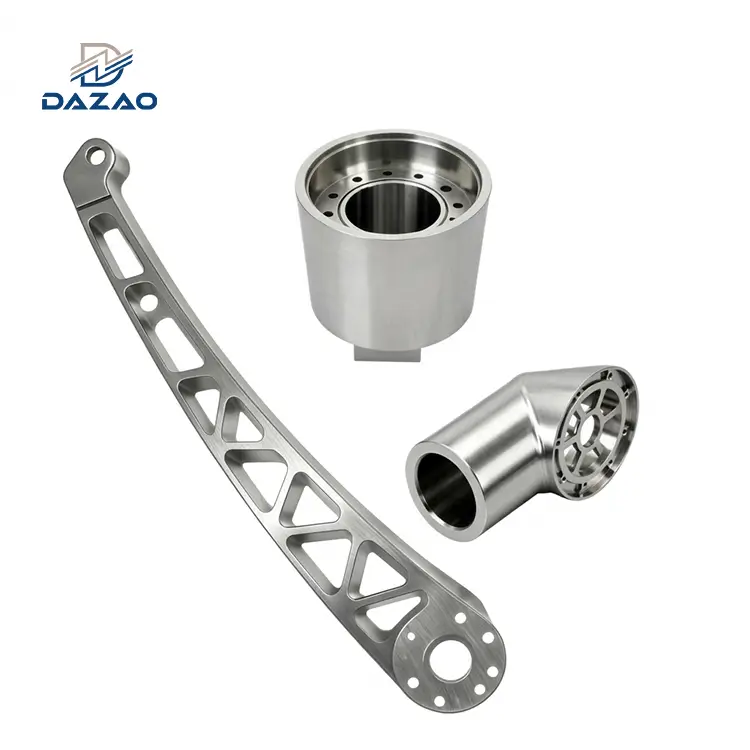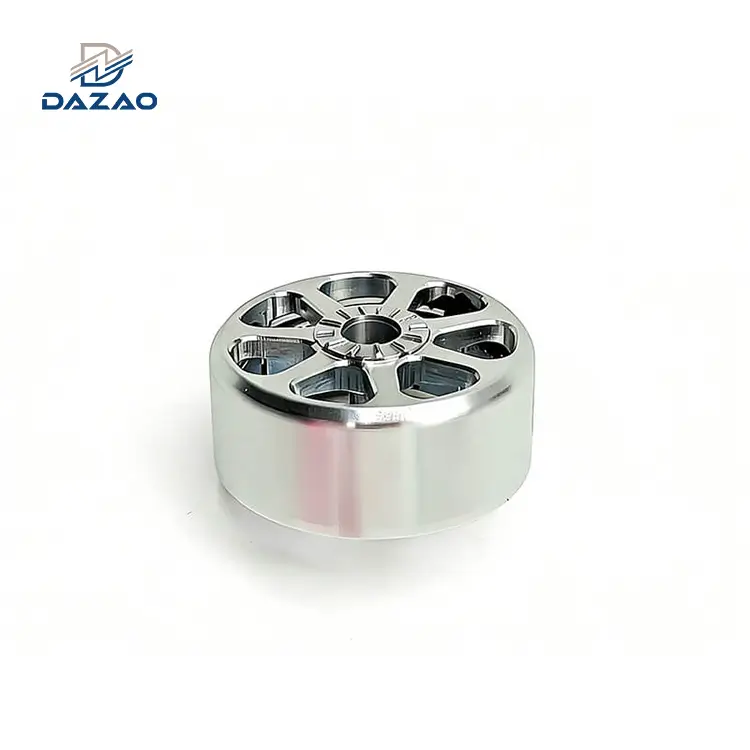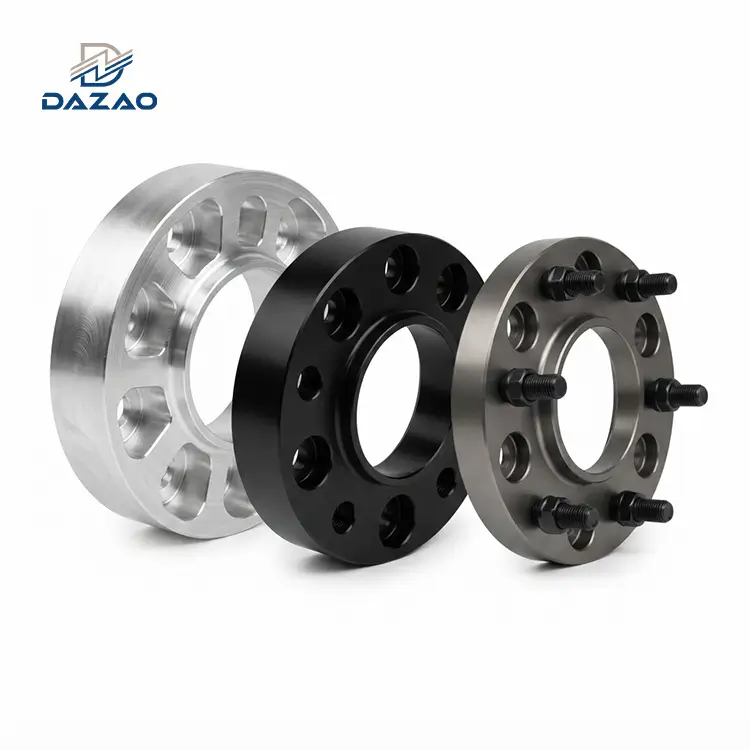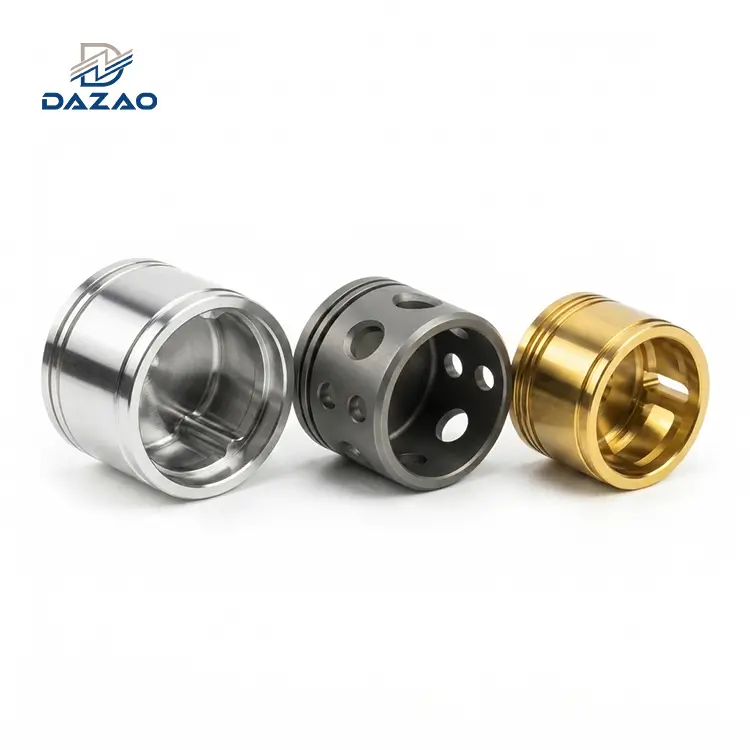

Selecting automotive aluminum requires balancing yield strength, cyclic fatigue limits, thermal conductivity, and microstructural stability. For structural aluminum parts for electric vehicles, 6061-T6 and 6082-T6 extrusions paired with precision CNC aluminum automotive parts machining provide the baseline for battery trays and motor housings. High-stress aluminum suspension parts demand forged 6082-T6 or billet 7075-T6, while high-volume aluminum engine components rely on cast A380 or heat-treated A356-T6. Machining thin-wall EV enclosures requires controlled roughing-finishing cycles and post-machining stress relief to maintain geometric sealing flatness within 0.05 mm across spans exceeding 1000 mm.
Automotive Aluminum Materials in Modern Lightweighting: Structural Evolution from ICE to EV Platforms
The integration of automotive aluminum has shifted from basic mass reduction to multi-physics functional optimization. Modern vehicle architectures require structural metals to simultaneously manage mechanical loads, dissipate thermal energy from power electronics, provide electromagnetic interference (EMI) attenuation, and maintain structural integrity during crash events.
Multi-Physics Performance Requirements: Battery Electric Vehicles (BEV) vs. Powertrain Systems
Material requirements diverge significantly across propulsion architectures:
· Internal Combustion Powertrains: Focus on elevated-temperature fatigue strength, continuous resistance to hydrocarbon exposure, and acoustic damping under harmonic vibration. Components such as cylinder blocks, transmission cases, and alternator brackets operate in thermal regimes ranging from 90°C to 220°C, requiring dimensional stability under sustained thermal cycling.
· Electric Vehicle (EV) Architectures: Prioritize stiffness-to-weight ratios to offset 400 kg to 700 kg battery packs, high thermal conductivity for liquid-cooled thermal plates, and strict hermetic sealing. An aluminum battery housing or aluminum motor housing must sustain IP67 and IP68 ingress protection ratings under severe torsional body flex, while also acting as an EMI shield against inverter switching frequencies exceeding 20 kHz.
Manufacturing Route Spectrum: Precision CNC Machining, Extrusion, Casting, and Forging
Achieving the required mechanical performance across prototype, low-volume, and mass-production phases demands distinct processing routes:
1. 5-Axis CNC Precision Machining: Serves as the primary fabrication method for prototypes, low-volume performance platforms, and high-precision post-processing of cast and forged blanks. Leveraging an established aluminum CNC machining guide protocols enables prototype validation without expensive initial tooling investments, holding GD&T tolerances down to ±0.010 mm.
2. Extrusion and Hydroforming: The foundation for longitudinal chassis rails, side sills, and battery pack side frames. Profile designs feature internal multi-cell webs engineered to buckle predictably under axial impact forces.
3. High-Pressure Die Casting (HPDC) and Giga-Casting: Dominates high-volume structural production by consolidating multi-piece stamped sheet assemblies into single-piece rear underbodies and shock towers using specialized ductile aluminum alloys.
4. Closed-Die Precision Forging: Reserved for safety-critical aluminum chassis components subject to severe multidirectional cyclic stress, including suspension control arms, wheel hubs, and steering knuckles.
At the Dazao production facility, manufacturing automotive components requires addressing the metallurgical state of raw stock prior to cutting. Relieving residual stress, optimizing grain boundary orientations, and applying precise feed rates per tooth prevent unexpected dimensional shifting during final assembly.
Automotive Aluminum Alloys Selection Matrix: Wrought vs. Cast Material Properties
Selecting the best aluminum alloy for automotive parts requires evaluating yield strength, elongation at break, corrosion behavior in road-salt environments, and high-speed machinability.

Wrought Aluminum Automotive Parts: In-Depth Evaluation of 5xxx, 6xxx, and 7xxx Series
5xxx Series (Al-Mg System: 5052, 5083)
Non-heat-treatable alloys strengthened via solid solution and cold working.
· 5052-H32: Offers exceptional resistance to chloride-induced corrosion and high fatigue strength (115 MPa reverse bending limit). Common in sheet metal underbody skid plates and deep-drawn fluid reservoirs.
· 5083-H111: Features high magnesium content (4.0% to 4.9% Mg), providing superior weldability and energy absorption. Used in welded battery pack base trays and impact-resistant bus chassis structures.
6xxx Series (Al-Mg-Si System: 6061, 6082, 6063)
Precipitation-hardened alloys that serve as the industry standard for CNC aluminum automotive parts and structural frame extrusions.
· 6061-T6: Yield strength ≥ 276 MPa, ultimate tensile strength ≥ 310 MPa. Fine dispersion of Mg2Si precipitates ensures excellent chip formation during high-speed milling. Following standardized 6061 aluminum CNC machining guidelines allows machinists to achieve surface finishes down to Ra 0.8 µm while preventing chip bird-nesting on high-speed spindles. Used for structural aluminum automotive brackets, sensor enclosures, and fluid distribution manifolds.
· 6082-T6: European standard for structural applications, delivering 10% to 15% higher yield strength (≥ 310 MPa) and superior impact toughness compared to 6061. The standard choice for aluminum suspension parts, subframe mounting links, and tow hooks.
· 6063-T6: Lower strength (yield ≥ 170 MPa) but superior extrudability and surface quality. Reviewing specialized 6063 aluminum machining practices helps engineering teams maintain precise wall thicknesses on intricate multi-void liquid cooling profiles and battery pack perimeter crash barriers.
7xxx Series (Al-Zn-Mg-Cu System: 7075)
Ultra-high-strength aerospace-grade material utilized where mass reduction is the primary engineering constraint.
· 7075-T6: Yield strength exceeds 500 MPa with an ultimate tensile strength of 570 MPa, matching or exceeding structural mild steels at one-third the density. Applied in racing suspension uprights, high-load camber arms, and differential mounting brackets. Incorporating proven 7075 aluminum CNC machining techniques prevents localized stress concentration during deep pocketing operations on high-load suspension uprights.
· Engineering Constraint: 7075-T6 exhibits susceptibility to stress corrosion cracking (SCC) along grain boundaries under sustained tensile stress and corrosive environments. It is not fusion weldable and requires hard anodizing or conversion coatings when exposed to road spray.
Cast Aluminum Automotive Parts: A380 vs. A356-T6 Structural Integrity and Fluidity
· A380 / ADC12 (Al-Si-Cu System): High-pressure die-casting alloy with high fluidity and dimensional stability. Silicon content (7.5% to 9.5%) aids mold filling for thin-walled parts, while copper (3.0% to 4.0%) increases hardness and machinability. Adopting advanced cast aluminum CNC machining procedures minimizes tool wear caused by hard silicon inclusions in A380 and ADC12 die castings. Used for timing chain covers, gearbox housings, and small e-drive motor enclosures.
· A356 / AlSi7Mg0.3 (Al-Si-Mg System): Low-pressure permanent mold casting alloy. When treated to the T6 temper (solution heat-treated, quenched, and artificially aged), elongation reaches 6% to 10% with a yield strength ≥ 205 MPa. Used for cast aluminum automotive parts requiring impact energy absorption, such as steering knuckles, subframe nodes, and road wheels.
Mechanical and Thermal Performance Matrix for Automotive Aluminum Alloys
|
Alloy & Temper |
Form |
Yield Strength (MPa) |
Ultimate Tensile Strength (MPa) |
Elongation at Break (%) |
Thermal Conductivity (W/m·K) |
Machinability Rating (Index 1-100) |
Primary Automotive Application |
|
5052-H32 |
Wrought Sheet |
195 |
230 |
12 |
138 |
55 (Gummy) |
Underbody shields, fuel tanks |
|
6061-T6 |
Wrought Billet/Plate |
276 |
310 |
12 |
167 |
85 (Excellent) |
CNC machined automotive parts, brackets |
|
6082-T6 |
Wrought Extrusion/Bar |
310 |
340 |
10 |
170 |
80 (Good) |
Suspension links, chassis crossmembers |
|
6063-T6 |
Extruded Profile |
170 |
215 |
12 |
200 |
70 (Moderate) |
Battery cold plates, crash boxes |
|
7075-T6 |
Wrought Billet/Plate |
503 |
572 |
11 |
130 |
75 (Short Chips) |
High-load suspension uprights, motorsport hubs |
|
A380 (As Cast) |
High-Pressure Die Cast |
160 |
330 |
3.5 |
96 |
70 (Abrasive) |
Engine covers, transaxle casings |
|
A356-T6 |
Low-Pressure Cast |
205 |
290 |
8 |
150 |
75 (Uniform) |
Steering knuckles, suspension subframes |
Automotive Aluminum Components: Systems Breakdown and Manufacturing Process Matching
Selecting the appropriate material and fabrication process requires aligning component functional dynamics with manufacturing physics.

Aluminum EV Components: Aluminum Battery Housing and Liquid-Cooled Motor Enclosures
Aluminum Battery Housing
Battery enclosures serve as the primary structural floor of modern EV platforms while protecting cells against mechanical intrusion and thermal runaway events.
· Material Strategy: Perimeter frames utilize hollow multi-chamber automotive aluminum extrusion profiles in 6063-T6 or 6082-T6, welded via Friction Stir Welding (FSW) to minimize heat-affected zone (HAZ) degradation. The bottom enclosure pan uses 5083-H111 sheet for puncture resistance.
· Machining Challenges: Top and bottom mating flanges require post-weld high-precision 5-axis CNC milling services to establish a continuous sealing surface with a flatness tolerance of ≤ 0.05 mm across spans of 1500 mm to 2000 mm, preventing silicone gasket blowouts under internal pressure pulses.
Aluminum Motor Housing and Inverter Enclosures
High-power traction motor stators generate thermal flux densities exceeding 10 W/cm², requiring integrated fluid-cooling jackets.
· Design & Material: Monolithic 6061-T6 billet or low-pressure cast A356-T6 featuring continuous internal helical coolant channels.
· Machining Tolerances: Stator bore inner diameters require machining to ISO H7 tolerance limits (typically +0.025/-0.000 mm) with roundness and cylindricity maintained within 0.008 mm. This prevents bearing misalignment and air-gap variations under rotational speeds exceeding 18,000 RPM.
Dynamic Aluminum Suspension Parts and Aluminum Chassis Components Under Cyclic Stress
Aluminum Suspension Parts and Control Arms
Suspension links endure combined cyclic loads consisting of high-frequency road vibrations and extreme shock inputs from curb strikes.
· Material Selection: Closed-die forged 6082-T6 for high-volume vehicles; 5-axis milled 7075-T6 billet for low-volume performance applications.
· Engineering Parameters: Control arm ball-joint bores and bushing seats require internal surface roughness of Ra ≤ 0.4 µm to prevent fretting wear and micro-crack initiation during dynamic suspension articulation.
Aluminum Chassis Components and Steering Knuckles
· Structural Mechanics: Knuckles must maintain high camber and toe stiffness under high-g cornering loads without catastrophic brittle fracture during lateral impacts.
· Process Matching: Cast A356-T6 or forged 6082-T6 components undergo multi-axis CNC milling to machine precise caliper mounting bosses, wheel bearing bores, and tie-rod attachment tapers. Tool paths must blend internal fillet radii (minimum R 3.0 mm) to eliminate localized stress risers.
Aluminum Engine Components and High-Precision Aluminum Automotive Brackets
Aluminum Engine Components
· Cylinder Heads & Engine Blocks: A356-T6 or semi-solid formed aluminum alloys engineered to maintain fatigue resistance under peak cylinder combustion pressures reaching 180 bar.
· CNC Valve Seat and Guide Machining: High-speed PCD (polycrystalline diamond) reaming and circular interpolation cutting to achieve valve seat concentricity within 0.012 mm relative to the guide bore centerline.
Aluminum Automotive Brackets and Housings
· Engine Mount & Accessory Brackets: Cast ADC12 or CNC machined 6061-T6 brackets designed through structural topology optimization. Rib thickness, wall-taper transitions, and bolt-boss standoffs are proportioned to shift the component natural resonance frequencies above 400 Hz, isolating the vehicle cabin from powertrain NVH (Noise, Harshness, and Vibration).
CNC Aluminum Automotive Parts Manufacturing: 3 Critical Shop-Floor Engineering Pitfalls
Engineering textbooks and online material selectors typically assume homogenous isotropic materials and idealized geometries. In actual production at Dazao, transforming raw automotive aluminum materials into functional assemblies reveals severe physical failure modes if structural mechanics and thermal dynamics are ignored.

Pitfall 1: Residual Stress Release and Warping in Thin-Wall Aluminum Automotive Housings
Large-footprint aluminum EV components, such as inverter heat sinks and transmission covers, often demand up to 85% volumetric material removal from solid 6061-T6 wrought plate.
· The Physical Failure Mechanism: Cold-rolled and solution-treated 6000-series plate contains deep internal residual stress gradients. Asymmetric high-speed tool paths remove outer surface material, disrupting the internal mechanical equilibrium. When the vacuum or mechanical clamp is released post-machining, the part exhibits non-linear warping, known as the potato chip effect. Perimeter sealing faces deflect by 0.50 mm to 2.50 mm, destroying the baseline 0.05 mm flatness required for IP67/IP68 elastomeric gasket compression.
· The Practical Dazao Solution:
1. Two-Stage Roughing: Rough-mill all pockets and outer profiles leaving a uniform 1.50 mm finishing allowance on all surfaces.
2. Thermal Stress Relief & Cryogenic Stabilization: Subject the semi-machined parts to a thermal cycle (heating to 160°C for 3 hours, followed by controlled air cooling, and intermediate sub-zero stabilization at -40°C). This redistributes internal lattice dislocations without dropping the T6 temper hardness below 95 HBW.
3. Finishing Passes with Dynamic Fixturing: Execute final high-speed skim cuts (spindle speed > 14,000 RPM, low radial depth of cut ae ≤ 0.20 mm) using custom vacuum chucks with distributed holding force, preventing mechanical clamp-induced elastic deflection.
Pitfall 2: Galvanic Corrosion and Anodizing Micro-Cracking in Aluminum Suspension Parts
Aluminum suspension parts and structural aluminum chassis components require high-strength threaded connections to attach steel ball joints, subframe bolts, and sensor brackets.
· The Physical Failure Mechanism: To prevent thread stripping in soft 6082-T6 or 7075-T6 aluminum, engineers frequently install stainless steel or carbon steel wire thread inserts (Helicoils or Keenserts). When exposed to wet, salted road conditions (aqueous NaCl electrolyte), the standard electrode potential differential between aluminum (-1.66 V vs. SHE) and steel (-0.44 V vs. SHE) creates an active galvanic cell. The aluminum parent material surrounding the steel insert experiences rapid pitting corrosion, leading to complete thread pull-out under dynamic shock loads. Additionally, applying thick (> 50 µm) Type III hard anodizing to prevent wear creates micro-cracks in the brittle aluminum oxide layer, reducing the base alloy fatigue limit by up to 30%.
· The Practical Dazao Solution:
1. Galvanic Isolation: Specify zinc-nickel (Zn-Ni) plated steel inserts coated with an organic barrier sealant, or transition to high-strength titanium (Ti-6Al-4V) hardware to minimize the electrochemical potential gap.
2. Controlled Anodizing Parameters: Specify certified automotive hardcoat anodizing surface finishing with coating thickness limited strictly to 25 to 30 µm on dynamic suspension mounts, followed by hot nickel acetate or PTFE sealing to fill microscopic surface fissures and preserve cyclic fatigue resistance.
Pitfall 3: Metallurgical Disconnect When Transitioning from CNC Billet to Automotive Aluminum Casting
During initial R&D, structural fluid manifolds, oil filter adapters, and aluminum motor housing prototypes are machined from solid wrought 6061-T6 billet. When moving to high-volume production, procurement teams switch directly to high-pressure die cast (HPDC) A380 or ADC12.
· The Physical Failure Mechanism: Wrought 6061-T6 possesses uniform grain flow, zero internal gas porosity, and isotropic tensile strength (elongation 12%). Prototypes easily pass 10 bar hydraulic burst tests and 2,000,000-cycle pressure pulsation testing. However, standard HPDC cast parts suffer from internal gas entrapment, dendritic segregation, and thermal shrinkage porosity at thick-to-thin section intersections. When subjected to the same pressure pulses, the cast components develop micro-fractures along internal knit lines, resulting in catastrophic fluid leakage at pressure ports.
· The Practical Dazao Solution:
1. DFM-Driven Prototype Modeling: Design the initial CNC billet prototype with uniform nominal wall thicknesses (3.0 mm to 4.5 mm), internal draft angles (1.5° to 3.0°), and continuous fillet radii (R ≥ 3.0 mm), mimicking die-casting flow constraints rather than using blocky prismatic geometry.
2. Intermediary Tooling Validation: For low-volume validation (50 to 500 units), utilize low-pressure gravity sand casting or semi-solid rheocasting using A356-T6 alloy. This matches the metallurgical density and structural ductility of mass-production castings before cutting expensive HPDC steel tooling.
Process Economics and Volume Break-Even: CNC Machined Automotive Parts vs. Extrusion and Casting
Selecting the optimal production method for aluminum automotive components depends on production volumes, dimensional tolerances, structural loads, and initial non-recurring engineering (NRE) capital expenditure.

Technical and Capital Expenditure Metrics Across Automotive Manufacturing Routes
|
Manufacturing Method |
Tooling Investment (NRE) |
Typical Lead Time |
Achievable Tolerance (mm) |
Surface Roughness (Ra) |
Structural Density & Integrity |
Best Part Geometries |
|
5-Axis CNC Machining |
Zero ($0) |
3 - 10 Days |
±0.005 to ±0.025 |
0.4 - 1.6 µm |
100% (Solid wrought billet, zero voids) |
CNC machined automotive parts, complex housings, brackets |
|
Aluminum Extrusion + CNC |
Low ($2,000 - $8,000) |
3 - 5 Weeks |
Extrusion: ±0.30; CNC: ±0.010 |
1.6 - 3.2 µm |
High (Unidirectional grain flow) |
Battery pack frames, crash beams, seat rails |
|
High-Pressure Die Casting (HPDC) |
High ($30,000 - $150,000) |
10 - 16 Weeks |
Casting: ±0.20; CNC: ±0.015 |
1.6 - 6.3 µm |
Moderate (Risk of internal sub-surface porosity) |
Thin-wall engine covers, transmission cases |
|
Closed-Die Precision Forging |
High ($20,000 - $80,000) |
8 - 14 Weeks |
Forging: ±0.50; CNC: ±0.010 |
3.2 - 6.3 µm |
Maximum (Aligned continuous grain boundary flow) |
Steering knuckles, suspension control arms, wheel hubs |
Scalability Tiers: From Rapid CNC Prototyping to High-Volume Die Casting
· Tier 1: 1 to 500 Units (Prototyping, Specialty Vehicles, Motorsport): Full 5-axis CNC automotive aluminum parts machining directly from billet is the most cost-effective path. It avoids tooling amortizations of $30,000+ while permitting iterative design changes within 24 hours.
· Tier 2: 500 to 5,000 Units (Low-Volume EV Platforms, Luxury Trim Packages): Hybrid manufacturing delivers the lowest total cost. Utilize automotive aluminum extrusion tooling to form long, constant cross-section profiles, followed by secondary 4-axis CNC machining for mounting holes, cutouts, and mating faces.
· Tier 3: 5,000+ Units (Mass-Market Passenger Vehicles): High-pressure die casting or automated forging blanks paired with dedicated multi-spindle CNC transfer lines minimize cycle times and reduce per-part costs.
Quality Control Protocol for Automotive Aluminum Components: Dazao IATF 16949 Standards
Procuring high-reliability aluminum auto parts requires multi-level physical and chemical verification at every manufacturing stage, backed by IATF 16949:2016 quality management systems.

Raw Material Traceability: Spectroscopy and Ultrasonic Non-Destructive Testing
· Chemical Composition Verification: Optical Emission Spectroscopy (OES) testing per ASTM E1251 on every incoming material batch to verify that alloying elements (Mg, Si, Cu, Zn, Mn) fall strictly within EN 573-3 and ASTM B221 specifications.
· Internal Defect Scanning: Ultrasonic non-destructive testing (UT) per AMS-STD-2154 Class A on thick billet stock (> 50 mm thickness) to detect subsurface voids, inclusions, and shrinkage cavities before machining begins.
In-Process Machining Quality: Thermal Compensation and ISO 16232 Cleanliness
· In-Process Thermal Drift Compensation: Operating high-rigidity CNC machining centers equipped with real-time spindle and ball-screw thermal sensors. Machine coordinate systems dynamically compensate for ambient factory temperature swings of ±5°C, ensuring dimensional repeatabilities within ±0.005 mm.
· Fluid Channel Cleanliness Testing: Inspecting internal cooling galleries of battery cold plates and inverter housings according to VDA 19 and ISO 16232 standards. Liquid extraction and gravimetric membrane analysis ensure residual particulate size does not exceed 200 µm, preventing electric water pump seizure.
Final Inspection: CMM Dimensional Metrology and Helium Mass Spectrometry Leak Detection
· GD&T Dimensional Inspection: Verified through certified coordinate measuring machine inspection protocols using Zeiss high-precision CMM scanning probes to validate complex freeform surface profiles, true positions, and runouts against native 3D CAD step files.
· Airtightness & Pressure Leak Testing: Dry-air differential pressure decay testing and Helium mass spectrometer leak detection (vacuum chamber method) verifying leakage rates stay below 1.0 x 10⁻⁴ mbar·l/s under 3.5 bar proof pressure on all sealed aluminum automotive housings.
· Corrosion Testing: Neutral Salt Spray (NSS) testing per ASTM B117 / ISO 9227 up to 1,000 hours to confirm zero blisterings or white rust formation on anodized, passivated, or e-coated aluminum car parts.
Strategic Procurement Roadmap: Specifying the Best Aluminum Alloy for Automotive Parts
Sourcing high-performance automotive aluminum components requires balancing material science, structural dynamics, surface chemistry, and machining mechanics:
1. Match Alloy Temper to Dynamic Stress States: Specify 6061-T6 or 6082-T6 for general structural rigidity and ease of machining. Reserve 7075-T6 strictly for high-stress suspension elements where peak yield strength is non-negotiable, and apply proper anti-corrosion barrier coatings to prevent stress corrosion cracking.
2. Design for Stress-Relief Protocols Early: When designing thin-wall EV inverter boxes and battery enclosures, incorporate symmetrical wall designs and plan for multi-stage CNC roughing and intermediate thermal stabilization to avoid uncorrectable part warping.
3. Engage DFM Engineering Early: Involve the manufacturing engineering team at Dazao before freezing production tooling designs. Adjusting fillet radii, tool approach angles, and wall transitions at the CAD stage reduces cycle times, eliminates unnecessary 5-axis setups, and prevents premature casting failure.
Frequently Asked Questions: Automotive Aluminum Machining and Sourcing
01.What is the best automotive aluminum alloy for structural crash management?
02.Why is 6061-T6 preferred over 7075-T6 for EV battery enclosures?
03.How do you prevent warping when CNC machining thin-wall aluminum automotive housings?
04.What causes pressure test failures when switching from CNC prototypes to cast aluminum parts?
05.Can automotive aluminum suspension parts be welded after CNC machining?
06.What surface treatment provides the best corrosion resistance for aluminum auto parts exposed to road salt?