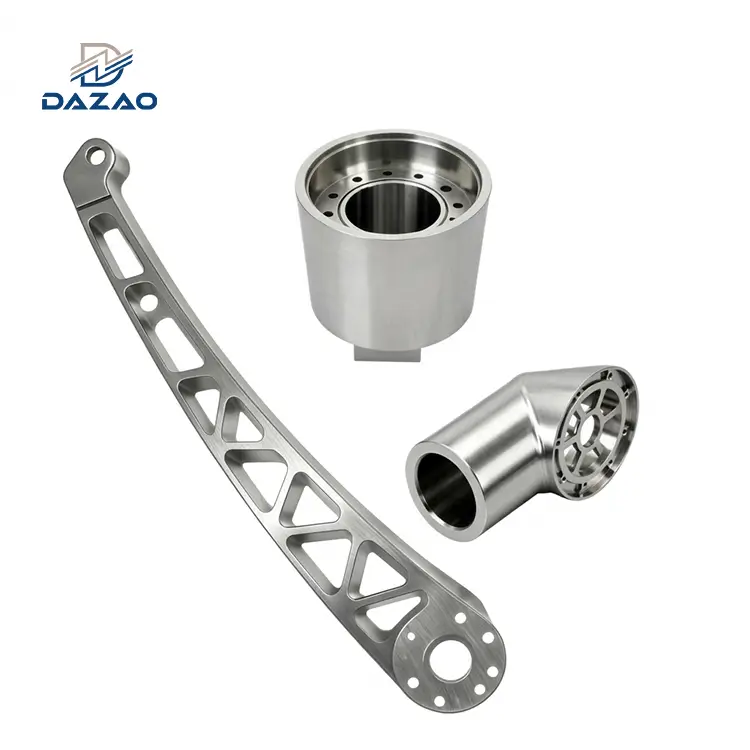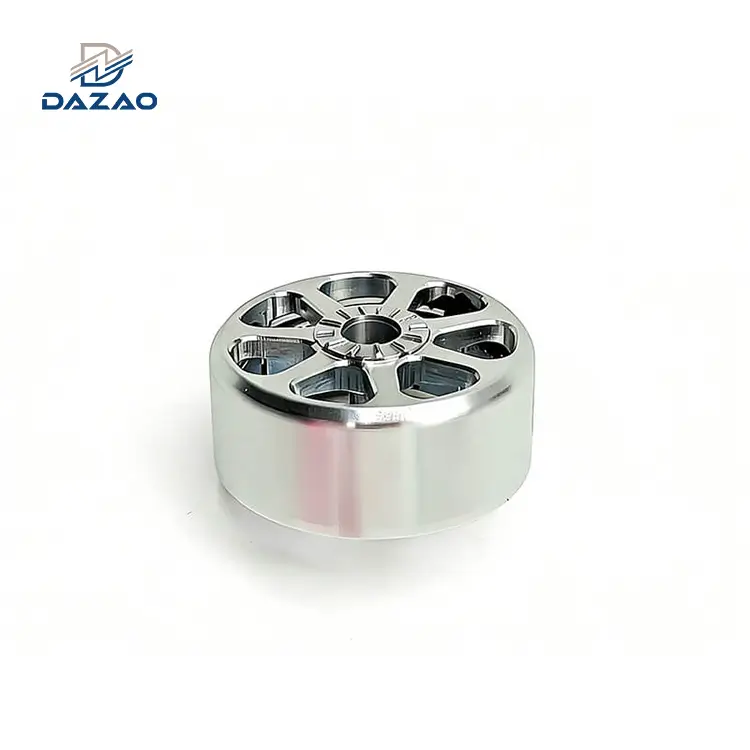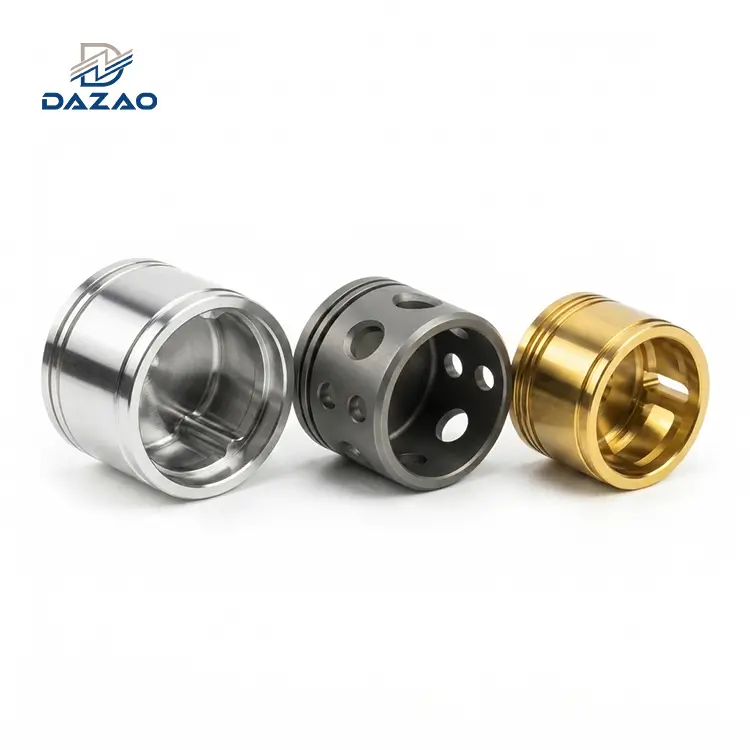

Surface integrity in food processing equipment represents the primary defense against bacterial colonization and chemical degradation. While many procurement teams focus on material grade alone, the mechanical state of a finished component dictates its long term safety and compliance profile. At Xiamen Dazao Machinery, our engineering protocols for food grade stainless steel machining prioritize the micro-topography of the part to ensure total hygiene.
Why 316 Stainless Steel is Essential for High Acid Food Processing?
The selection of AISI 316 over AISI 304 is non-negotiable in environments involving high salinity, acetic acid, or aggressive Clean-in-Place (CIP) chemicals. The inclusion of 2.0 to 3.0 percent Molybdenum (Mo) provides a fundamental resistance to pitting and crevice corrosion.
Chemical Resistance and Pitting Protection
The following table outlines the technical differences that impact the service life of NSF compliant parts in corrosive food environments.
|
Element / Property |
AISI 304 Stainless Steel |
AISI 316 Stainless Steel |
Impact on Food Safety |
|
Chromium (Cr) |
18.0 to 20.0% |
16.0 to 18.0% |
Passivation layer formation |
|
Nickel (Ni) |
8.0 to 10.5% |
10.0 to 14.0% |
Austenitic stability and ductility |
|
Molybdenum (Mo) |
0% |
2.0 to 3.0% |
Resistance to chloride-induced pitting |
|
Pitting Resistance (PREN) |
~19 |
~25 |
Higher value equals better durability |
|
Max Temp (Continuous) |
870°C |
925°C |
Thermal stability during steam cleaning |
Standard 304 stainless steel often fails when exposed to the high concentration of sodium chloride found in meat processing or the high acidity in citrus juice production. Dazao utilizes 316L variants to prevent carbide precipitation during any high-heat machining processes, maintaining the structural integrity of the material matrix.

Electropolishing Services: Solving the Biofilm Problem at a Molecular Level
Mechanical polishing, even when achieving a low Ra (Roughness Average) value, often leaves the surface compromised at a microscopic level. Traditional abrasive methods push, smear, and tear the metal surface, creating microscopic overhangs and burying contaminants.
Electropolishing services provide a superior alternative by utilizing an electrochemical process to remove the outer layer of the metal. This results in a featureless, smoothed surface where the peaks are dissolved faster than the valleys.
Beyond Mechanical Grinding: The Passivation Advantage
By removing the iron from the surface and concentrating the Chromium, electropolishing significantly improves the chrome-to-iron ratio. This produces a thicker, more uniform passive layer of chromium oxide.
1.Burr Removal: It eliminates microscopic burrs that can break off into the food stream.
2.Stress Relief: The process removes surface stresses induced during food grade stainless steel machining.
3.Surface Energy Reduction: A smoother surface at the molecular level reduces the adhesion of proteins and fats, making the cleaning cycles significantly more effective.

Overcoming Hidden Engineering Failures in Food Grade Component Manufacturing
Most manufacturers discuss surface finish in general terms. However, three specific technical failures often occur when the machining and finishing processes are not synchronized.
The Micro Fold Trap: Why Ra 0.8 is Not Always Enough?
A common error in the industry is relying solely on a profilometer reading. A part may have an Ra of 0.4μm but still contain micro-folds. These are tiny laps of metal created by a dull CNC insert or incorrect chip load. These folds act as bunkers for bacteria like Listeria, shielding them from chemical sanitizers.
Dazao employs specific tool geometry and high-pressure coolant systems to prevent metal smearing. By following this with electropolishing, we chemically dissolve these micro-folds, ensuring that the surface is not just smooth, but also microscopically open and accessible to cleaning agents.
Residual Stress and the Risk of Stress Corrosion Cracking
High-speed milling of 316 stainless steel generates significant heat. If the machining parameters are not optimized, the material undergoes work hardening. This creates a gradient of residual stress within the first 0.05mm of the surface.
In food production lines subject to vibration and thermal cycling, this residual stress can trigger stress corrosion cracking. Dazao mitigates this by using specialized tool paths that minimize heat transfer into the workpiece. This ensures that the finished part maintains its metallurgical properties throughout its lifecycle.
Maintaining Precision Tolerances During Electrochemical Removal
Electropolishing is an aggressive material removal process. A standard cycle may remove 0.01mm to 0.03mm of material from all exposed surfaces. In many cases, this leads to the failure of precision threads or bearing fits, causing leaks in pressurized food lines.
Dazao solves this through pre-calculated offset machining. Our engineers calculate the exact material loss anticipated during the electropolishing services and adjust the initial CNC program to leave a specific amount of over-sized stock. The result is a part that meets the ±0.01mm tolerance requirements while possessing a high-purity finish.

Procurement Checklist: Auditing Suppliers for 316 SS and Surface Integrity
For a CPO or Project Manager, identifying a reliable supplier for NSF compliant parts requires looking beyond the price per unit. Use the following criteria to audit potential partners:
· Tooling Specialization: Does the factory use dedicated inserts for 316 stainless to avoid cross-contamination from carbon steel?
· Electropolishing Verification: Can the supplier provide a B912 compliance report or salt spray test data?
· Surface Topography Equipment: Does the supplier use advanced profilometers for high-criticality parts?
· Coolant Management: Is the coolant filtered and pH-monitored to prevent the embedding of fine particles during the machining phase?
Xiamen Dazao Machinery maintains an ISO9001:2015 certified environment where every batch of food grade components undergoes a dimensional inspection and surface energy verification.
Conclusion: Ensuring Long Term Compliance
The synergy between precision food grade stainless steel machining and specialized electropolishing services is the only way to guarantee the safety of high-output food processing lines. By selecting a partner like Dazao that understands the underlying physics of material stress and micro-topology, you reduce the risk of product recalls and equipment failure. Focus on the total cost of ownership: a part that is easier to clean and resistant to corrosion will always provide a higher ROI than a lower-cost, poorly finished alternative.

FAQs
01.Why is my 316 stainless steel rusting after a few months?
02.My electropolished parts no longer fit correctly. What happened?
03.Is electropolishing better than manual buffing for bacteria prevention?
04.How do I prevent galling or seizing in 316 stainless steel threads?
05.Why is Ra 0.8 surface finish sometimes not enough for food safety?
06.What is the most cost-effective way to get NSF compliant parts?