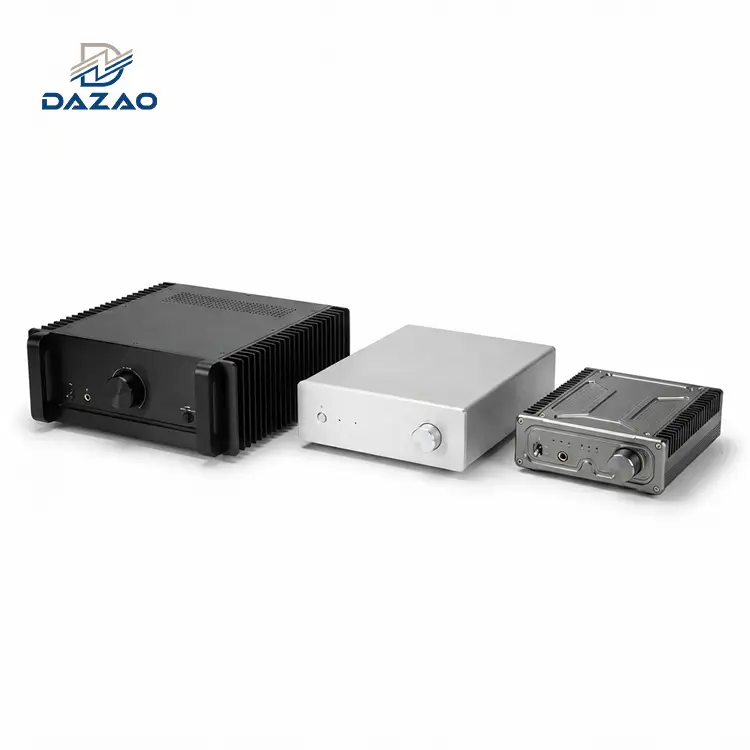
CNC Machining Aluminum Audio Amplifier Chassis Solutions
Solid-billet acoustic isolation and thermal protection engineered for premium audio hardware.
Core Engineering Features:
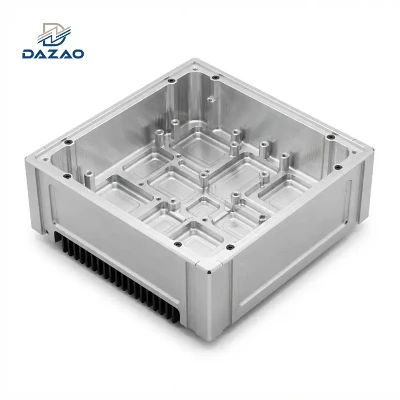
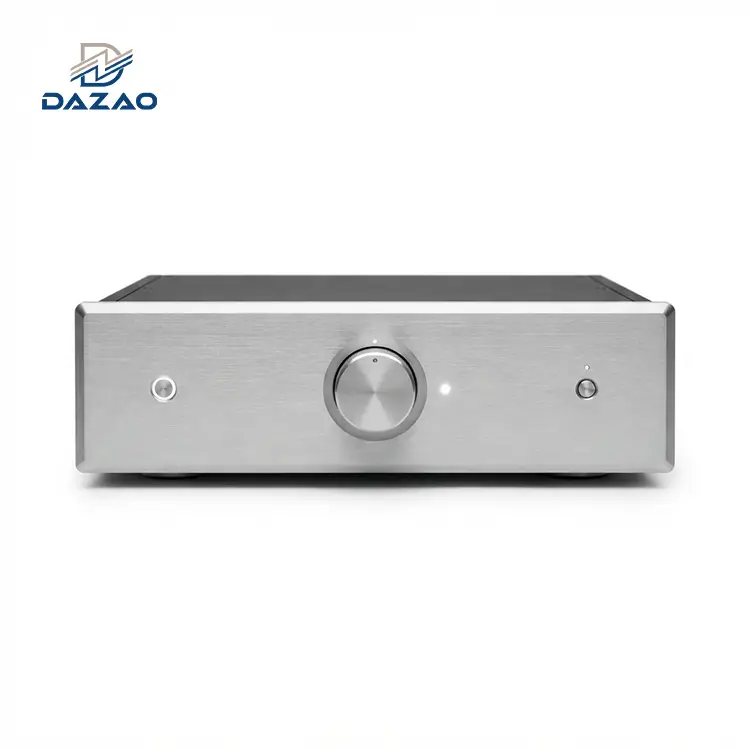
Monoblock CNC billet aluminum audio amplifier enclosure.
Front panel component alignment controlled within ±0.02mm.
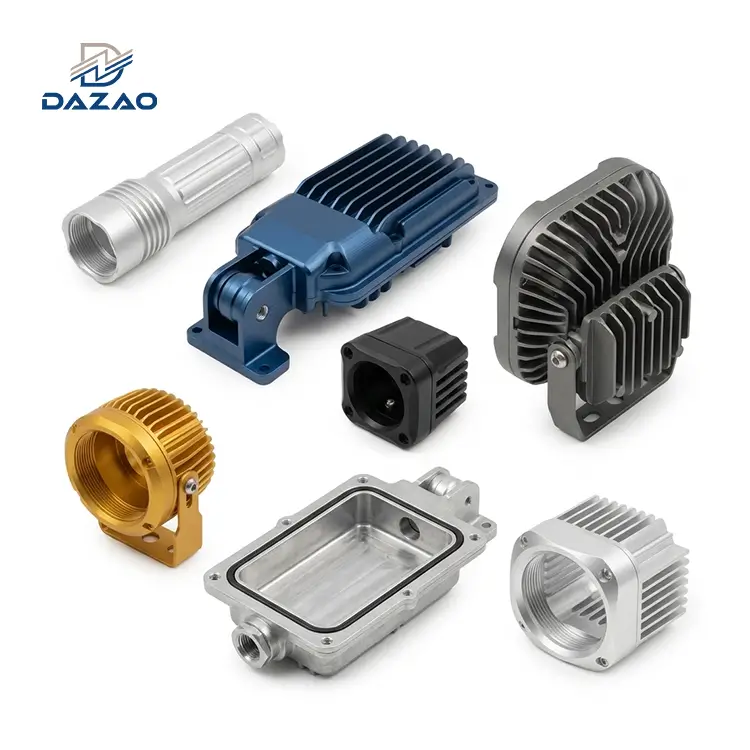
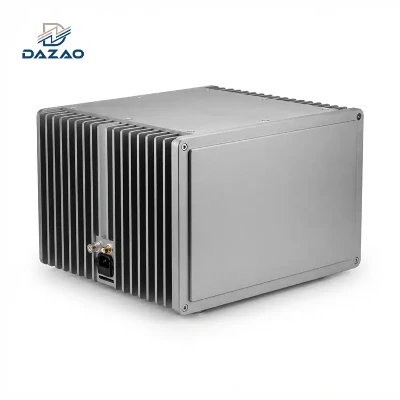
Integrated cooling fins machined for heat sink enclosures.
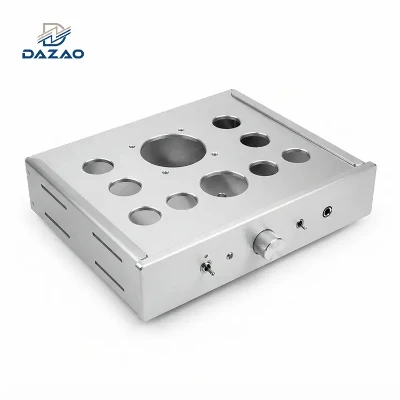
Custom aluminum tube amplifier chassis made to order.
5-day rapid prototyping with 100% mechanical DFM check.
Anodized aluminum hi fi amplifier chassis with zero MOQ.
Xiamen Dazao Machinery specializes in custom-engineered thermal and mechanical packaging for high-end audio hardware. Operating as an ISO 9001:2015 certified contract manufacturer, we utilize our advanced CNC milling service setup, including 3-axis, 4-axis, and 5-axis machining centers, to mill high-fidelity enclosures directly from solid aluminum billets.
By eliminating the assembly tolerances, structural air gaps, and acoustic dampening failures common to sheet-metal or die-cast enclosures, our parts provide stable grounding, mechanical isolation, and optimized thermal dissipation. We support industrial audio brands, boutique tube amplifier studios, and crowdfunding engineering startups with quick-turn prototyping, first-article validation, and scalable series manufacturing.
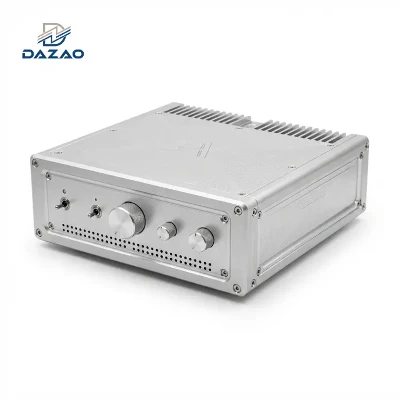
CNC Aluminum Audio Amplifier Chassis Manufacturing Capabilities
Direct milling from solid aluminum blocks to eliminate mechanical resonance and vibration.
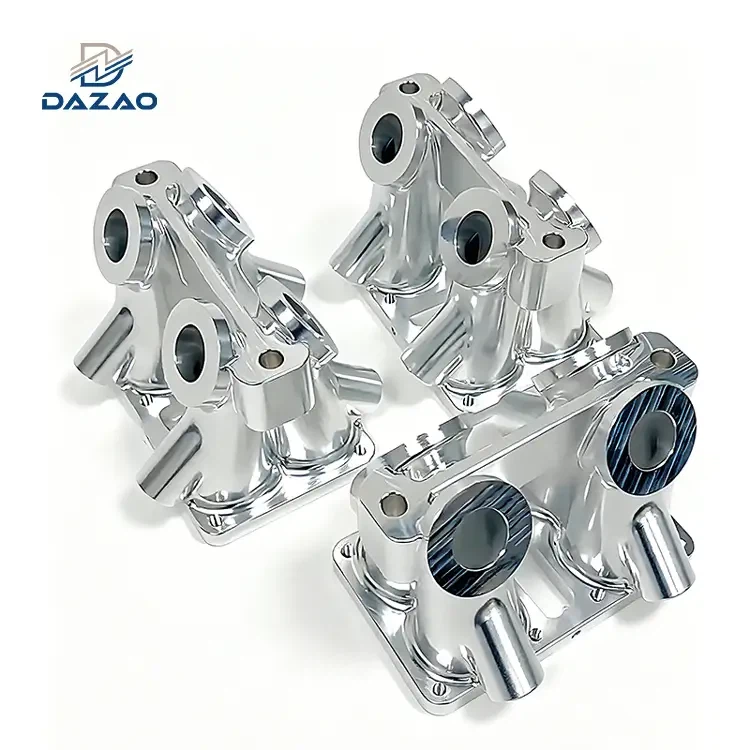
High-fidelity audio components demand structural rigidity to eliminate mechanical microphonics and acoustic coloration. Our manufacturing process centers on carving mono-cavity layouts out of solid AL6061-T6, AL6063, or AL7075-T6 aluminum blocks. This solid-wall design isolates sensitive electromagnetic stages, isolates transformers, and serves as an integrated heat sink [1]. In addition to specialized audio hardware, our production lines for CNC aluminum electronic enclosure configurations allow us to regularly machine custom billet aluminum audio amplifier enclosure designs, multi-part split-type chassis, and complex vacuum tube layouts [1]. Our production lines feature high-speed spindles and rigid workholding setups to machine deep, thin-walled cavities without structural distortion or tool vibration marks, ensuring flat mating surfaces and precise mechanical alignment.
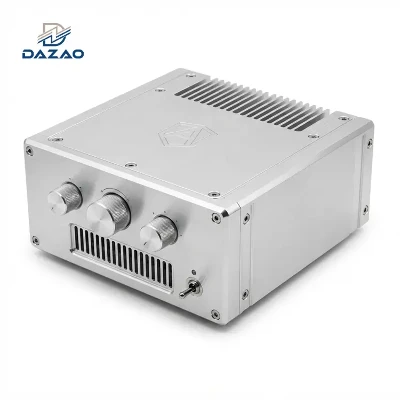
Mitigating Dimensional and Thermal Non-Conformances in Audio Chassis Production
Real-world case studies detailing how we resolve assembly stack-up and thermal warping.
To achieve reliable volume manufacturing, we have systematic solutions for common industry failure modes based on past production runs:
1. Eliminating Cumulative Tolerance Stack-Up on HiFi Front Panels
· The Issue: In an early-stage production run for a premium desktop amplifier, the client supplied separate nominal specifications for the potentiometer shafts, OLED display bezels, and RCA jacks. Although we machined individual apertures to print, cumulative assembly variations resulted in a 0.1 mm concentricity offset. This prevented smooth dial rotation, caused unequal gaps around the screen bezels, and interfered with quick-turn assembly lines.
· The Resolution: We modified our incoming print-review checklist to require physical mating components or layout drawings for all dial and display modules. Our machining standard now tightens panel-hole true position tolerances to <= 0.02 mm. Every initial production run undergoes an actual-component physical fit-up test to verify flush-mount alignment before initiating batch milling. Subsequent runs achieved a 99.8% first-pass assembly yield.
2. Thermal Warpage and Dissipation Failure in 100W Class-A Enclosures
· The Issue: A boutique audio studio contracted us to mill a 100W Class-A amplifier chassis featuring integrated base cooling fins. The initial runs suffered from high internal thermal stress. Under an 8-hour continuous thermal load, the chassis surface temperature reached 75°C, triggering a 0.08 mm structural warp in the bottom mounting plate. This warp caused uneven seating on flat surfaces and compromised the thermal paste contact layer.
· The Resolution: We established a power-matched thermal analysis review. We optimized the fin spacing, draft angle, and base-plate thickness to balance heat dissipation with mechanical rigidity. Additionally, we introduced a post-roughing stress-relief annealing cycle (180°C for 4 hours) to eliminate residual machining stresses. The updated bottom plate maintains flatness within <= 0.05 mm even under continuous peak-temperature thermal loads, keeping transistor temperatures 12°C cooler.
3. Acoustic Resonance and Chassis Vibration Noise in Segmented Stereo Frames
· The Issue: A customer reported that their multi-panel bolted stereo amplifier suffered from localized mechanical resonance when operating at low frequencies (under 120 Hz) at high volume levels. The vibration was traced back to microscopic gaps at the joints of the top cover and side panels, which were machined to standard general industrial tolerances.
· The Resolution: We transitioned the product to a monoblock billet structure machined from a single aluminum block to eliminate mechanical joints entirely. For modular designs where a multi-panel layout is required, we mill the interlocking steps to a tolerance of +/- 0.02 mm, machine internal vibration-damping polymer grooves, and include dedicated dampening pad recesses. This engineering update reduced structural resonance by more than 40%.
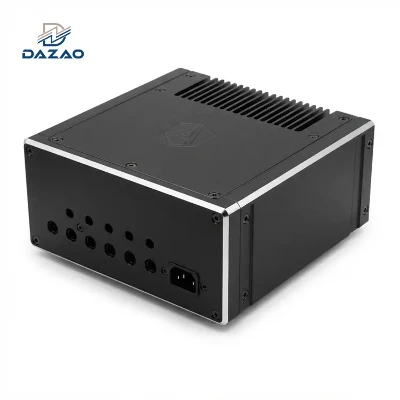
Acoustic and Thermal Engineering Standards for High-End Audio Housings
Proprietary production techniques designed to optimize acoustic purity and power dissipation.
To address the hidden mechanical issues that degrade audio signal quality, we implement three distinct engineering standards:
1. Structural Anti-Resonance Engineering
Standard enclosures assembled from thin sheets or multi-piece panels often suffer from mechanical vibrations that introduce microphonic noise into high-gain circuit stages.
· Material Integrity: We prioritize milling solid billet cavities to ensure high material density.
· Milling Control: We utilize low-stress, light-pass milling parameters to prevent micro-fissures and preserve structural dampening properties.
· Frequency Offsetting: We calculate and machine variable wall thicknesses and asymmetric internal reinforcement ribs. This shifts the natural mechanical resonance frequency of the chassis outside of the audible spectrum (20 Hz – 20 kHz).
2. Precision Front Panel Cosmetics and Alignment
The front panel serves as the primary visual and tactile interface for consumer-facing audio hardware. Our manufacturing standards target high-precision alignment and uniform cosmetics:
· Aperture Accuracy: To support companion rotary knobs and dials produced via our precision CNC turning service, we hold front-panel dial, LED, and toggle-switch aperture positions to ±0.02 mm to ensure concentric alignment with internal PCBs.
· Uniform Surface Finishes: Our linear brushing process uses automated abrasive belt systems to ensure straight, unbroken grain lines across the entire panel width. Bead blasting parameters are monitored to maintain a uniform matte surface texture.
· Color Consistency: Our anodizing processes maintain color consistency within a limit of Delta E <= 1.2 across different production runs. We utilize rear-face or interior cavity clamping points to keep all visible exterior faces free of racking marks.
3. Integrated Thermal Fin Design
Class-A amplifiers, linear power supplies, and high-output DACs generate significant heat that must be dissipated to prevent component drift and premature failure.
· Monoblock Heat Sinks: We mill cooling fins directly into the main chassis frame to eliminate the thermal interface resistance found in bolted assemblies.
· Transistor Mating Flatness: We fly-cut the transistor mounting areas to a flatness tolerance of <= 0.02 mm with a surface roughness of Ra 0.8, maximizing direct metal-to-metal thermal transfer.
· Simulation-Backed Layouts: We adjust fin spacing and aspect ratios (up to 15:1) based on expected thermal convection profiles to prevent localized heat pockets.
Performance Comparison of CNC Monoblock versus Modular Enclosure Technologies
Evaluating structural rigidity, heat transfer efficiency, and small-batch manufacturing costs.
|
Metric |
CNC Monoblock (Dazao) |
Sheet Metal Assembly |
Aluminum Die-Casting |
Extruded Profile Shell |
|
Acoustic Dampening |
Excellent (Zero joint play, thick solid walls) |
Poor (Panel vibration, joint resonance) |
Moderate (Porosity reduces dampening) |
Moderate (Open ends require plate joints) |
|
Heat Dissipation |
Excellent (Integrated fins, flat contacts) |
Poor (High thermal resistance at joints) |
Good (Integrated fins but high porosity) |
Good (Extruded fins but limited layout) |
|
Surface Finish Quality |
Excellent (Perfect brushing & anodizing) |
Moderate (Visible weld lines/rivets) |
Poor (Surface pits & flow marks) |
Moderate (Extrusion lines present) |
|
Tooling Cost & Lead Time |
None (Direct CAD-to-CNC programming) |
Low (Bending dies, fast setup) |
High (Molding tools, 30-45 days) |
Moderate (Extrusion die setup required) |
|
Design Flexibility |
Unlimited (Easily change holes or chambers) |
Limited (Restricted to uniform thickness) |
Difficult (Requires mold redesign) |
Highly Restricted (Fixed 2D cross-section) |
Aluminum Alloys and Mechanical Layout Selection Guide for Audio Assemblies
Helping hardware designers choose the optimal alloy grade and structural configuration.
1. Mechanical Material Selection
· AL6061-T6: The standard material for high-end audio enclosures. It offers balanced machinability, high structural strength, and uniform anodizing response. Best suited for main chassis blocks, internal shielding walls, and front panels.
· AL6063: Highly ductile with excellent thermal conductivity (200 W/m·K). It is ideal for chassis with deep, thin heatsink fins or high-power Class-A amplifiers. Note: Yield strength is lower than 6061, so avoid thin-walled load-bearing panels.
· AL7075-T6: High-strength aerospace alloy with strong mechanical dampening properties. Recommended for reference-grade HiFi equipment, thick turntable platters, and vibration-sensitive isolation platforms. Note: Anodizes with a slightly darker tint; dark finishes are recommended to ensure color consistency.
2. Physical Layout Styles
· Monoblock Cavity Chassis: Utilizing simultaneous 5-axis CNC machining to carve complex structures from a single block of aluminum, separating power supply, digital processing, and analog amplification stages.
· Split-Type Enclosures: Utilizes precision tongue-and-groove joints to connect a heavy-gauge faceplate, side heatsinks, and a flat cover panel. A cost-effective design for standard rack-mount and desktop hardware.
· Vacuum Tube Enclosures: Features top-panel valve base cutouts, passive convection venting slots, and internal structural mounts for heavy transformers. Optimized to manage heat from hot vacuum tubes.
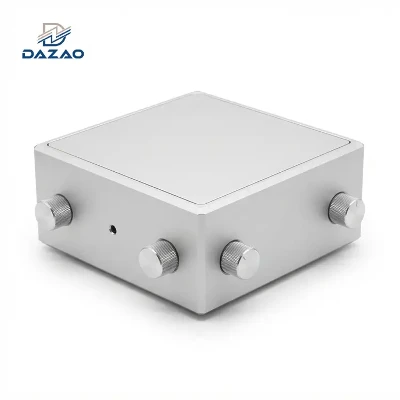
· Desktop/Portable Form-Factors: Lightweight, thin-walled enclosures for portable DACs, headphone amplifiers, and digital streamers, featuring complex internal pockets for compact PCBs.
Mechanical Specifications and Dimensional Tolerances of Milled Enclosures
Hard engineering parameters and limits of our multi-axis CNC milling centers.
The table below outlines the mechanical tolerance budgets, raw material properties, and operational configurations applied during the production of our premium CNC aluminum parts and custom enclosures.
|
Feature |
Production Capability |
|
Standard Material Grades |
AL6061-T6, AL6063-T5/T6, AL7075-T6, AL5052 |
|
Maximum Machining Envelope |
800 mm x 600 mm x 200 mm |
|
Dimensional Tolerances |
+/- 0.02 mm standard; down to +/- 0.01 mm for critical positions |
|
Front Panel Flatness |
<= 0.05 mm over 400 mm |
|
Surface Finish Roughness |
Machined: Ra 0.8 to Ra 1.6; Ground: Ra 0.4 to Ra 0.8 |
|
Aspect Ratio (Fins) |
Up to 15:1 utilizing multi-pass reciprocating tooling |
|
Anodizing Specification |
Type II Protective (10-15 μm), Type III Hardcoat (30-50 μm) |
|
Aperture Position Accuracy |
Dial & display mounting alignment within +/- 0.02 mm |
|
Acceptable File Formats |
STEP, IGS, Parasolid (x_t), 2D PDF with tolerance callouts |
In-Process Quality Control and Dimensional Verification Protocols
Advanced metrology, FAI assembly testing, and structural inspections for zero-defect shipments.
We monitor dimensions and surface finishes throughout the production run:
1. Material Verification: Every batch of aluminum is verified using spectrometer testing to confirm alloy composition and mechanical properties before release to production.
2. First Article Inspection (FAI): Prior to initiating batch production, we perform a complete dimensional run on the first unit off the machine. This includes mounting the actual knobs, potentiometers, screens, and jacks to verify the layout.
3. In-Process Dimensional Auditing: Machine operators perform micrometer and gauge inspections every 10 parts to monitor tool wear.
4. CMM Dimensional Verification: We use Coordinate Measuring Machines (CMM) to verify the flatness, parallel alignment, and concentricity of internal shielding pockets.
5. Cosmetic Inspection: Every anodized chassis undergoes inspection under a 1200-lux light bar to check for color variation, handling marks, or anodizing spots.
6. Secure Export Packaging: Finished enclosures are protected with custom-cut PE protective film, packed in individual shock-absorbing foam inserts, and shipped in heavy-duty wooden crates to prevent transit scratches.
Performance Trade-Offs: Structural Advantages and Constraints of Billet Machining
An objective engineering analysis of acoustic dampening gains versus subtractive fabrication costs.
Advantages:
· Excellent Structural Acoustic Dampening: Monoblock billet construction eliminates panel joints, rivets, and micro-gaps. This high-density, rigid frame shifts natural resonant frequencies out of the audible spectrum, preventing mechanical microphonics in high-gain circuit stages.
· Low Thermal Interface Resistance: Machining cooling fins directly into the chassis base eliminates the contact thermal resistance of bolted-on heat sinks. Fly-cutting power transistor mounting faces to a flatness of ≤0.02mm ensures maximum thermal contact.
· Superior EMI and RFI Isolation: Thick, machined internal partition walls serve as physical Faraday cages. This setup shields sensitive analog sections from high-frequency noise generated by adjacent switching power supplies or digital clock lines.
· Accurate Component Fitment: Tight panel-hole tolerances of ±0.02mm eliminate cumulative tolerance stack-up during assembly. This ensures that volume dials, display bezels, and connectors align cleanly without physical binding or unequal spacing.
Limitations:
· High Material Waste and Machining Cost: Pocketing solid aluminum blocks often converts over 80% of the raw billet into scrap chips. This high waste factor, paired with long spindle runtimes, makes billet chassis far more expensive than sheet-metal enclosures.
· Significant Weight Penalty: Heavy-walled monoblock designs add substantial weight to the finished product. While helpful for dampening desktop vibrations, this mass increases international logistics fees and puts extra stress on equipment rack ears.
· Tool Access and Internal Radius Constraints: CNC milling cannot cut sharp, square 90° inside vertical corners. Designers must accommodate internal corner fillets left by the radius of the cutting tools, which can slightly reduce internal layout packaging density.
· Vulnerability to Handling Scuffs: Brushed and anodized cosmetic faces are highly sensitive to scratching during board installation or system integration. Any deep surface damage usually requires stripping, graining, and re-anodizing the entire part, as field touch-ups are impractical.
Primary Industrial Applications for Precision-Milled Audio Enclosures
Engineered enclosures protecting sensitive electronics from consumer audio to studio hardware.
We produce custom enclosures for five primary commercial audio sectors:
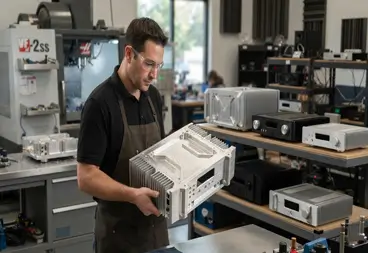
High-End Consumer HiFi & Audiophile Hardware
Monoblock DAC housings, stereo preamplifiers, and mono-power amplifiers.
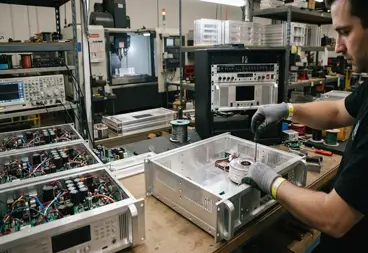
Professional Studio Hardware
Standard 1U/2U/4U rackmount signal processors, active crossovers, and monitor control units.
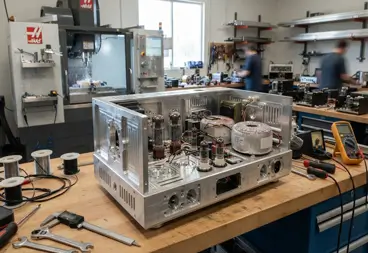
Boutique Tube Amplification
Heavy-duty, open-chassis layouts designed for classic push-pull and single-ended triode tube layouts.
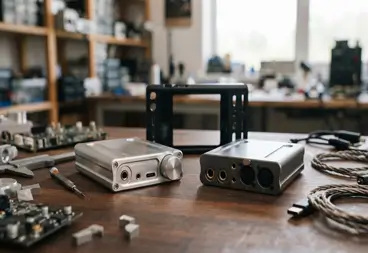
Portable Headphone Audio
Pocket-sized DAC/AMP shells, balanced headphone distribution hubs, and portable player frames.
Get A Quote for CNC Machining Aluminum Audio Amplifier Chassis
Frequently Asked Questions Regarding Custom Audio Chassis Fabrication
01.Can you produce custom cnc machined aluminum amplifier chassis?
02.Do you offer a custom billet aluminum audio amplifier enclosure?
03.Are you an anodized aluminum hi fi amplifier chassis factory?
04.Can you provide cnc milling aluminum hifi audio enclosures?
05.Do you manufacture aluminum heat sink enclosure for power amplifier units?
06.Are you a custom aluminum tube amplifier chassis manufacturer?
Upload your 3D models for automated toolpath optimization and commercial pricing within 24 hours.
Our engineering team provides technical feedback and Design for Manufacturability (DFM) reviews for your enclosure designs.
We work directly with standard CAD formats to optimize wall thicknesses, fin profiles, and assembly steps to help control manufacturing costs.
Contact Us

Hot Tags: custom cnc machined aluminum amplifier chassis,custom billet aluminum audio amplifier enclosure,anodized aluminum hi fi amplifier chassis,cnc milling aluminum hifi audio enclosures,aluminum heat sink enclosure for power amplifier