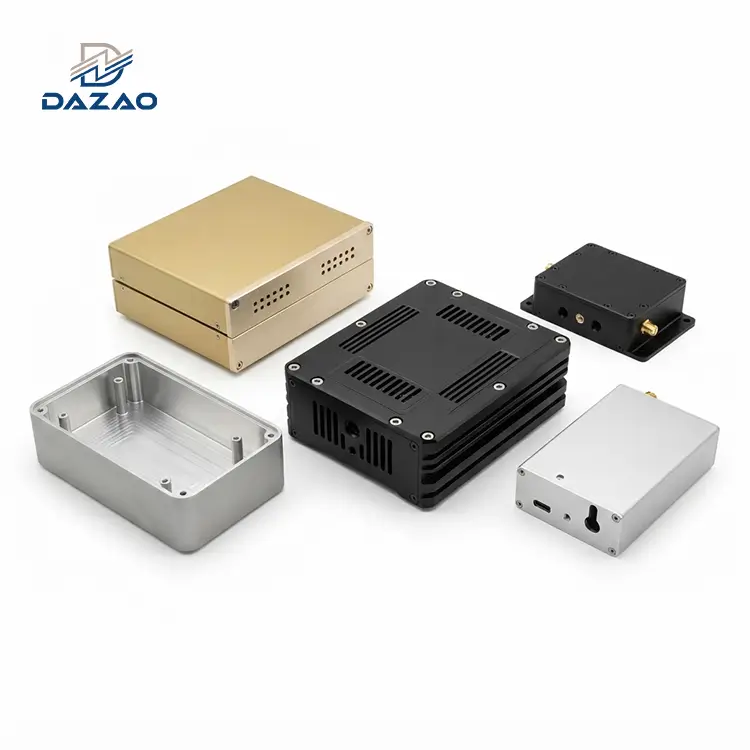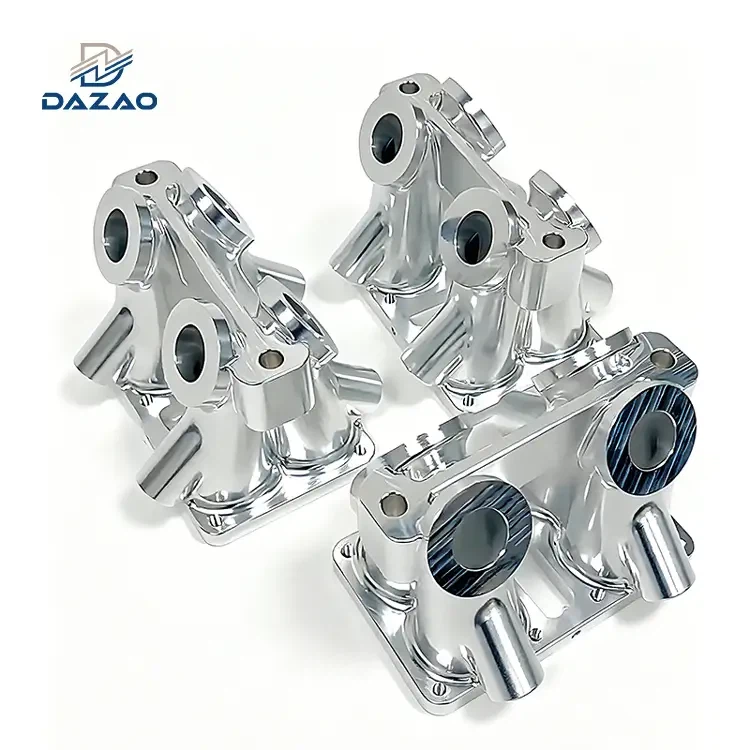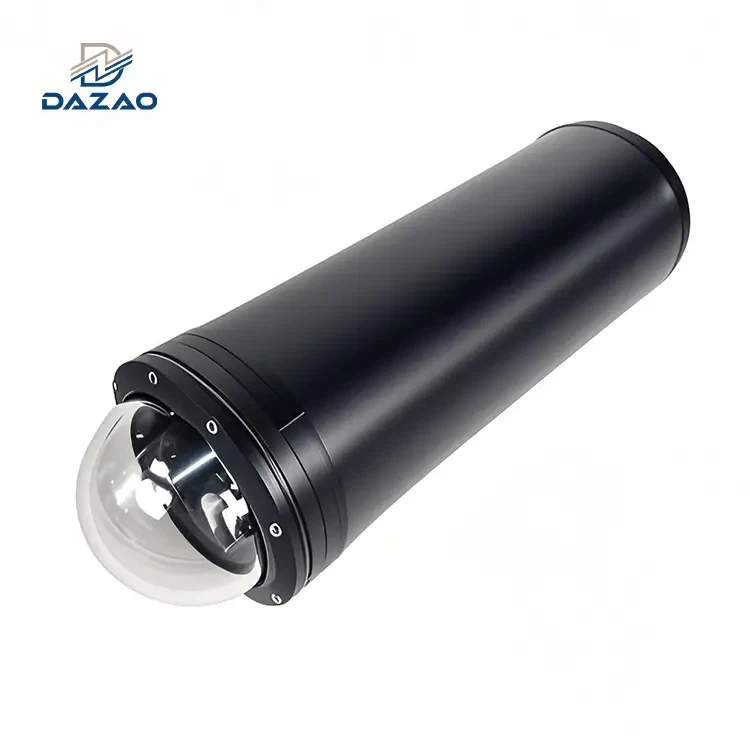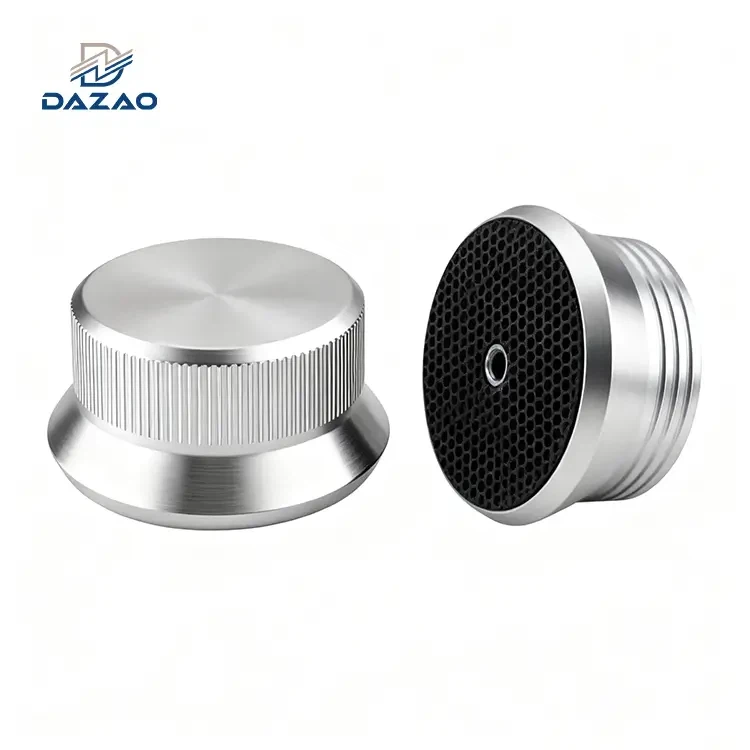
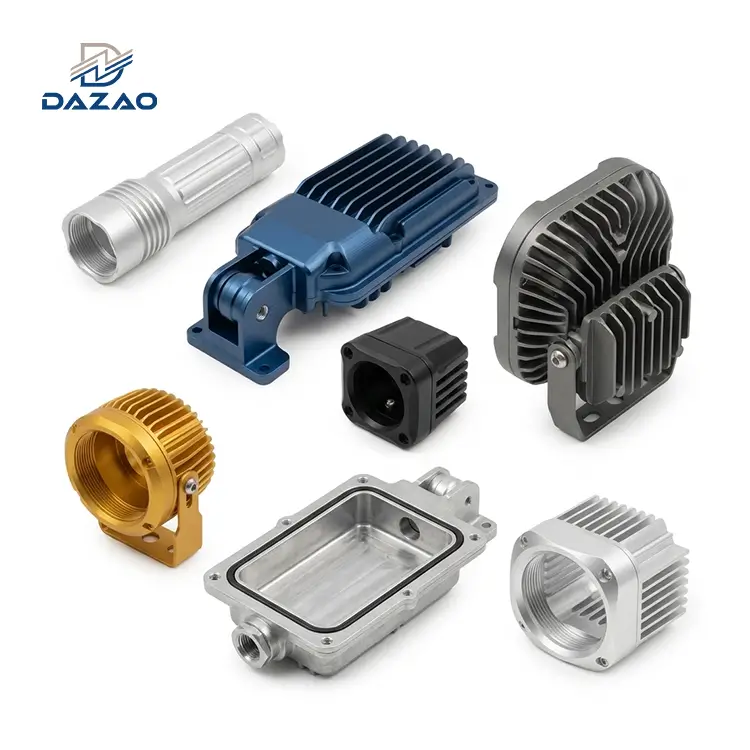
Precision CNC Machined Aluminum LED Light Housings
Achieve ≤0.02 mm sealing flatness and monolithic thermal performance for harsh-environment lighting systems.
Core Engineering Features:
IP67 waterproof and high-durability precision cnc 6061 aluminum led housing components.
Heavy-duty cnc machined automotive led light housing specs.
High-density anodized cnc aluminum led heat sink housing options.
3-day turnaround for precision machined tactical flashlight casings.
Outdoor led street light aluminum housing cnc structures.
High-precision aluminum light fixture components with zero tooling fees.

Engineering Overview: High-Precision CNC Machined Aluminum LED Light Housings
Monolithic milling from premium solid billet ensures zero internal porosity and maximized thermal dissipation paths.
Our production facility manufactures custom CNC Machined Aluminum LED Light Housings directly from solid billet AL6061-T6, AL6063, and AL7075-T6. Our high-precision 3-axis and 5-axis milling setups produce complex, single-piece structures that integrate high-efficiency cooling fins, mounting brackets, and O-ring sealing grooves without welded joints. This manufacturing method minimizes thermal resistance while ensuring mechanical durability for industrial environments. We support low-volume production and rapid prototyping with lead times starting at 10 days.

Root-Cause Engineering: Resolving Common Failures in CNC Aluminum LED Housings
How data-driven engineering overrides common assembly, thermal, and sealing failures in physical production.
Case Study 1: Resolving IP67 Waterproof Failures in Municipal Streetlights
· Background: An outdoor municipal lighting contractor faced an 18% water leakage rate in a batch of streetlight housings during field-simulated rain testing. The assemblies used a standard O-ring rubber gasket seal, but water bypassed the barrier.
· Root Cause Analysis: Investigation of the returned housings revealed that while the nominal groove dimensions matched the engineering drawings, the groove depth varied along the perimeter due to tool deflection during high-feed milling. This caused uneven gasket compression. Additionally, the groove floor roughness was Ra 3.2, which allowed micro-gaps for capillary water entry.
· Corrective Action: We modified the toolpath to include a light-load finishing pass using a single-crystal diamond tool. Groove depth tolerances were locked to ±0.02 mm, and floor flatness was held to ≤0.01 mm, achieving a Ra 0.8 surface finish.
· Results: We implemented a 100% pneumatic leak test station at 0.1 MPa for 3 minutes before dispatch. Since implementing this process, the customer has reported a 0% field failure rate across subsequent production runs.
Case Study 2: Resolving Heat Decay in High-Power Searchlights
· Background: A manufacturer of 200W high-power searchlights observed a 35% luminous flux decay after 1,000 hours of continuous operation, which did not meet their thermal decay standards.
· Root Cause Analysis: Thermal imaging identified a localized thermal barrier at the junction where the cooling fins met the core housing base. The fins had been milled with standard perpendicular toolpaths, leaving microscopic step marks and sharp internal angles that resisted heat flow. Additionally, the LED mounting plane had a flatness deviation of 0.08 mm, leaving tiny air gaps despite the application of thermal grease.
· Corrective Action: We programmed multi-axis circular arc toolpath transitions at the fin roots, removing sharp geometric corners to optimize thermal conduction. The LED mounting plane was moved to a secondary surface-grinding station, bringing the flatness under 0.02 mm.
· Results: Under identical test conditions, the LED chip junction temperature dropped by 12°C. Luminous flux decay at 1,000 hours stabilized at a standard 14% drop, matching the LED's specified lifespan.
Case Study 3: Resolving Lens Fitment Failures After Type III Hard Anodizing
· Background: An automotive lighting brand reported assembly line stoppages because their optical glass lenses could not fit into the front bezel groove of their anodized CNC housings.
· Root Cause Analysis: The housings were machined to exact nominal design dimensions prior to surface treatment. However, Type III hard anodizing builds up an oxide film that grows both inward and outward from the metal boundary. This 20 μm per-side buildup reduced the mounting bore's internal diameter by approximately 40 μm, causing interference with the lens.
· Corrective Action: We integrated a dimensional pre-compensation protocol into our DFM planning. For hard anodizing, we pre-machined internal diameters larger and external thread diameters smaller by the calculated oxide layer thickness.
· Results: Post-anodizing dimensions settled in the center of the specified tolerance bands, ensuring an immediate assembly fitment rate on the customer's production line.

Three Unique Engineering Process Standards
Standardized machining protocols designed to guarantee structural water-tightness and long-term weatherproofing.
Process Standard 1: Process-Controlled IP-Class Waterproof Grooves
Standard CNC shops often mill gasket channels using general roughing programs, relying solely on rubber compression to stop moisture. Our facility uses a dedicated finishing regimen to ensure sealing integrity:
· Tooling Selection: High-rigidity carbide end mills are dedicated solely to final groove finishing to prevent dimensional drift.
Geometry Control: Grooves are held to a depth tolerance of ±0.02 mm with a floor flatness under 0.01 mm.
· Pneumatic Verification: 100% of sealing enclosures are tested using a dry-air pressure decay system to confirm structural sealing before packaging.
Process Standard 2: Monolithic Low-Thermal-Resistance Heat Dissipation
Heat dissipation in high-power LED systems is limited by structural interfaces. Our milling processes optimize heat flow:
· Monolithic Milling: Machined from a single block of billet aluminum, bypassing the joint resistance of extruded fin assemblies.
· Ramped Toolpaths: Circular transitions at fin roots eliminate raw material steps and lower conduction resistance.
· Contact Plane Grinding: LED contact surfaces are polished to a Ra 0.8 finish and flatness of ≤0.02 mm, minimizing the thickness of the required thermal paste layer.
Process Standard 3: Dimensional Pre-Compensation & Salt Spray Durability
To protect outdoor lighting components from atmospheric corrosion without causing dimensional interference, we manage surface finishes as part of the machining cycle:
· Oxide Film Offset: CNC programs are offset based on whether Type II (standard) or Type III (hard) anodizing is specified.
· Batch Color Consistency: Tank parameters are regulated to limit batch-to-batch color variation (ΔE≤1.5).
· Salt Spray Testing: Optional 1000-hour neutral salt spray (NSS) testing is available to verify the corrosion resistance of components destined for maritime and industrial environments.

Manufacturing Route Evaluation: CNC Machined Billet vs. Die-Casting and Extrusion
Technical evaluation of material density, geometric limits, and development costs across common manufacturing routes.
|
Performance Parameter |
Monolithic CNC Billet |
Aluminum Die-Casting |
Extruded Profile + CNC |
|
Material Density & Thermal Conductivity |
100% dense; no internal air pockets (optimal heat transfer) |
Prone to micro-porosity and internal voids (thermal barriers) |
Highly dense, but heat transfer is limited to the extrusion axis |
|
Dimensional Tolerance Control |
Up to ±0.01 mm on critical features |
Generally ±0.15 mm; requires secondary machining for fits |
Extrusion tolerances are loose; requires secondary milling |
|
Initial Tooling Cost & Lead Time |
Zero tooling fees; programming completes in 1–2 days |
High mold fees ($3,000+); 30–45 days mold lead time |
Medium die fees ($1,500+); 15–20 days die fabrication |
|
Geometric & Design Flexibility |
High; 5-axis milling supports complex and non-linear shapes |
High design flexibility, but restricted by draft angles |
Restricted to uniform 2D linear shapes; minimal complexity |
|
Surface Finish Quality |
Smooth surfaces (Ra 0.8) for precise sealing and optics |
Rough cast surface; prone to surface blemishes and pits |
Moderate; extrusion lines must be polished or machined off |
|
Economic Order Quantity (EOQ) |
1 to 5,000 units (highly cost-effective for small/medium runs) |
5,000+ units (required to amortize high tooling costs) |
1,000+ meters (required to justify custom extrusion runs) |

Material Selection Guide: Aluminum Alloys for Optoelectronic Enclosures
Selecting the ideal metal grade to optimize mechanical strength, thermal conductivity, and anodizing quality.
· AL6061-T6 (Structural Standard): This is our primary alloy for industrial and outdoor housings. It offers balanced mechanical strength, excellent machining stability, and responds well to protective color anodizing.
· AL6063-T5 (High Thermal Conductivity): Preferred for architectural linear lighting. It has a higher thermal conductivity coefficient (~201 W/m·K) than 6061 (~167 W/m·K), facilitating rapid heat dissipation in high-flux fixtures.
· AL7075-T6 (Extreme Impact Strength): Reserved for tactical flashlights and military-grade searchlights. This alloy is highly resistant to mechanical deformation and impact, though it carries a higher raw material cost.
· ADC12 / AlSi10Mg (High-Volume Hybrid): Suitable for high-volume commercial production. We perform secondary CNC precision milling on cast preforms to achieve flat sealing faces and clean thread structures.

Technical Specifications & Parameter Matrix
Complete dimensional and physical processing limits for high-performance optoelectronic enclosures.
|
Parameter / Dimension |
Technical Specification Range |
|
Material Grades |
AL6061-T6, AL6063-T5, AL7075-T6, AL5052, ADC12, AlSi10Mg |
|
Machining Envelope |
3-Axis / 4-Axis Milled Parts: Up to 800 mm x 600 mm x 200 mm; Turned/Milled Parts: Up to ∅350 mm x 500 mm |
|
Dimensional Tolerances |
Linear: ±0.02 mm (critical features ±0.01 mm); Hole Diameters:±0.01 mm; Thread Fit: Class 6H/2B standard |
|
Surface Flatness |
≤0.02 mm (verified via optical flats / dial indicators) |
|
Surface Roughness |
As-milled: Ra 1.6 to Ra 3.2; Precision Ground: Ra 0.8 |
|
Cooling Fin Geometry |
Minimum Fin Thickness: 0.8 mm; Maximum Fin Aspect Ratio: 15:1 |
|
Surface Treatments |
Type II/III Anodizing (Class 1 & 2), Bead Blasting (Grit 120-320), Alodine/Chromate Conversion, Laser Engraving |
|
Sealing Compatibility |
IP65, IP66, IP67, IP68 structural configurations |

Quality Control & Quality Assurance Protocols
Standardized inspection sequences from incoming spectrometer verification to post-anodizing thread gauging.
· Incoming Material Verification: We analyze the chemical composition of every incoming raw material batch using optical emission spectrometry (OES) to confirm alloy grade before machining.
· First Article Inspection (FAI): The first component of a production run is fully measured on our Coordinate Measuring Machine (CMM). Production does not proceed without FAI approval.
· In-Process Sampling: Critical dimensions are monitored every 30 minutes during production runs to account for tool wear.
· Post-Anodizing Verification: All critical threads, sealing grooves, and lens seat dimensions are checked after anodizing to verify post-coating fitment.
· Pneumatic Leak Testing: Housings designed for wet environments undergo pneumatic bubble or pressure decay testing to confirm IP-rated seals.
· Protective Packaging: Finished parts are packed in customized EPE foam inserts to protect fine surfaces and threads from transport damage.

Target Industries & Real-World Application Scenarios
Structural protection for high-power, vibration-prone, and corrosive operating environments.
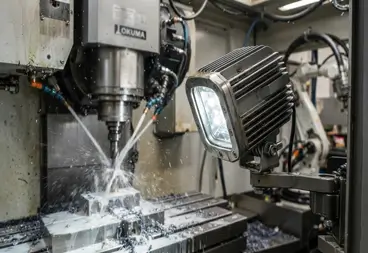
Industrial Equipment & Automation
Heavy-duty enclosures for cnc machine tool work light enclosure applications, resistant to alkaline coolants, oils, and continuous machine vibrations.
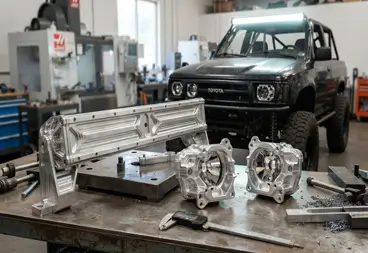
Automotive & Off-Road Lighting
Multi-axis housings for cnc machined automotive led light housing applications, including high-power light bars and custom projector headlights.

Municipal & Outdoor Infrastructure
Sealed housings for outdoor led street light aluminum housing cnc structures, optimized to survive thermal cycling and marine environments.
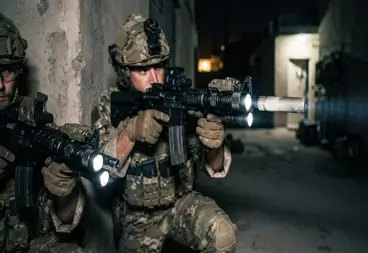
Tactical & Portable Systems
Knurled, anodized bodies for custom cnc aluminum flashlight housing designs used by security and defense forces.
FAQs

01.Can you manufacture custom cnc aluminum flashlight housing parts?
02.Do you offer custom cnc machining services for led lighting applications?
03.How do you achieve a waterproof ip67 cnc aluminum led enclosure?
04.Can you produce an anodized cnc aluminum led heat sink housing with tight tolerances?
05.Do you machine large outdoor led street light aluminum housing cnc components?
06.Can you supply oem cnc machined aluminum light fixture parts under NDA?
Send your CAD files for an objective DFM review and a detailed line-item cost proposal within 24 hours.
Do you have a design for a CNC Machined Aluminum LED Light Housing that requires precise tolerances and robust heat dissipation?
Send your 2D engineering drawings (PDF) and 3D CAD files (STEP/IGS) to our engineering department at erica@dazaocn.com.
We will perform a detailed DFM (Design for Manufacturability) analysis and provide an itemized commercial quotation within 24 hours.
Contact Us

Hot Tags: CNC Machined Aluminum LED Light Housings,cnc machined automotive led light housing,precision cnc 6061 aluminum led housing,anodized cnc aluminum led heat sink housing