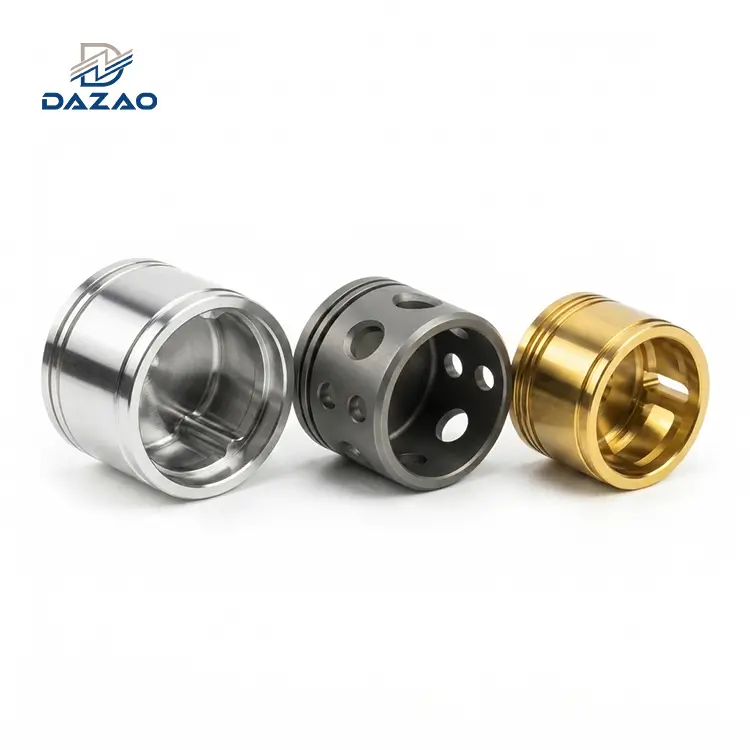

In modern marine engineering, protecting core electronics from moisture and high pressure is important. This is especially true for underwater robots (ROV/AUV) and outdoor electronic equipment.
A qualified watertight enclosure must handle deep-sea pressure. It should also keep its seal intact against saltwater corrosion over time.
CNC machining is now the main way to make high-performance underwater pressure housings. This change is the growth of precision manufacturing.Compared with casting or extrusion, CNC machining offers superior geometric tolerance control and surface finish quality.
This article gives a clear overview of the CNC aluminum watertight enclosure manufacturing process. It covers material selection, precision machining, and surface treatment. The piece highlights important engineering details that people often overlook in a simple metal housing.
Why Aluminum Alloys Are the Preferred Material for Watertight Enclosures?
When designing aluminum watertight enclosure tubes, material selection is the first decision that determines project success. Divers use stainless steel and titanium underwater, but they find aluminum alloys more common. They are popular because they are strong, lightweight, and easy to machine.
1.6061-T6: The Most Common Choice
6061-T6 is the most widely used aluminum alloy for underwater enclosures. It offers good corrosion resistance, moderate strength, and excellent machinability.
For most watertight enclosures designed for depths up to 300 meters, 6061-T6 provides the best balance between performance and cost. Its heat-treated condition ensures dimensional stability during CNC machining, minimizing distortion.

2. 7075-T6: Pushing Deep-Sea Limits
For deep-sea applications (typically 1000 meters or more), 7075-T6 is often recommended. Its strength rivals that of certain steels, allowing it to withstand extreme pressure differentials.
However, its corrosion resistance is inferior to 6xxx-series aluminum, making advanced surface treatments-such as hardcoat anodizing-essential.
3. 5083: For Harsh Marine Environments
For long-term immersion in seawater (e.g., environmental monitoring buoys), 5083 aluminum alloy is favored for its exceptional resistance to saltwater corrosion.
a bit harder to machine than 6061. However, its chemical stability makes it great for long-term use in the ocean.
The Core of Watertight Design: O-Rings and Tolerance Control
Sealing performance is not determined by wall thickness, but by the design of the sealing interface.
A precision underwater pressure housing typically relies on O-rings as its primary sealing barrier.
1. Radial Seals vs. Face Seals
In CNC aluminum tube designs, both sealing methods are often used together:
Radial seals:
The O-ring is installed on the end cap sidewall or inside diameter of the tube. As external pressure increases, the O-ring compresses further into the sealing gap, enhancing sealing performance.
Face seals:
The bolt force presses the O-ring down against a flat surface. People often use it on flanged covers that need frequent disassembly.

2. Precision Tolerances for O-Ring Grooves
The true value of CNC machining lies in its ability to tightly control sealing groove dimensions.
Standards such as AS568 typically require control of groove width, depth, and corner radii within ±0.02 mm.
Squeeze ratio: Typically designed between 15%–30%
Too little squeeze leads to leakage at low pressure; too much causes permanent O-ring deformation or installation damage.
Stretch ratio: For sealing the internal diameter, O-ring stretch should not go over 5%. If it does, the cross-section becomes thinner, and sealing reliability goes down.
3.A Common Sealing Failure Scenario: Dimensions Are Correct-So Why Does It Leak?
We have seen many aluminum watertight enclosures that passed drawing reviews and size checks. However, they still leaked during immersion tests or long-term use.
In most cases, the issue was not machining accuracy, but insufficient consideration of real operating conditions.
A typical failure case involves:
· O-ring grooves designed strictly per standard tables
· Actual operating depth exceeding validated design depth
· Subtle but continuous turning tool marks on sealing surfaces
· Minor O-ring twisting during assembly or maintenance
Under high hydrostatic pressure, water molecules exploit these micro-defects and gradually penetrate, eventually forming visible leaks.
Conclusion:
"Dimensionally compliant" does not equal "reliably sealed."
The true indicator of a mature sealing design is its tolerance for manufacturing variation, assembly error, and pressure fluctuation.
4.Surface Finish: Why Ra 0.8 μm Matters?
Our shows that over 50% of sealing issues are selecting the wrong surface roughness. This is not related to the O-ring material.
For sealing interfaces, you should control the CNC-machined surface finish between Ra 0.8 μm and Ra 1.6 μm.
· Too rough → micro tool marks become leakage channels
· Too smooth (mirror finish, Ra < 0.2 μm) → sealing grease cannot adhere, increasing friction and O-ring damage risk

CNC Machining Process for Aluminum Watertight Enclosures
Producing high-quality aluminum watertight enclosure tubes requires seamless integration of turning and milling processes.
1. Precision CNC Turning
Turning is the primary process for cylindrical housings.
Coaxiality control:
The internal diameter, outer diameter, and sealing features are all machined in one setup. This helps avoid errors from re-clamping.
Thin-wall machining:
To reduce weight, enclosure walls are often thin. Skilled machinists use abundant coolant and staged roughing/finishing strategies to control thermal distortion and residual stress.

2. Multi-Axis Milling
End caps often include complex features such as cable penetrators, pressure relief valves, and threaded mounting holes.
Thread forming:
Thread rolling (form tapping) is preferred over cutting to improve thread strength-especially when threads carry structural loads.
Sensor mounting pads:
4-axis or 5-axis milling allows flat mounting surfaces to be machined directly onto cylindrical housings, ensuring uniform gasket compression.
3. Chatter Suppression and Tool Mark Control
Long, thin aluminum tubes are prone to machining chatter-fatal for sealing surfaces.
Experienced CNC shops use anti-vibration tooling and optimized RPM/feed combinations to produce uniform, continuous cutting patterns in sealing areas.
Design vs. Manufacturing Responsibility: Where Should We Solve Problems?
A common problem in watertight enclosure projects is identifying the cause of a sealing failure. It can be either a design flaw or a manufacturing issue.
From experience, problems arise when responsibility boundaries are unclear early on.
Must Be Defined During Design:
· O-ring size, material, and pressure rating
· Target operating depth and safety factor
· Maintenance and disassembly frequency
If these parameters lack clear definitions, perfect CNC execution alone cannot guarantee sealing reliability.
Highly Dependent on Manufacturing Expertise:
· Machinability of O-ring grooves and corner radii
· Surface finish consistency
· Thin-wall deformation control
Experienced CNC manufacturers often give DFM feedback during the drawing stage. They optimize groove sizes, machining steps, and surface treatments instead of just following the print.
Early collaboration saves far more cost than repeated pressure testing later.
This is why working with a professional CNC machining service that understands sealing structures, anodizing compensation, and underwater pressure requirements is critical for long-term reliability.
Surface Treatment: Anodizing and Sealing Compensation
Aluminum naturally forms an oxide layer. However, chloride-rich seawater can still cause pitting and galvanic corrosion. This makes surface treatment important.
1. Hardcoat Anodizing (Type III)
The industry standard for underwater pressure housings.
Process: Low-temperature sulfuric acid anodizing forms a 25–50 μm aluminum oxide layer
Benefits: Hardness exceeding HRC 60, excellent wear resistance, electrical insulation, and corrosion protection

2. Masking and Dimensional Compensation
Anodizing adds thickness. Without compensation, sealing grooves become shallower, leading to excessive O-ring compression.
Masking:
Sealing areas may be masked to remain bare aluminum or receive thin anodizing (Type II)
Dimensional compensation:
The preferred approach is accounting for anodizing growth during CNC programming using negative tolerances
3. PTFE (Teflon) Impregnation
PTFE impregnation after hard anodizing fills tiny pores. This improves surface lubricity and helps with O-ring installation and sealing performance.
Quality Control and Pressure Testing
Every watertight enclosure must undergo rigorous inspection before delivery.
1. CMM Inspection
Focuses on geometric tolerances rather than basic dimensions:
Roundness: Ensures uniform O-ring compression
Perpendicularity: Prevents end-cap misalignment
2. Vacuum Leak Testing
Vacuum decay testing quickly reveals micro-leaks, porosity, or machining defects.
3. Hydrostatic Pressure Testing
Enclosures are tested in pressure chambers at 1.25–1.5× rated depth.
Long-duration holds (24+ hours) detect micro-leakage
Strain gauges may be applied to verify elastic deformation against design assumptions

Application Trends in Aluminum Underwater Pressure Housings
1.Modular ROV housings with standardized custom ROV components
2.Transparent viewing windows (acrylic or sapphire) with multi-stage sealing designs
3.Lightweight structures using internal ribs and topology optimization, reducing weight by over 20%-critical for AUV endurance
Conclusion: Choosing the Right CNC Manufacturing Partner
Manufacturing a deep-sea-capable aluminum watertight enclosure is not simple machining-it is a comprehensive challenge involving materials, precision, and process control.
A deep understanding of 6061-T6 behavior and careful control of O-ring groove tolerances are key. Every detail affects electronic safety.
If you need professional aluminum watertight enclosure tube machining, pick a supplier with real underwater engineering experience. They should have a strong understanding of hard anodizing and complete pressure testing skills.
At Dazao, we do more than just parts manufacturing. Our DFM skills help engineers improve sealing structures. This ensures that every enclosure works well under high pressure.
Whether for prototyping or small-batch production, precision CNC machining remains the gateway to the deep sea.

FAQ
1. How deep can an aluminum watertight enclosure withstand?
Most 6061-T6 enclosures are suitable for depths up to 300 meters. With proper design, 7075-T6 housings can exceed 1000 meters.
2. Is CNC machining better than extrusion for watertight enclosures?
Yes. CNC machining provides tighter tolerances, superior surface finish control, and more reliable sealing interfaces.
3. Does anodizing affect O-ring sealing performance?
Yes. Hard anodizing adds thickness. Without compensation, O-ring squeeze may exceed safe limits and cause leakage.
4. What surface roughness is recommended for sealing areas?
Ra 0.8 μm to Ra 1.6 μm is ideal. Too rough or too smooth surfaces can both lead to sealing failure.
5. How are CNC aluminum watertight enclosures tested before delivery?
Typical testing includes CMM inspection, vacuum leak testing, and hydrostatic pressure testing at 1.25–1.5× rated depth.