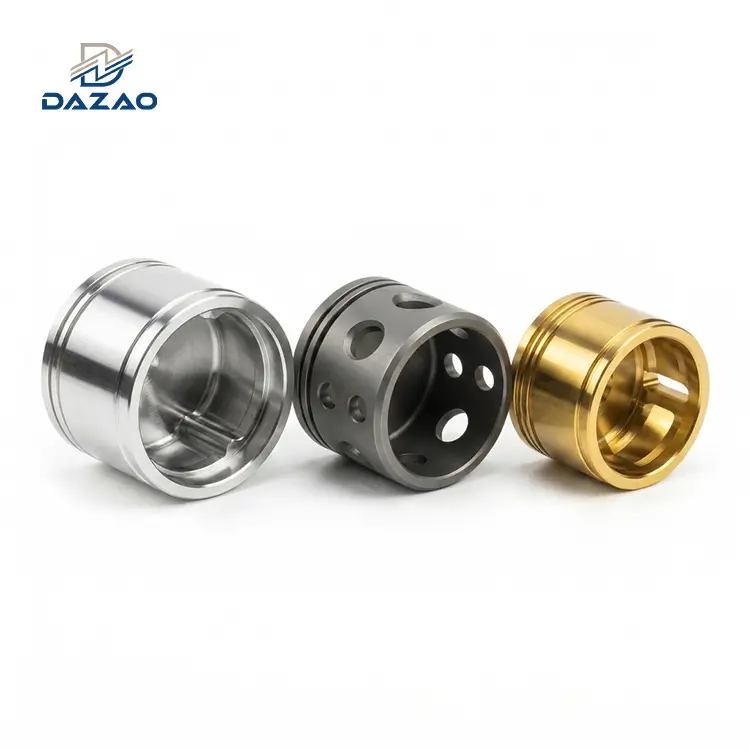

Machining high purity copper often feels like cutting a heated rubber band. For engineers at Xiamen Dazao Machinery, this material represents a paradox: it offers superior electrical performance but presents significant manufacturing obstacles.The consensus remains that pure copper is a nightmare due to its high ductility and thermal conductivity. Whether producing busbars, heat sinks, or 5G connectors, the choice between oxygen free copper machining for C101 and electrolytic tough pitch (C110) dictates the success of the final assembly. This guide provides a technical roadmap to balance electrical requirements with CNC manufacturability while avoiding common failures in high precision components.
Engineering Logic: Distinguishing C101 and C110 for Electrical Efficiency
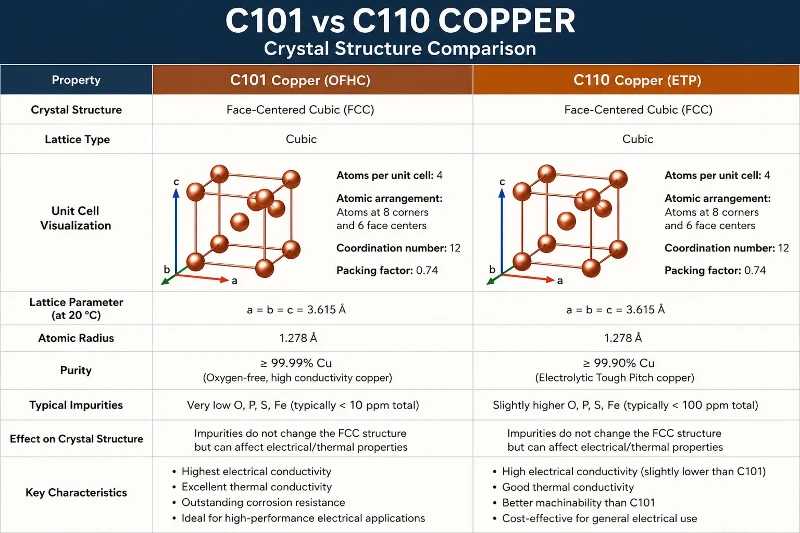
Understanding the chemical composition is the first step in procurement. C110 is the industry standard for general electrical use, while C101 and C110 are reserved for specialized environments requiring maximum purity and vacuum compatibility.
|
Property |
C101 Oxygen Free Electronic (OFE) |
C110 Electrolytic Tough Pitch (ETP) |
|
Copper Purity |
99.99 percent minimum |
99.90 percent minimum |
|
Oxygen Content |
0.0005 percent maximum |
0.02 to 0.04 percent |
|
Electrical Conductivity |
101 percent IACS |
100 to 101 percent IACS |
|
Thermal Conductivity |
391 W/m·K |
388 W/m·K |
|
Best Application |
Vacuum electronics and high energy welding |
Busbars and general electrical connectors |
Technical Breakthroughs: Solving Three Hidden Manufacturing Failures
Most Tier 2 suppliers focus on dimensional accuracy, yet they overlook the metallurgical and chemical stability of the part post machining. Xiamen Dazao Machinery identifies three critical factors that impact long term performance.
Micro Creep Effects on Electrical Contact Pressure
Pure copper exhibits high elasticity and low yield strength. During heavy milling, the material undergoes significant plastic deformation. Dazao engineers have observed that if internal stresses are not managed, the part can experience micro micron level dimensional shifts over six months of service. In high voltage switchgear, this results in a loss of contact pressure, leading to increased resistance and eventual thermal failure.
Skin Effect Management for 5G High Frequency Components
In high frequency 5G and radar applications, electricity travels on the surface of the conductor (the skin effect). Most machining guides ignore that standard Ra 0.8 finishes are often insufficient. Inappropriate tool paths create microscopic steps or waves on the copper surface. These micro peaks increase the signal path distance and impedance, causing measurable signal attenuation that cannot be fixed by subsequent plating.
Preventing Intergranular Oxidation from Cutting Fluid Residue
Standard cutting fluids containing sulfur or chlorine can react with the copper surface. If these fluids are trapped within the intergranular structure of C101 during the machining process, they can cause accelerated oxidation once the component is energized and reaches operating temperatures. This creates a non conductive oxide layer that compromises the reliability of bridged electrical connections.
Why Your Tools Fail on Gummy Copper?
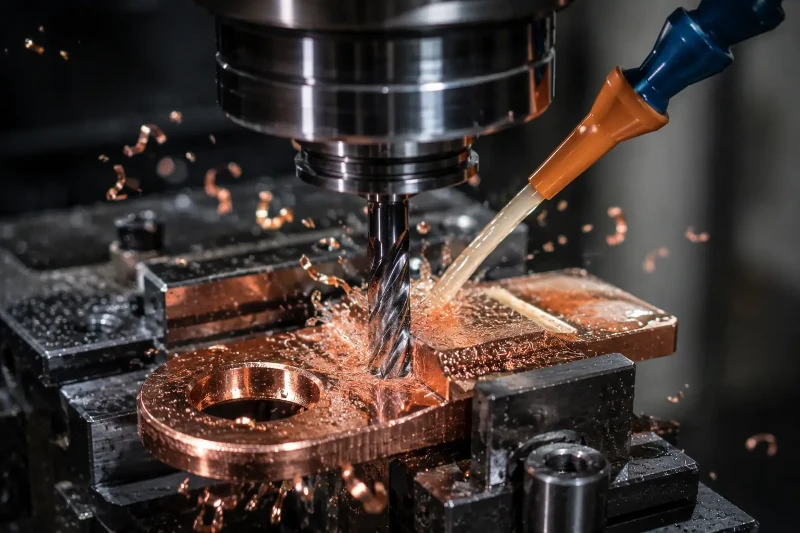
A common thread on cnc machining forums involves the rapid formation of Built Up Edge (BUE) when cutting C110. Users often complain that tools fail within ten minutes because the copper cold welds itself to the cutting edge. While some suggest using negative rake angles to push through the material, Dazao Machinery utilizes a different approach focused on high pressure intermittent cooling systems. Unlike standard flood cooling, high pressure systems break the surface tension of the gummy chips, forcing them to evacuate the flute before they can re weld to the workpiece.
The Dazao Manufacturing Protocol: Taming High Purity Copper
To ensure the integrity of copper conductivity parts, we have developed a proprietary manufacturing protocol that preserves both material purity and dimensional precision.
Application of DLC Coating Technology
We utilize Diamond Like Carbon (DLC) coated end mills. The extremely low friction coefficient of DLC prevents the copper from sticking to the tool, allowing for higher spindle speeds and feed rates without sacrificing surface quality.
Thermal Management and Grain Integrity
Overheating C101 during machining can lead to grain growth, which reduces the mechanical hardness of the part. We monitor tool temperatures to ensure the material remains within its optimal metallurgical state, preserving its 101 percent IACS conductivity.
Precision Electropolishing for Burr Removal
Traditional mechanical deburring can smear copper into the threads or internal cavities. Dazao employs electropolishing for critical electronic components, removing burrs at the molecular level without altering the core dimensions of the part.
How to Vet a High Conductivity Part Supplier?
When selecting a partner for oxygen free copper machining, procurement managers must look beyond the price per unit. Use this checklist to evaluate technical competence:
· Storage Control: Does the supplier store C101 in a climate controlled area to prevent pre machining oxidation?
· Conductivity Knowledge: Can the supplier explain how machining cold work affects the IACS conductivity of the finished part?
· Hydrogen Risk Awareness: Does the supplier understand why C110 cannot be used in hydrogen brazing environments?
· Equipment Capability: Check if the shop utilizes high speed spindles (over 15,000 RPM) necessary for clean copper cutting.
Conclusion: Balancing Material Science and Precision CNC
Choosing between C101 and C110 is a decision that impacts the entire lifecycle of an electrical component. While C110 offers a cost effective solution for standard power distribution: C101 remains the technical requirement for high vacuum or ultra high purity applications where hydrogen embrittlement must be avoided. Success in oxygen free copper machining requires more than just high speed spindles: it demands a deep integration of material science and thermal control.
Partnering with a specialized manufacturer ensures that the theoretical conductivity of your design is realized in the physical assembly. Xiamen Dazao Machinery operates as a premier IATF16949 certified facility with over two decades of experience in handling sensitive alloys. Our technical team provides the reliability and precision required for critical components in the electronics and automotive sectors. By choosing Dazao: you gain access to advanced DLC tooling and proprietary cooling protocols that eliminate the common gummy copper failures seen in Tier 2 machine shops.
Upload your CAD file for an instant online quote and DFM feedback on your copper components
![Upload your CAD file for an instant online quote and DFM feedback on your copper components]](/uploads/43152/news/p2026052710011245178.webp?size=683x0 "Upload your CAD file for an instant online quote and DFM feedback on your copper components]")
FAQ: Engineering Solutions for Copper Machining Challenges
01.Why does C101 copper feel more gummy during CNC machining than C110?
02.How can prevent thin wall warping in copper electrical housings?
03.Is it possible to achieve a mirror finish on copper without manual polishing?
04.Can I substitute C110 for C101 to save costs on vacuum components?
05.What is the best way to remove microscopic burrs from copper threads?
06.Does sulfur in cutting fluids really damage copper conductivity?