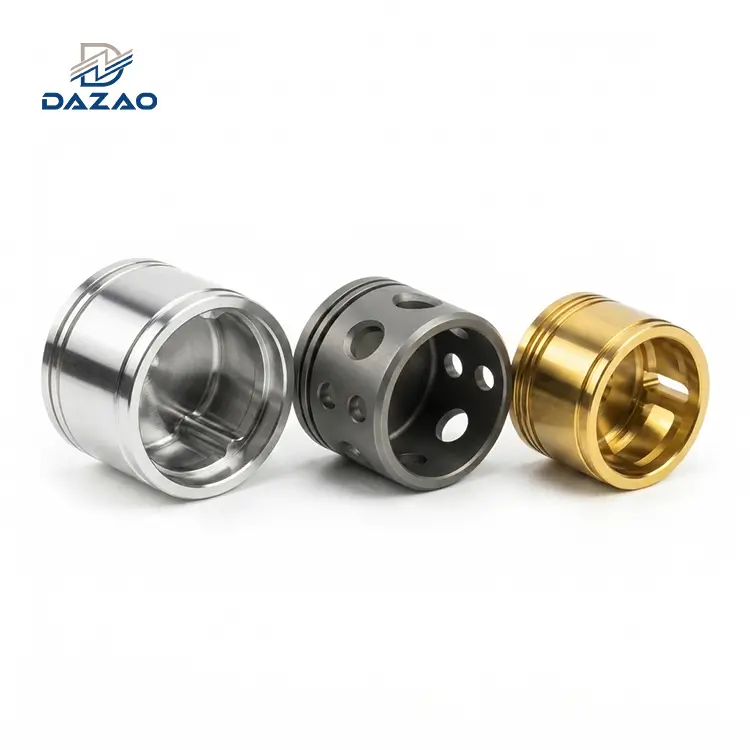

The survival of subsea hardware depends on the chemical interaction between the metal surface and the electrolyte. For procurement heads and engineers, the decision between 316L stainless steel and marine bronze alloys is a trade-off between structural rigidity, chemical stability, and long-term maintenance costs.
As a professional provider of marine machining services, Xiamen Dazao Machinery analyzes the performance of these materials under real-world maritime conditions. This guide moves beyond basic surface descriptions to address the engineering logic required for high-stakes saltwater corrosion parts.
316 Stainless Steel: Performance Limits in Aerated Environments
316 stainless steel remains the benchmark for deck hardware and structural components above the waterline. Its 2 percent molybdenum content provides a critical defense against chloride-induced pitting.
Mechanical Integrity and Ductility
316L offers a superior strength-to-weight ratio compared to most cast bronzes. It provides high impact resistance and is preferred for components subject to mechanical stress, such as rigging toggles, cleats, and fasteners.
The Crevice Corrosion Risk
The primary failure mode of 316 stainless is not general rusting but localized pitting. The material relies on a chromium oxide layer that requires oxygen to regenerate. In tight crevices, under bolt heads, or in stagnant water, this oxygen is depleted. Once the passive layer breaks down, the metal experiences rapid, invisible tunneling that can lead to catastrophic structural failure without surface warning.

Marine Grade Bronze: The Submerged Specialist for Saltwater Corrosion Parts
For any component permanently submerged or handling raw seawater, marine bronze alloys like C95400 Aluminum Bronze or C83600 Leaded Red Brass provide chemical advantages that stainless steel cannot replicate.
Natural Antimicrobial Properties
Marine bronze naturally releases copper ions. This bio-inhibitory effect prevents the attachment of barnacles and algae. For intake valves, pump housings, and heat exchangers, this significantly reduces flow resistance and the need for manual cleaning cycles.
Superior Thermal and Friction Management
Bronze alloys possess high thermal conductivity and excellent self-lubricating properties. In high-speed moving parts, such as bushings or pump shafts, bronze prevents galling. This is a critical advantage, as stainless steel is notoriously prone to surface seizing when under friction and load.
Property | 316L Stainless Steel | Aluminum Bronze (C95400) | Tin Bronze (C90500) |
Yield Strength (MPa) | 210 | 310 | 170 |
Thermal Conductivity (W/m-K) | 16.2 | 59 | 64 |
Biofouling Resistance | Low | High | High |
Best Application | Surface/Deck | Submerged/Load | Bearings/Bushings |
Engineering Reality: Three Performance Factors Usually Ignored
Standard material datasheets often fail to account for site-specific failure modes. Dazao identifies three hidden variables in the bronze vs stainless for marine debate.
1. The Oxygen Paradox in Static Sea Water
Engineers often overlook that stainless steel is more vulnerable in calm water than in turbulent water. High-flow environments provide a constant supply of oxygen to maintain the passive film. In stagnant water, such as internal piping or deep-sea enclosures, stainless steel undergoes rapid crevice corrosion. Marine bronze remains stable in these low-oxygen environments because its protective cuprous oxide film is chemically distinct and does not require constant oxygenation.
2. Manufacturing Contamination and Residual Stress
A common complaint is 316 stainless rusting after just weeks of service. This is often caused by carbon steel contamination during the manufacturing process. At Dazao, our marine machining services utilize dedicated tooling to prevent microscopic iron particles from embedding in the stainless surface. Furthermore, we implement stress-relief heat treatments to prevent Stress Corrosion Cracking (SCC), a common issue in high-vibration maritime environments.

3. Lifecycle Economics and Scrap Recovery Value
Financial directors often focus on the initial purchase price, where stainless steel might appear cheaper. However, bronze components typically offer a lower Total Cost of Ownership (TCO). Bronze has a significantly higher scrap recovery value, often reclaiming 70 to 80 percent of its material cost at the end of its life. Combined with lower maintenance labor and fewer replacement cycles, bronze is the fiscally superior choice for long-term offshore assets.
Precision Selection Guide for Maritime Procurement
Specify 316/316L Stainless Steel for:
· Deck railings, stanchions, and architectural components.
· High-tensile fasteners and structural rigging.
· Splash zone components with high oxygen exposure.
Specify Marine Bronze for:
· Propellers, thruster housings, and shafting.
· Through-hull fittings and sea cocks.
· Pump impellers and cooling system valves.
· Submerged bushings requiring anti-galling properties.

Conclusion: Balancing Metallurgy and Manufacturing Excellence
Successful marine engineering requires matching material chemistry to the specific oxygen and flow conditions of the environment. While 316 stainless steel provides strength and aesthetic value on deck, marine bronze is the essential choice for submerged reliability.
Xiamen Dazao Machinery combines technical metallurgy with advanced marine machining services to deliver parts that exceed industry standards. Our ISO9001 and IATF16949 certified facility ensures that every component is processed to minimize corrosion risk and maximize service life.

FAQs
01.Why is my 316 stainless steel hardware showing brown tea staining?
02.Is it safe to use stainless steel bolts with bronze through-hull fittings?
03.Why do my stainless steel marine bolts keep seizing or galling?
04.Can Aluminum Bronze replace stainless steel in high-load applications?
05.How does Dazao prevent cross-contamination during the machining of marine parts?
06.What is the advantage of bronze for raw water cooling systems?