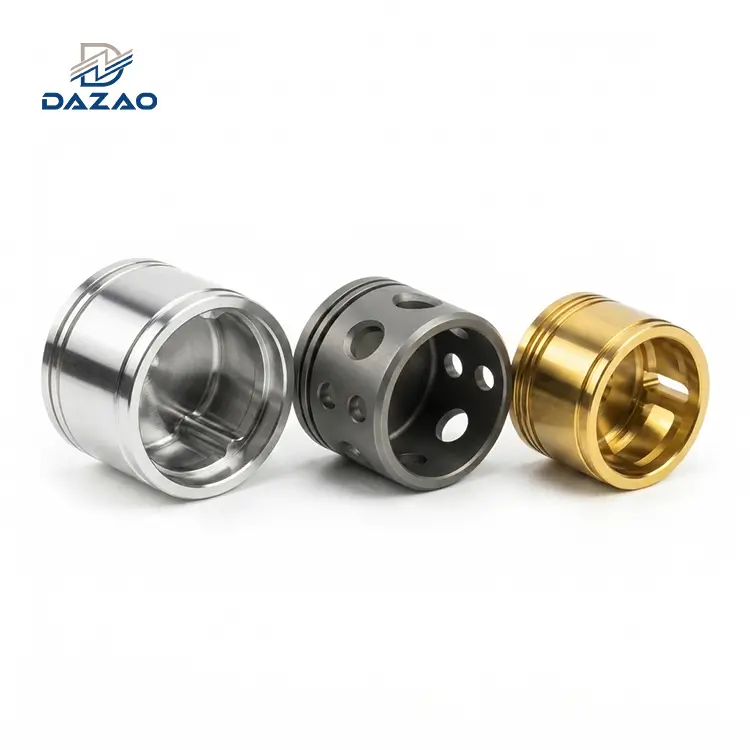

Procurement managers and engineers often operate under the misconception that specifying ASTM A967 on a drawing is a universal guarantee against corrosion. In high precision manufacturing, this assumption is a significant risk factor. At Xiamen Dazao Machinery, we have observed components that passed initial quality control only to exhibit surface oxidation after twenty days of maritime transit. Understanding the technical divergence between passivation vs electropolishing is mandatory for ensuring the long term integrity of stainless steel finishing.

Understanding Stainless Steel Passivation and Chemical Reconstitution
Passivation is a non-electrolytic process using nitric or citric acid to remove free iron and exogenous matter from the surface. The objective is to optimize the chromium-to-iron ratio on the surface layer, facilitating the formation of a passive chromic oxide film.
Nitric vs Citric Acid Methods in ASTM A967
Most industrial standards rely on nitric acid (ASTM A967 Nitric 1 through 5). Nitric acid is effective but aggressive. Citric acid (ASTM A967 Citric 1 through 5) has gained traction because it selectively targets iron without depleting other alloying elements. However, the efficacy of citric acid depends heavily on temperature control and bath concentration.
The Hidden Risk of Batch Cross-Contamination
A common failure point in the supply chain occurs when a vendor uses a single tank for multiple grades of steel. If a batch of carbon steel parts precedes your stainless steel order, the bath becomes saturated with iron particles. This leads to iron transfer rather than iron removal, rendering the passivation process counterproductive.
Electropolishing Technology for Microscopic Surface Levelling
Electropolishing is often described as the reverse of electroplating. The workpiece acts as the anode in an electrolytic bath. Under controlled current and temperature, the process removes the outer layer of the material, targeting microscopic peaks first.
· Material Removal: Typically removes 0.0001 to 0.0025 inches of surface material.
· Roughness Improvement: Can reduce surface roughness (Ra) by up to 50 percent.
· Stress Relief: Removes the cold worked layer on the surface, which is beneficial for high cycle fatigue applications in aerospace.

Three Technical Challenges Overlooked in Stainless Steel Finishing
Through decades of production at Xiamen Dazao, we have identified three technical challenges that are rarely discussed in standard engineering textbooks.
1. The Roughness Paradox in Passivation Processes
Many buyers believe passivation improves the aesthetic appearance of a part. This is false. Passivation is a cleaning and protective process, not a finishing process. If the mechanical polishing prior to passivation is inconsistent, the acid will highlight surface defects. Strong acid concentrations can etch the grain boundaries of certain stainless steel grades, actually increasing the Ra value and making the surface more prone to bacterial entrapment in medical applications.
2. Acid Bleeding in Complex Weldments and Deep Cavities
Components with complex geometries, such as manifolds with deep blind holes or overlapping weld joints, are susceptible to electrolyte entrapment. If the post-treatment rinsing sequence is inadequate, residual acid will eventually leach out. This phenomenon, known as bleeding, creates localized corrosion sites that are impossible to repair without re-machining. Dazao utilizes ultrasonic agitation during the neutralization phase to mitigate this specific risk.
3. The Practical Limitations of ASTM A967 Certification
A certificate of compliance often represents the results of a test conducted on a standard lab coupon rather than the actual complex part. Current distribution in electropolishing is uneven. High current density areas (corners) may be over-polished, while low current density areas (internal diameters) may receive no treatment at all. Without specifying a Copper Sulfate or Potassium Ferricyanide test on the most vulnerable areas of the actual geometry, the certification lacks engineering validity.

Technical Comparison Table: Passivation vs Electropolishing
|
Feature |
Passivation (ASTM A967) |
Electropolishing (ASTM B912) |
|
Primary Goal |
Iron removal and oxide layer enhancement |
Surface levelling and deburring |
|
Surface Finish (Ra) |
No significant change |
Significant reduction (up to 50%) |
|
Dimensional Change |
Negligible |
0.0002 to 0.001 inches per side |
|
Corrosion Resistance |
High (removes free iron) |
Highest (optimal Cr:Fe ratio) |
|
Typical Cost |
Baseline (1x) |
Premium (3x to 5x) |
|
Visual Aspect |
Matte or original finish |
High luster / Mirror-like |
Industry Case Study: The 50,000 USD Sulfur Contamination Failure
In 2014, Xiamen Dazao was consulted to rectify a failure involving a series of high pressure fluid valves. The client had used a local vendor for passivation. Despite an ASTM A967 certificate, the valves showed pitting corrosion at the thread roots after only 48 hours of service.
Our investigation revealed that the previous machine shop used high-sulfur cutting oils to speed up the thread rolling process. Sulfur is an extreme pressure additive that is excellent for machining but catastrophic for stainless steel passivation. The sulfur reacted with the passivation acid to create microscopic pits. We resolved the issue by implementing a multi-stage degreasing protocol using alkaline cleaners before the chemical treatment. This experience taught us that surface protection begins with the selection of the cutting fluid, not the finishing tank.
Engineering Decision Guide: Which Process Should You Choose?
Optimal Scenarios for Specifying Passivation
Specify passivation for structural components where functional corrosion resistance is required but aesthetic perfection is secondary. It is the cost effective choice for large batches of simple CNC machining parts used in industrial environments.
Critical Scenarios for Specifying Electropolishing
Electropolishing is necessary for the following conditions:
· Medical and Food Grade: Where a sterile, easy to clean surface is mandatory.
· Complex Deburring: When parts have micro-burrs that cannot be reached by mechanical tools.
· Semiconductor Piping: To prevent outgassing and particle entrapment.
· Aesthetic Requirements: When a bright, chrome-like finish is desired without the risk of plating flakes.

Final Conclusion on Surface Protection Strategy
The choice between passivation vs electropolishing determines the lifecycle of your product. At Dazao, we suggest that for critical components, you request a Salt Spray Test (ASTM B117) or a Humidity Test to validate the process before full scale production. Quality surface finishing is an investment in risk mitigation.

FAQs
01.Why did my passivated parts start rusting after only two weeks?
02.Is electropolishing a viable solution for removing heavy machining tool marks?
03.Can I electropolish 303 grade stainless steel for better corrosion resistance?
04.How much material is actually removed during the electropolishing process?
05.Does ASTM A967 cover both nitric and citric acid passivation?
06.Is it true that electropolishing makes stainless steel non-magnetic?