
Why Surface Finish Dictates Custom Part Viability?
A frequent post theme in manufacturing particularly, involves a classic procurement failure: purchasing teams specifying anodizing to hide minor machining marks. When the physical parts arrive, buyers are shocked to find that the anodic coating amplified the substrate scratches by an order of magnitude.
The physical reality of surface engineering is unforgiving. As an ISO9001:2015 and IATF16949:2016 certified custom parts manufacturer, Xiamen Dazao Machinery understands that selecting a post-processing method requires more than picking a color from a catalog. The anodic layer is crystalline and highly uniform; it faithfully replicates the micro-topography of the base aluminum.
This CNC surface finish comparison delivers a strict technical breakdown of visual variations, dimensional impacts, and financial realities. By analyzing factual engineering data, supply chain leads and mechanical designers can execute correct DFM (Design for Manufacturing) decisions prior to issuing a purchase order to any china-based factory or global supplier.
As-Machined vs Bead Blasted vs Anodized: The Visual & Functional Truth
Understanding the baseline mechanical interactions of different finishes prevents costly rework. Whether you are milling Al6061-T6 for electronic enclosures or turning standard brass for fittings, the substrate's reaction to post-processing is highly predictable. Below is an engineering breakdown of the three foundational surface states and their functional realities.

1. As-Machined: Maximizing Functional Precision
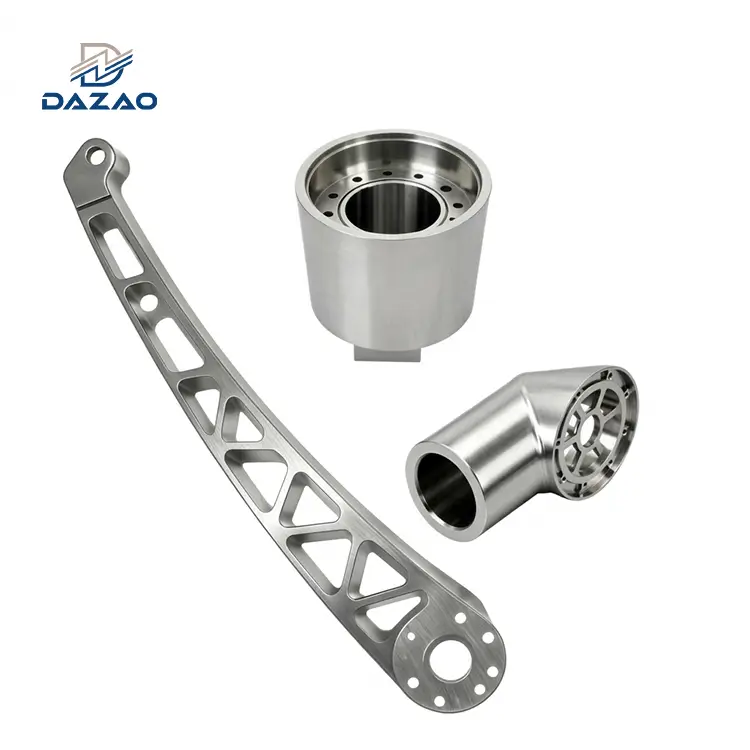
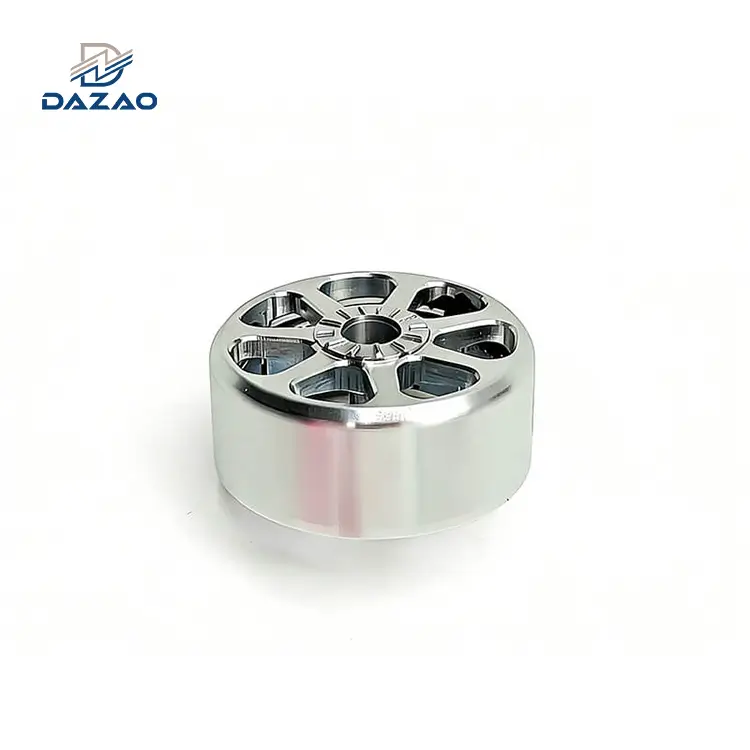
The as-machined state leaves the CNC milling or turning marks visible. This finish retains the exact dimensional integrity achieved by the machine tool. For mating surfaces requiring ±0.001 inch tolerances or strict flatness controls, preserving the as-machined surface prevents post-processing operations from altering the geometry. The visual appearance reflects the exact path of the endmill or face mill, offering an industrial, mechanical aesthetic.
2. Bead Blasted: Glare Reduction & Matte Consistency
Bead blasting utilizes pressurized air to propel spherical glass beads against the part. Unlike sandblasting which uses angular media to aggressively strip material, glass beads peen the surface. This process plastically deforms the micro-peaks of the machining marks, creating a uniform, non-directional matte finish. Engineers specify this to eliminate light glare and obscure light tool transitions, particularly on external cosmetic housings.
3. Anodized (Type II): Beyond Cosmetic Coloring
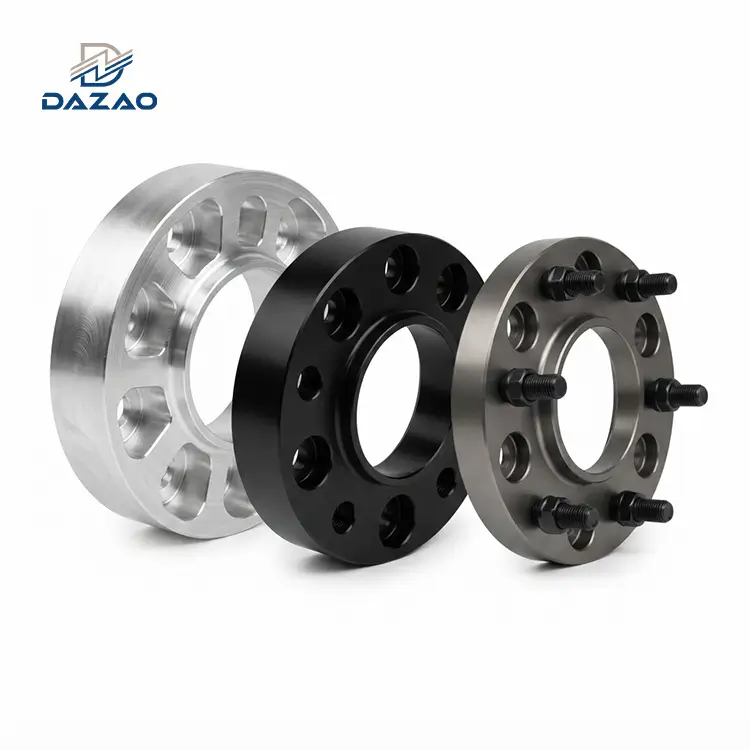
Anodizing is an electrolytic passivation process that increases the thickness of the natural oxide layer on aluminum parts. Type II sulfuric acid anodizing typically produces a layer between 5μm and 25μm thick. It provides high corrosion resistance, increased surface hardness (typically 300-400 HV), and a porous structure capable of absorbing organic dyes for coloring. It is an oxide growth process, not a sprayed coating.
The Ra 1.6 vs Ra 3.2 Dilemma: Hidden CNC Machining Costs
The specification of surface roughness heavily influences cycle times and tool consumption. The debate of Ra 1.6 vs Ra 3.2 (measured in micrometers) is a constant source of friction between design and production teams.
Visual & Tactile Diagnostics
A Ra 3.2 finish (approximately 125 µin) presents a visible, slight texture. Running a fingernail across the surface will detect the ridges of the feed lines. A Ra 1.6 finish (approximately 63 µin) requires tighter step-overs and slower feed rates, resulting in a much smoother tactile feel where tool marks are visible but barely detectable to the touch.
The Consensus: Why Engineers Over-Specify Ra 1.6?
Experienced machinists frequently note that applying a global Ra 1.6 callout to an entire drawing is a primary driver of wasted budget. Achieving Ra 1.6 rather than Ra 3.2 often requires a dedicated finishing pass with a high-speed, low-feed toolpath. This specific requirement extends CNC spindle time exponentially and accelerates tool wear, directly inflating the piece price with zero functional benefit to non-mating surfaces.
DFM Strategy: Using CNC Toolpaths as "Free" Aesthetic Design
Standard industry advice dictates masking tool marks by paying for secondary bead blasting. Dazao engineers utilize a different DFM approach: weaponizing the as-machined toolpath for aesthetic value.
Instead of fighting the Ra 3.2 texture, our programming team optimizes the CAM strategy. By utilizing concentric scallop toolpaths or precise cross-hatching facing routines, the visible Ra 3.2 feed lines transform into deliberate, high-tech geometric patterns. This strategy utilizes the natural kinematics of 5-axis CNC milling to provide a unique industrial texture, eliminating the need for separate bead blasting operations and optimizing the project budget.
|
Specification |
Tactile Feel |
CNC Cycle Time Impact |
Tool Wear Impact |
Recommended Application |
|
Ra 3.2 (125 µin) |
Slight ridges |
Baseline (1.0x) |
Baseline (1.0x) |
Internal brackets, standard non-cosmetic faces |
|
Ra 1.6 (63 µin) |
Smooth, minor lines |
High (1.5x - 2.0x) |
High |
O-ring grooves, thermal interfaces, sliding seals |
|
Ra 0.8 (32 µin) |
Near mirror |
Extreme (3.0x+) |
Extreme |
High-pressure fluid seals, optical mounts |
Bead Blasting + Anodizing: Avoiding Tolerance Stack-Up Traps
Combining bead blasting with anodizing is the industry standard for consumer electronics and premium industrial hardware. However, this combination introduces strict optical and dimensional variables that cause major production failures if ignored.
The Optical Paradox: Why Black Anodized Parts Turn "Grey"
A common failure reported in engineering circles occurs when parts ordered with black anodizing arrive looking faded, charcoal, or dark grey.
This is the optical paradox of heavy bead blasting. When an operator uses an aggressive, low-mesh abrasive (producing deep micro-valleys), the surface area increases drastically. During the anodizing process, the dye fully saturates the porous oxide layer. However, the heavy micro-texture causes severe diffuse reflection of incoming light. Light scattering across rough topography visually washes out dark dyes.
To ensure deep, saturated black coloring, Dazao maps specific glass bead mesh sizes (e.g., #120 to #170 mesh) directly to the selected dye density. Controlling the blast pressure at 40-60 PSI ensures we flatten the machining peaks without creating the excessive microscopic craters that cause the washed-out optical illusion.

Tolerance Stack-Up: The H7 Press-Fit Bore Killer
Many designers treat surface finishing as a purely cosmetic layer, neglecting the mathematical impact on part geometry. The combination of bead blasting and anodizing creates a bidirectional dimensional shift known as Tolerance Stack-up.
· Material Removal (Bead Blasting): Peening the surface compresses and removes a microscopic amount of aluminum, typically reducing external dimensions by 0.0001 to 0.0003 inches.
· Material Addition (Type II Anodizing): The oxide layer penetrates the substrate by 50% of its thickness and builds up outward by 50%. A standard 15μm oxide layer will increase the external dimension by approximately 0.0003 inches (7.5μm) per surface.
On a tight H7 press-fit bore for a custom bearing cap, these shifts will destroy the interference fit. Dazao engineers mandate Custom Masking protocols for any internal bore or mating surface requiring tolerances tighter than ±0.02mm. We deploy precision-cut silicone plugs and specialized UV-curing masking resins to isolate critical geometries from both the blast media and the electrolytic acid bath, ensuring raw-metal dimensional integrity remains intact.
The Cost Equation: True Anodizing Cost & Budget Optimization
Procurement professionals require exact data on how finishing choices impact the final invoice. Anodizing cost is not a flat rate; it is a dynamic formula driven by surface area, racking requirements, and batch physics.
Breaking Down Anodizing Minimum Lot Charges (MLC)
· Minimum Lot Charge (MLC): Chemical processing tanks require massive electrical current and strict chemical titration regardless of batch size. Factories enforce an MLC (often $50 to $150 per run) to cover tank activation. Running five prototype parts carries the same baseline electrochemical cost as running fifty parts.
· Custom Racking Design: Parts must be physically clamped to titanium or aluminum racks to conduct electrical current. If your part lacks threaded holes or hidden non-cosmetic surfaces for racking, engineers must design custom spring-loaded titanium fixtures. Complex racking drastically increases the per-unit labor cost.
· Masking Labor: Every masked hole requires manual insertion and removal of silicone plugs. Specifying mask-all-tapped-holes on a chassis with fifty M3 threads will heavily inflate the total assembly cost due to manual labor.
Avoiding the "Premium Finishing" Waste Trap
A strict rule in industrial procurement: Never use surface finishing to rescue bad machining. Instructing a factory to run long bead-blasting cycles to erase heavy chatter marks or deep gouges will only result in dimensional warping and high scrap rates. Optimal part geometry must be established during the CNC phase.
Dazao's Surface Finish Decision Matrix
To optimize your custom project budget, Dazao recommends the following routing logic:
|
Component Function |
Recommended Finish Strategy |
Cost Impact |
DFM Rationale |
|
Internal Brackets / Hidden Structural |
As-Machined (Ra 3.2) |
Lowest |
No cosmetic requirement; maximizes dimensional accuracy. |
|
Thermal Heatsinks / Fluid Channels |
As-Machined (Ra 1.6) |
Medium |
Improves thermal contact area and fluid flow efficiency. |
|
External Enclosures / Panels |
Bead Blasted + Anodized |
High |
Removes tool marks, provides premium matte aesthetic and scratch resistance. |
|
Wear Surfaces / Sliding Rails |
Hard Coat Anodized (Type III) |
Highest |
Delivers 60 Rockwell C hardness and superior abrasion resistance. |
Conclusion: Engineering the Perfect Surface
Successful product development relies on the strict balance of mechanical tolerances, visual requirements, and unit economics. Understanding the mechanical differences between as-machined surfaces, the physical impact of glass beads, and the dimensional reality of oxide growth separates amateur designs from scalable industrial production.
Xiamen Dazao Machinery operates beyond basic print execution. Our engineering team conducts rigorous DFM analyses to verify that your specified finish aligns with your tolerance requirements and budget constraints.

FAQs
01.Why did my Ra 3.2 machining marks look 10x worse after clear anodizing?
02.How much does specifying Ra 1.6 instead of Ra 3.2 actually inflate my CNC quote?
03.Why do my black anodized aluminum parts look faded or dark purple instead of deep black?
04.Did bead blasting and anodizing ruin my H7 press-fit bearing bore tolerances?
05.Why is the anodizing cost for 5 prototype parts almost the same as 50 parts?
06.How do I stop bead blasting media from destroying my M3 tapped holes?