
If you browse, you will frequently encounter variations of this exact supply chain nightmare: "A supplier promised a 3-day turnaround. Three weeks later, I found out the parts warped on the machine and tools broke. Zero communication until the deadline passed, leaving us with nothing to test."
For hardware engineers and procurement managers sourcing electric vehicle parts, accelerated R&D iterations mean dealing with highly compressed lead times. Delays in receiving physical testing models often translate to missed investor pitches or delayed product launch cycles.
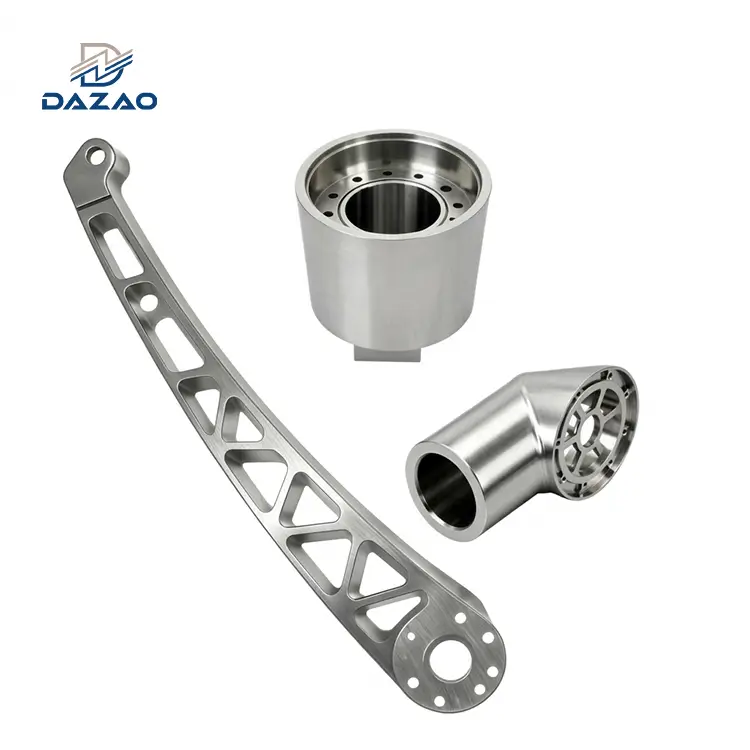
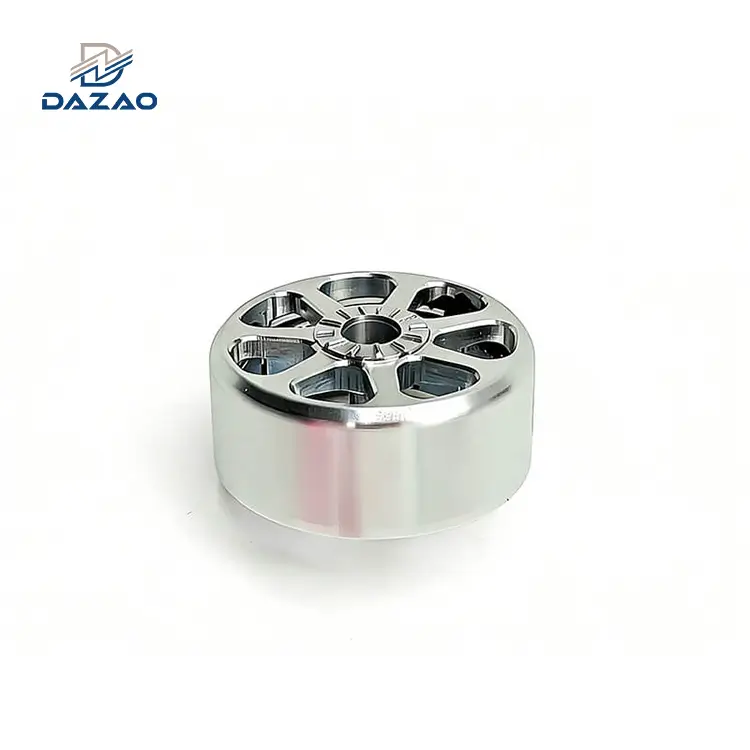
This engineering case study details how Xiamen Dazao Machinery-an ISO9001:2015 and IATF16949:2016 certified custom parts factory in China-successfully executed complex EV battery housing machining within a strict 72-hour window. By utilizing 5-axis CNC systems and a 24-hour synchronized engineering workflow, we delivered high-tolerance rapid prototyping aluminium components without compromising structural integrity or geometric dimensioning and tolerancing (GD&T) requirements.
The 72-Hour Challenge: Why Standard Factories Fail at Electric Vehicle Parts
The client, an emerging EV startup, required a functional, full-scale aluminum battery enclosure prototype to conduct fluid thermodynamics and leak testing. The testing data was a prerequisite for an upcoming Series B funding round scheduled 96 hours later.
Standard machine shops typically require two days merely to source the massive 6000-series aluminum billet, followed by an additional four to five days for roughing, stress relief, and finishing. A three-day deadline is mathematically impossible without pre-allocated machine capacity and aggressive optimization of the CAM toolpaths.

Project Specifications & Engineering Requirements:
|
Technical Parameter |
Specification Requirement |
Machining Challenge |
|
Material |
Al6061-T6 Billet |
High material removal rate (MRR) required; prone to internal stress release and warping. |
|
Dimensions |
850mm x 620mm x 145mm |
Requires large-travel 5-axis or 3+2 axis CNC gantries. |
|
Wall Thickness |
2.5mm minimum |
High risk of vibration and chatter during deep cavity end milling. |
|
Liquid Cooling |
Integrated serpentine channels |
Complex toolpath interpolation; demands high spindle rigidity. |
|
Sealing Surface |
IP67 O-ring groove |
Strict ±0.02mm tolerance and Ra 0.8 surface finish for fluid containment. |
Dazao's 3-Day Execution Plan for Rapid Prototyping Aluminium
To meet the 72-hour hard deadline, Dazao Machinery bypassed standard sequential manufacturing phases and implemented a concurrent engineering framework.
Day 1: Al6061 Material Allocation & Concurrent CAM Programming
Within 60 minutes of PO generation, our automated flexible production line protocol was activated. Instead of waiting for external material vendors, we pulled an 850mm x 620mm Al6061-T6 block directly from our internal raw material buffer. Simultaneously, our manufacturing engineers initiated Mastercam programming, prioritizing the roughing paths so the machine could start cutting while the finishing paths were still being calculated.
Day 2: 24/7 5-Axis CNC Milling & Deep Cavity Optimization
We allocated a high-rigidity 5-axis CNC machining center equipped with a 20,000 RPM spindle. Operating on a strict 24-hour shift schedule, the day shift handled the aggressive volumetric roughing-removing up to 80% of the material mass. The night shift seamlessly took over for semi-finishing and finishing, utilizing 70-bar through-spindle coolant (TSC) to evacuate chips from the deep liquid cooling channels and prevent recutting.
Day 3: CMM Tolerancing & Expedited Global Shipping
By hour 60, the part was off the machine. It immediately entered our climate-controlled inspection lab. Using a Hexagon Coordinate Measuring Machine (CMM), we probed the IP67 sealing grooves and mounting boss locations to verify the ±0.02mm tolerance. Following a rapid ultrasonic cleaning and chemical conversion coating (RoHS compliant), the enclosure was securely crated and dispatched via expedited international air freight.
3 Hidden Pitfalls in EV Battery Housing Machining (And Our DFM Solutions)
Many suppliers claim to offer fast turnarounds by simply increasing feed rates. However, aggressive machining of large electric vehicle parts introduces severe mechanical and thermal risks. Here is how our engineering team mitigated the three most common causes of prototype failure.
Pitfall 1: Controlling Thermal Warping in Thin-Wall Enclosures
The Standard Factory Approach: To save time, standard shops run high-feed roughing and immediately transition to finishing. When the massive 850mm part is unclamped from the vise, the internal stresses in the rapid prototyping aluminium release, causing the 2.5mm thin walls to warp by up to 1.5mm, rendering the IP67 seal useless.
The Dazao Solution: We programmed a calculated "Roughing - Stress Relief - Finishing" cycle. After removing 80% of the material mass, we deliberately halted the machine, completely unclamped the part, and allowed it to rest for 2 hours to naturally release internal stresses. We then re-clamped it using controlled, low-torque vacuum fixtures for the final 0.5mm finishing passes. This ensured the massive base plate maintained a flatness of 0.05mm over 800mm.
Pitfall 2: Eliminating Tool Chatter in Liquid Cooling Channels
The Standard Factory Approach: Operators load the 3D model exactly as provided. When machining the deep corners of the cooling channels, standard end mills suffer from severe overhang (L/D ratio > 5), resulting in extreme vibration, tool breakage, and gouged surfaces. The machine stops, custom long-reach tools are ordered, and the project is delayed by a week.
The Dazao Solution: During the first hour of quoting, our engineers ran toolpath simulations to identify collision and chatter risks. We immediately sent the client a Design for Manufacturing (DFM) markup. We identified that a 5mm internal corner radius at a depth of 60mm would cause chatter. We proposed modifying the non-critical radii to 8mm, allowing us to use a thicker, standard rigid end mill. The client approved the change in 10 minutes, eliminating a major failure point before the spindle even started.
Pitfall 3: Solving the "Time Zone Black Hole" for Overseas Procurement
The Complaint: "The worst part of sending urgent parts to an Asian supplier is the 12-hour time zone gap. If a machine alarms out during their night shift, the project sits dead until my next morning."
The Dazao Solution: As an experienced manufacturer and global supplier, we deploy a Shadow Shift Protocol for critical time-sensitive prototypes. Our night shifts are not just staffed by operators. We mandate the presence of a fluent English-speaking Project Manager (PM) and a Manufacturing Engineer on the floor. When the US-based engineering team woke up on Day 2, they did not receive a machine error notification. Instead, they found an email containing mid-process photos and preliminary CMM data for the roughing phase.

Conclusion:Why Dazao is Your Reliable China Manufacturer for EV Components?
Executing rapid prototyping aluminium projects for the automotive sector requires far more than just fast machine tools. It demands a rigorous understanding of metallurgy, active DFM intervention, and strict quality control protocols aligned with IATF16949 standards.
When dealing with high-stakes electric vehicle parts, choosing the right manufacturer in China is about protecting your R&D timeline and your engineering budget. Xiamen Dazao Machinery delivers exact-tolerance prototypes on schedule, with transparent communication at every phase of the manufacturing process.

FAQs
01.How do you guarantee a 3-day lead time without breaking tools in deep cooling channels?
02.My last rapid prototyping aluminium part warped like a banana after unclamping. How do you prevent this?
03.What happens if my 3D model has deep internal radii that standard tools cannot reach?
04.How does Dazao handle overnight machine errors for urgent overseas orders?
05.Suppliers often claim parts are "inspected," but the O-ring groove leaks. How do you verify this?
06.How often will I receive updates during a 72-hour expedited machining project?