
Producing between 500 and 1000 units represents a difficult inflection point for procurement teams and mechanical engineers. This volume sits in a gray zone where CNC machining becomes labor-intensive and expensive, yet high-volume hard tooling requires a capital expenditure that the project budget may not yet support. At Xiamen Dazao Machinery, we see many projects stall at this stage because of a fundamental misunderstanding of the trade-offs between CNC vs injection molding cost and technical performance.
Choosing the wrong path results in more than just a higher invoice. It leads to assembly failures, warped housings, and lost time. This guide analyzes the transition from prototype to production through the lens of real-world floor experience.

Breaking Down the Economics of Low Volume Injection Molding
When evaluating CNC vs injection molding cost, buyers often focus solely on the piece price. While the unit cost of a low volume injection molding part might be 15 percent of a CNC machined part, the Non-Recurring Engineering (NRE) costs for bridge tooling can range from 3000 USD to 15000 USD depending on complexity.
CNC Machining Cost Drivers
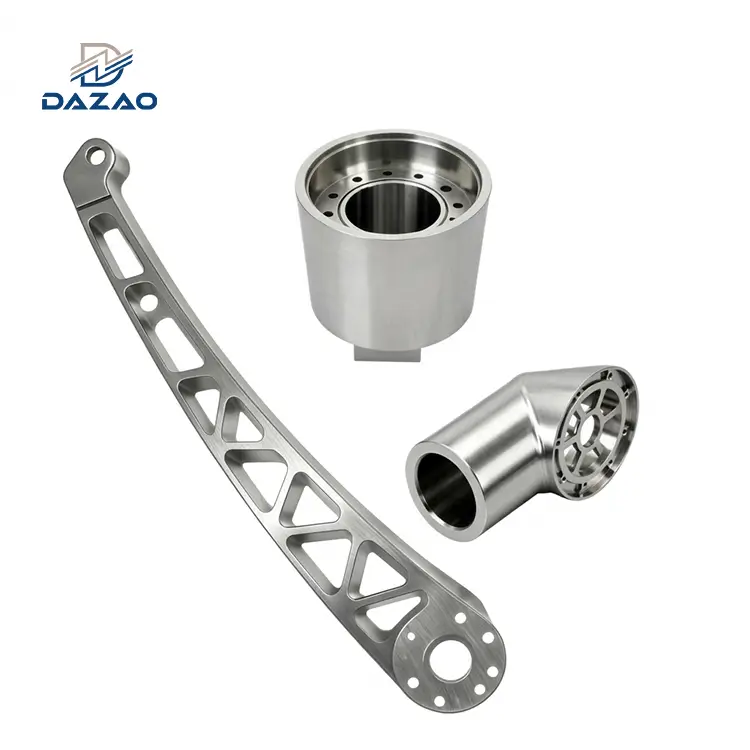
For 500 units, CNC costs are driven by machine hours, setup times, and tool wear. 5-axis CNC milling reduces setup counts but the cycle time remains constant for every part. There is no economy of scale beyond the initial programming phase.
Bridge Tooling Cost Drivers
Bridge tooling China options typically utilize Al7075 or P20 pre-hardened steel. These tools allow for rapid injection cycles. The primary cost is the initial mold design and fabrication. For a standard electronic enclosure, the break-even point where bridge tooling becomes cheaper than CNC usually occurs between 600 and 800 units.
| Feature | CNC Machining (500-1000 Units) | Bridge Tooling (Injection Molding) |
| Setup Cost (NRE) | Low (Programming and Fixturing) | Moderate to High (Mold Base and Cavity) |
| Unit Price | High (Linear with quantity) | Low (Decreases with volume) |
| Lead Time | 5 to 10 Days | 15 to 25 Days |
| Material Range | Nearly any solid block | Thermoplastics (ABS, PC, PA66+GF) |
| Design Flexibility | High (Change code instantly) | Low (Requires mold modification) |

Technical Barriers: Why Your CNC Prototype Might Fail in a Mold
Most manufacturers discuss cost and speed. However, 24 years of operation at Dazao have taught us that technical failure at the 500-unit mark usually stems from three specific areas that traditional sales pitches ignore.
Internal Stress and Dimensional Stability Shifts
CNC machining is a subtractive process. We start with a stress-relieved block of material (like Al6061-T6 or POM-C) and remove what we do not need. The resulting part is dimensionally stable.
In contrast, low volume injection molding involves high-pressure injection of molten resin followed by rapid cooling. This process introduces internal stresses. For a 1000-unit run, if the gate location or cooling lines are poorly designed in the bridge tool, the parts may meet tolerances immediately after ejection but warp 48 hours later during assembly. If your assembly requires plus or minus 0.02mm tolerances across a 200mm span, CNC remains the safer choice even at 1000 units.
The Design Freeze Trap: When a 5000 USD Mold Becomes Scrap
Bridge tooling is marketed as a bridge to mass production. In reality, it often becomes an iteration killer. We have managed projects where clients moved to bridge tooling at 500 units to save 4.00 USD per part. Midway through the run, a field test revealed that a PCB component needed 1.0mm more clearance.
With CNC, we update the G-code and the next part is correct. With a bridge tool, you face a steel-safe modification or, worse, a scrapped tool. Do not move to bridge tooling unless your design is at a 95 percent freeze state.
Surface Finish Decay and Tool Life Reality
The industry standard claim is that aluminum bridge tools last for 10000 cycles. While the mold base might survive, the critical surfaces do not. For high-aesthetic parts with MT-11010 textures or high-gloss finishes, the abrasive nature of glass-filled resins (like PA66+30%GF) will degrade the mold parting line long before the 10000th shot.
By the 800th unit, you may see flash or loss of texture definition. At Dazao, we mitigate this by using P20 steel for bridge tools intended for glass-filled materials, even for 1000-unit orders.

Case Study: Why a 700 Piece Drone Project Reverted to CNC
A client in the commercial drone sector approached us with an order for 700 airframe components. Initially, they demanded a switch from CNC machining to bridge tooling China services to reduce the unit price from 45.00 USD to 12.00 USD.
The original CNC design featured varying wall thicknesses ranging from 1.0mm to 5.0mm to accommodate structural ribs. While this was easy to machine, it was a disaster for injection molding. The thick sections caused severe sink marks and cooling delays, while the thin sections suffered from short shots.
The client had not performed a proper DFM (Design for Manufacturing) analysis for molding. They spent 6500 USD on a bridge tool that produced unusable parts. We eventually reverted to CNC machining for that batch while their team redesigned the part for a future 10000-unit injection molding run. The lesson: Production volume dictates design, not just the machine.
Dazao Decision Matrix: Choosing the Right Path for Your Batch
To solve your procurement bottleneck, evaluate these four criteria before requesting a quote:
· Material Performance: Do you need the specific molecular orientation of a molded part, or will the isotropic properties of a machined block suffice?
·Timeline: If you need parts in hand in 7 days for a trade show, CNC is the only option. Bridge tooling requires a minimum of 14 days for T1 samples.
· Future Scalability: If the 1000 units are a market test and the final product will be injection molded, use bridge tooling now to validate the molding process and shrink rates.
·Surface Finish: If you require a specific molded-in texture (VDI or MT), you must go with injection molding. CNC can only simulate these through secondary bead blasting or painting.