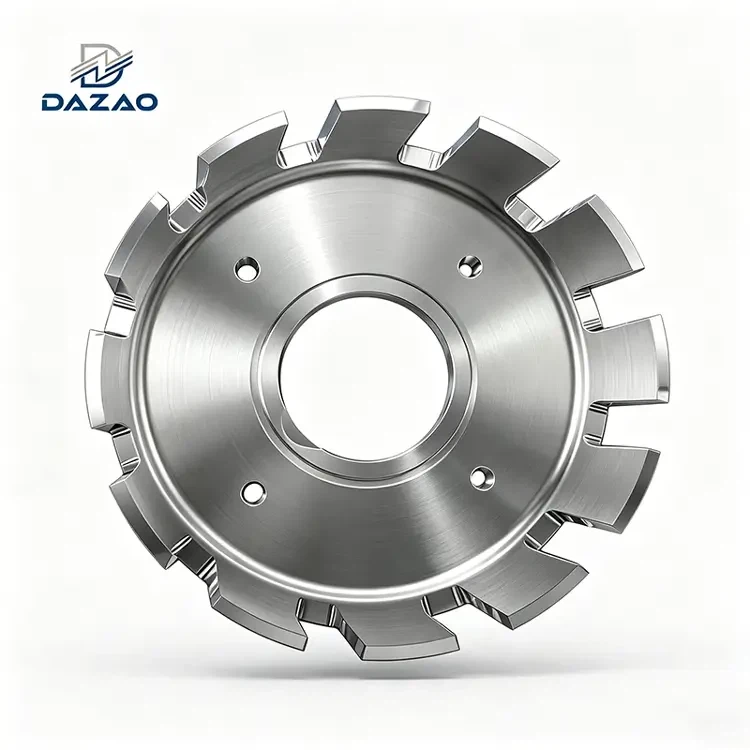
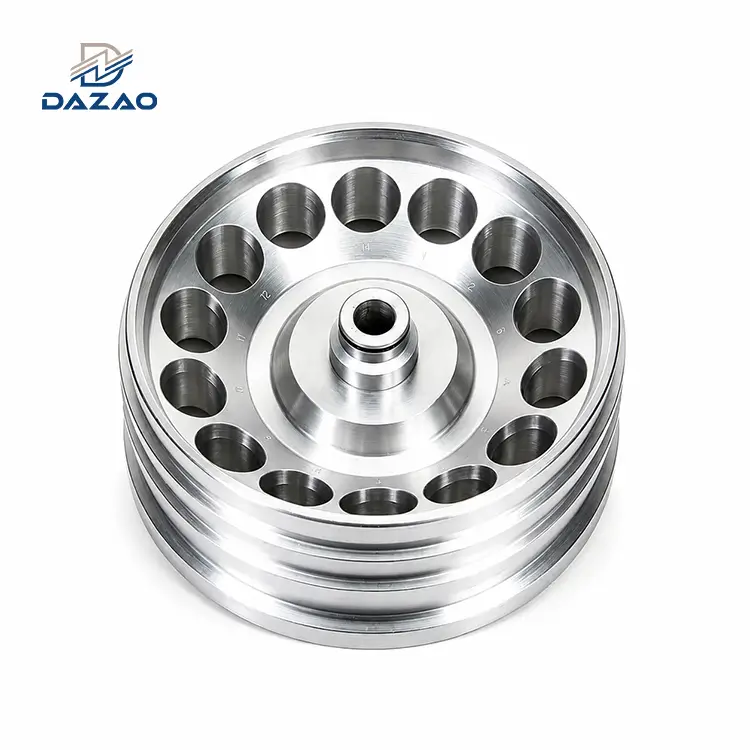
5-Axis CNC Machined Aluminum Centrifuge Rotors
Monoblock 7075-T6 Billet Milling with ISO G2.5 Dynamic Balance Stability for Laboratory and Medical Centrifuges.
Core Engineering Features:
Monoblock 7075-T6 billet CNC milling without welds or voids.
ISO G2.5 dynamic balance testing for 5-axis CNC rotors.
3-stage stress relief prevents dynamic balance drift.
Hole positional tolerance ≤ 0.02 mm via 5-axis milling.
Rapid 10-day prototype delivery without tooling costs.
Shot peening and R0.5 edge radii eliminate fatigue cracks.

Product Overview & Machining Capabilities
Monoblock Billet Engineering Designed for Zero-Porosity and Ultra-High Rotational Stability
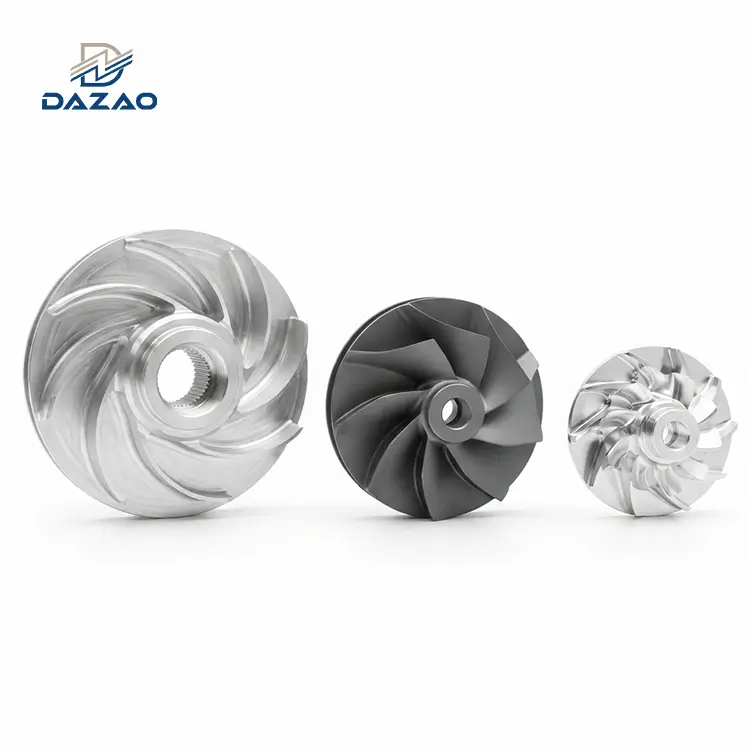
Dazao Machinery manufactures monoblock 5-Axis CNC Machined Aluminum Centrifuge Rotors from solid 7075-T6 aerospace aluminum bar stock or forged TC4 titanium blanks. Utilizing 5-axis CNC machining services for centrifuge rotors, we produce fixed-angle and swinging bucket configurations for desktop, floor-standing, and high-speed refrigerated centrifuges.
By eliminating the structural porosity, blowholes, and weld-line stress concentrations typical of cast or welded alternatives, our billet-milled rotors deliver higher tensile strength and structural integrity under high centrifugal loads up to 20,000 RPM. We provide low-volume production, rapid prototyping, reverse engineering, and custom parametric modifications for laboratory device OEMs, medical instrument manufacturers, and research institutes worldwide.

Field Failure Analysis and Engineering Corrections
How Root-Cause Incident Analysis Drives Industry-Leading Production Standards
Case 1: Residual Stress Relaxation & Dynamic Balance Drift in Fixed-Angle Rotors
· Incident: A European university laboratory ordered 12-hole 7075-T6 fixed-angle rotors rated for 15,000 RPM. Following standard rough-to-finish machining protocols, parts passed initial factory inspection at ISO G2.5 balance grades. After 60 days of shelf storage prior to assembly, field testing triggered vibration alarms at 12,000 RPM. Re-inspection showed a 0.03 mm coaxiality shift across tube cavities, causing dynamic balance to degrade to G6.3.
· Root Cause: Internal residual stresses within the 7075-T6 aluminum released slowly over time, causing micro-deformation of the rotor geometry.
· Corrective Standard: We implemented a 3-stage thermal stress relief protocol: high-temperature stress relief after roughing, low-temperature stabilization after semi-finishing, and artificial aging post-finishing. First-article units are held for 7 days before final dimensional and dynamic balance re-verification. Retest data proves dynamic balance drift remains under 0.5 g·mm after 6 months of storage.
Case 2: Tube Cavity Edge Fatigue Cracking in Medical Centrifuge Rotors
· Incident: A medical device manufacturer integrated our 10,000 RPM desktop centrifuge rotors. Standard deburring left sharp milling edges along the tube cavity rims. After 8 months of operation, 3 units developed micro-fatigue cracks at the rim edges, requiring a full batch recall.
· Root Cause: Sharp edge geometries and tool mark intersections created localized stress concentration points under cyclic loading.
· Corrective Standard: All tube rim intersections and cavity corners now receive full 3D contour radii (minimum R0.5 mm) followed by mechanized polishing. High-stress zones undergo controlled shot peening to induce compressive surface stress, offsetting operational tensile loads. Each production batch undergoes eddy current non-destructive testing (NDT) to verify surface defect limits.
Case 3: Structural Degradation from Improper Mass Removal in Swinging Bucket Rotors
· Incident: During dynamic balance correction of a swinging bucket rotor, technicians drilled mass-relief holes near the bucket attachment trunnions to hit G2.5 tolerances quickly. During full-speed overload testing, cracking occurred at the reduced material section of the trunnion base.
· Root Cause: Unregulated mass removal at critical load-bearing locations severely reduced the structural safety factor.
· Corrective Standard: We established restricted mass-correction zones. Mass removal is restricted to non-structural outer margins and end faces; key load paths, trunnion bases, and cavity walls are strictly off-limits. FEA stress re-evaluation is automatically performed whenever mass correction exceeds 1.5 grams.

Proprietary Manufacturing and Quality Standards
Advanced Thermal Processing and Zoned Dynamic Balancing Protocols
1. 3-Stage Stress Relief Protocol: Integrates roughing thermal relief, semi-finish thermal stabilization, and post-finish artificial aging. Prevents geometry drift and maintains ISO G2.5 dynamic balance precision during extended storage and operation.
2. Zoned Dynamic Balancing with FEA Validation: Restricts balancing mass removal to non-load-bearing regions. Every balance adjustment is cross-referenced with CAD/FEA stress models to retain structural safety margins under maximum centrifugal acceleration.
3. High-Velocity Fatigue Life Optimization: Applies minimum R0.5 mm edge radiusing across all cavity intersections, combined with surface shot peening and 100% eddy current NDT batch sampling, eliminating micro-notch fatigue initiation points.

Technical Specifications and Performance Comparison
Quantitative Benchmarks Comparing Monoblock Billet CNC Rotors to Cast and Welded Alternatives
|
Parameter / Feature |
Monoblock 5-Axis Billet Rotor (Dazao Standard) |
Cast Aluminum Rotor |
Welded / Assembled Rotor |
|
Material Structure |
Uniform 7075-T6 aerospace aluminum / TC4 (Zero voids/pores) |
Porous internal structure |
Heat-affected weld zones |
|
Dynamic Balance Stability |
ISO G2.5 (Drift < 0.5 g·mm / 6 mos) |
G6.3 typical (Prone to drift) |
G4.0 - G6.3 (Stress distortion) |
|
Positional Tolerance |
≤ 0.02 mm across all cavities |
±0.10 mm to ±0.20 mm |
±0.08 mm to ±0.15 mm |
|
Max Operating Speed |
Up to 20,000 RPM (Design dependent) |
< 6,000 RPM |
< 10,000 RPM |
|
Fatigue Life |
> 10,000 duty cycles |
< 2,000 duty cycles |
< 3,500 duty cycles |
|
Tooling Cost & Lead Time |
$0 Tooling / 10-Day Prototype |
High Mold Cost / 45-60 Days |
Fixture Cost / 30 Days |
Engineering Parameters
· Max Machining Diameter: Ø50 mm to Ø300 mm
· Cavity Positional Accuracy: ≤ 0.02 mm
· Surface Roughness: Ra 0.8 µm (Standard CNC Milling); Ra 0.4 µm (Polished Cavities)
· Dynamic Balance Standard: ISO 1940-1 Grade G2.5
· CAM Software: HyperMill 5-axis toolpath strategies for centrifuge rotors

Material Grade and Structural Selection Matrix
Engineering Guidelines for Matching Alloy Selection and Rotor Geometry to Rotational Speed Tiers
Material Options
· 7075-T6 Aluminum Alloy: High strength-to-weight ratio. Ideal for standard laboratory and medical high-speed centrifuges operating under non-corrosive conditions up to 20,000 RPM.
· TC4 Titanium Alloy (Grade 5): Superior yield strength, non-magnetic, highly resistant to aggressive chemical acids and bio-corrosive fluids. Recommended for ultra-speed applications (>20,000 RPM) and sterile bioprocess environments via specialized TC4 titanium alloy machining.
Rotor Geometry Options
· Fixed Angle Rotors: Fixed cavity angles (e.g., 45°, 30°, 15°). Optimized for high RPM pelleting, quick phase separation, and high sample capacity.
· Swinging Bucket Rotors: Buckets swing 90° during rotation. Ideal for density gradient centrifugation and flat-bottom pelleting; restricted to lower peak speeds than fixed-angle designs.
Speed Tier Guidelines
· Low Speed (< 5,000 RPM): 6061-T6 Aluminum; basic G2.5 dynamic balance balancing.
· Medium-High Speed (5,000 - 20,000 RPM): 7075-T6 Aluminum; 3-stage stress relief, edge radiusing, shot peening.
· Ultra-High Speed (> 20,000 RPM): TC4 Titanium Alloy; 100% Eddy Current Inspection, specialized surface anodizing or PVD coating.

Standardized Manufacturing and Delivery Workflow
Turnkey Production Execution from Initial CAD Analysis to Global DDP Logistics
1. Engineering Analysis: CAD file verification (STEP/IGS/X_T) and DFM stress optimization.
2. Material Verification: Optical emission spectrometry verification of raw aluminum/titanium billets with mill test reports (MTR).
3. Precision Machining: Single-setup machining using hypermill 5-axis toolpath strategies for centrifuge rotors to eliminate re-clamping tolerances.
4. Thermal Treatment: Execution of 3-stage stress relief sequences.
5. Quality Verification: Full CMM dimensional inspection checks, ISO G2.5 dynamic balancing, and non-destructive surface flaw inspection.
6. Surface Finishing: Hard-coat anodizing, clear anodizing, or custom laser engraving.
7. Delivery: Pearl-cotton custom-fitted foam packaging, export-grade wooden boxing, and DDP/FOB shipping options.
Quality Control and Inspection Standards
Multi-Stage Quality Verification Protocols Ensuring Zero-Defect Delivery
· Material Traceability: Heat-number tagged material certifications supplied with every batch.
· First Article Inspection (FAI): AS9102-compliant inspection reports covering 100% of drawing dimensions.
· CMM Dimensional Audits: Positional, concentricity, and axial runout reports generated via Zeiss CMM equipment.
· Dynamic Balance Certification: Physical balance calibration readouts provided per serial number.
· Non-Destructive Testing: Eddy current or dye-penetrant inspection certificates available upon request.
Global Supply Chain and Private Label Support
Seamless Integration, Confidentiality Protocols, and Flexible Trade Services
· Trade Terms: Support for FOB, CIF, DDP (Door-to-Door Duty Paid) options.
· Intellectual Property Protection: Non-Disclosure Agreements (NDA) executed prior to drawing transfer; encrypted CAD storage protocol.
· OEM Customization: Neutral white-label packaging, custom part marking, laser-etched serial numbers, and private label boxes for precision CNC aluminum parts.
· Post-Sales Technical Support: Engineering replacement policies for components failing dynamic or dimensional tolerances.
Application Industries and Operational Scenarios
High-Precision Rotor Solutions Tailored for Critical Laboratory, Medical, and Biotech Systems.

Medical Diagnostic Devices
Benchtop clinical blood separation centrifuges requiring strict batch-to-batch vibration limits.

Research Laboratory Equipment
Custom 5-axis CNC machined laboratory rotors tailored for non-standard tube geometry or specialized analytical research.

Biotechnology Bioprocessing
Production-scale harvesting and cell washing separation equipment requiring chemical resistance and structural durability.

Industrial Fluid Separation
Heavy-duty oil and coolant mist separation systems needing fatigue-resistant components.
FAQs

01.How do 7075-T6 aluminum rotors withstand repeated autoclaving and chemical cleaning without surface degradation?
02.Why does a centrifuge rotor exhibit vibration at specific RPM thresholds despite static balance checks?
03.What are the primary structural safety distinctions between fixed-angle and swinging bucket rotors under high G-forces?
04.Can you engineer custom tube cavity profiles without creating localized stress concentration risks?
05.Why are monoblock CNC machined rotors safer for high-speed operation than cast aluminum alternatives?
06.How is dynamic balance precision verified and documented prior to customer dispatch?
Engineering Consultation and Quoting
Upload your 2D and 3D CAD files (STEP, IGES, X_T) for complete engineering review.
Our technical team provides DFM feedback, stress-relief recommendations, and complete quotations within 24 hours.
Contact Us

Hot Tags: 5-axis CNC aluminum 7075-T6 centrifuge rotors,5-axis CNC machining services for centrifuge rotors,dynamic balance testing for 5-axis CNC rotors,5-axis CNC machining for fixed angle centrifuge rotors