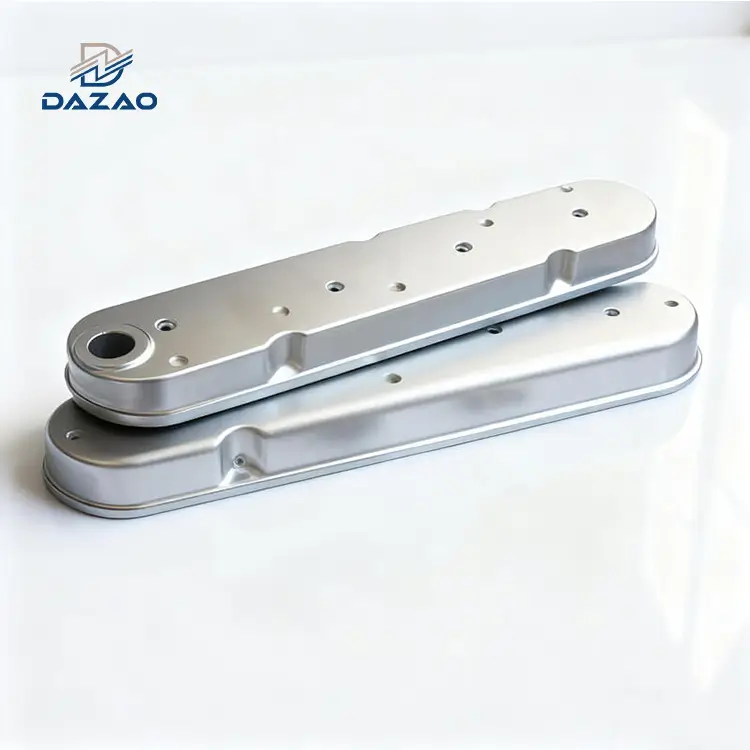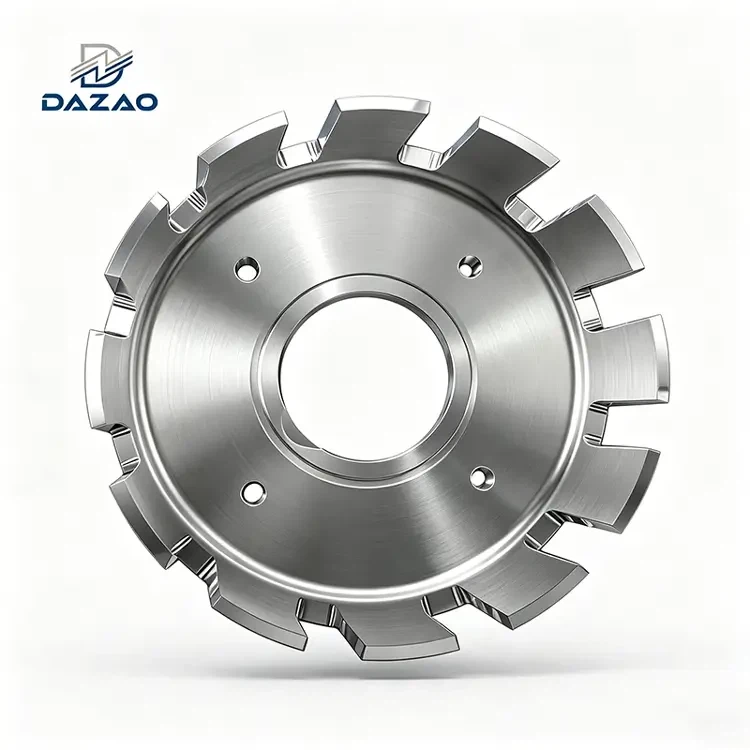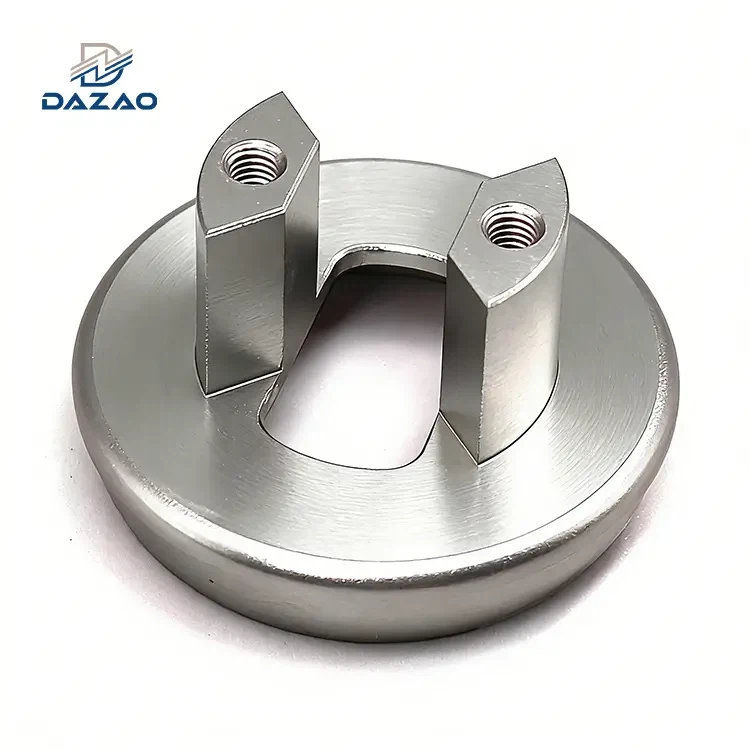
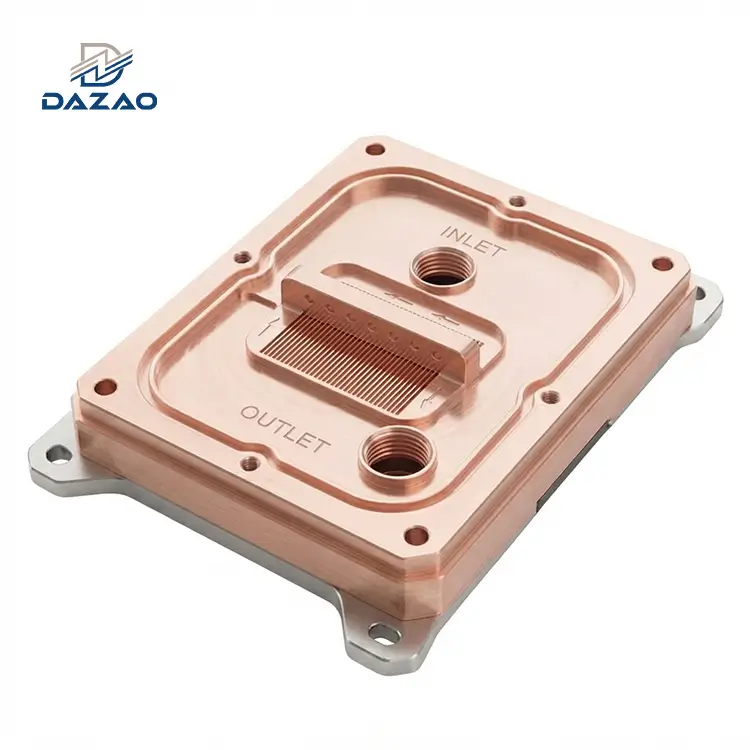
Precision CNC Machining Liquid Cooling Plate Design and Fabrication
High-Density Thermal Management Solutions Engineered for Zero-Leak Integrity and Sub-Micron Surface Precision
Core Engineering Features:
±0.01mm profile tolerance and ≤0.02mm/100mm surface flatness baseline.
Helium mass spectrometer leak rate ≤1×10⁻⁹ Pa·m³/s verified.
Vacuum brazing and FSW solid-state joint encapsulation.
6061-T6 aluminum and C1100 copper thermal structures.
ISO 4406 -/14/11 microchannel particulate cleanliness compliance.
100% CMM dimensional audit with 10-15 day lead time.
100W to 200kW thermal dissipation range designs.

Product Overview & Core Machining Capabilities
Monoblock Precision Milling and Advanced Thermal Architecture for Demanding Industrial Systems
Contract manufacturing for high-heat-flux thermal management components focuses strictly on CNC Machining Liquid cooling plate assemblies. Utilizing multi-axis CNC milling centers, precision deburring, and advanced solid-state joining technologies, thermal plates are processed directly from solid billet stock.
Processing capabilities cover specialized heat sinks and liquid cold plates engineered for intense power densities in electric vehicle (EV) battery packs, AI data center server racks, industrial IGBT power modules, and medical laser equipment. Production handles low-volume rapid prototyping as well as scalable production, ensuring structural integrity, zero coolant leakage, and high thermal contact performance.

Technical Specifications and Performance Baselines
Comprehensive Tolerances, Material Options, and Pressure Testing Metrics for Engineering Evaluation
|
Parameter Category |
Engineering Specification |
Capability Limits & Standards |
|
Dimensional Limits |
Single-piece size: 50 mm × 50 mm to 1500 mm × 800 mm |
Extended sizes up to 2000 mm length via modular joining |
|
Machining Tolerances |
CNC Milling: ±0.01 mm |
Verified via Zeiss CMM inside climate-controlled rooms |
|
Surface Flatness |
Standard: ≤0.05 mm/m² |
Minimizes thermal interface contact resistance |
|
Flow Channel Types |
Straight Slot, Serpentine, Pin-Fin Array, Microchannel, Topology Optimized |
Minimum microchannel slot width: 0.10 mm; Depth Ratio: 10:1 |
|
Material Options |
Aluminum: 6061-T6, 5052-H32, 3003 |
Full MTR provided per batch via OES spectrometry analysis; explore precision CNC copper machining |
|
Sealing & Joining |
Vacuum Brazing, Friction Stir Welding (FSW), Laser Welding, Nocolok Brazing |
100% seam integrity audit; zero filler intrusion inside flow path |
|
Leak Rate Threshold |
Helium Leak Testing: ≤1×10⁻⁹ Pa·m³/s |
Air-under-water test: 0.6 MPa for 30 minutes (Zero Bubbles) |
|
Proof Hydrostatic Pressure |
Operating Pressure: 0.2 to 1.5 MPa |
Tested with 1.5× working pressure for 30 min duration |
|
Surface Finish |
Machined: Ra 0.8 µm to Ra 1.6 µm |
Plating thickness controlled to 5–12 µm without thread obstruction |
|
Cleanliness Standard |
ISO 4406 -/14/11 class cleanliness |
4-stage ultrasonic wash + high-pressure directional flush |

Manufacturing Processes, Joining Methods, and Field Failure Solutions
Proven DFM Workflows and Metallurgy Controls Learned from Real-World Thermal Hardware Failures
Multi-Axis CNC Milling & Distortion Management
Thermal plates manufactured from extruded 6061-T6 aluminum or C1100 copper retain internal residual stresses. Machining deep, asymmetric flow channels releases these stresses, leading to post-machining warpage.
· Tooling: Utilizing high-precision multi-axis CNC milling centers, carbide endmills with internal coolant feeds, and micro-cutters down to 0.1 mm diameter process microchannel arrays.
· Fixturing: Vacuum chucks combined with multi-point pneumatic edge-clamping fixtures distribute holding forces evenly to avoid mechanical deformation during roughing.
· On-Machine Verification: Renishaw optical probes execute datum updates mid-process to adjust for material shift.
Sealing & Joining Methods
· Vacuum Brazing: Performed in high-vacuum furnaces (<10⁻⁴ Pa) using aluminum silicon filler alloys. Specialized vacuum brazing services eliminate flux inclusion and produce uniform, leak-free joints across internal pin-fin matrices.
· Friction Stir Welding (FSW): A solid-state joining process operating below the melting point of the parent metal. Prevents hot cracking, porosity, and thermal shrinkage in large battery cooling plates.
· Laser Welding: Applied for thin-walled covers and localized perimeter seals requiring minimal heat input.
Real-World Field Failures & Root Cause Engineering Solutions
Lesson 1: Stress-Relief Protocol for Batch Flatness Stability
· The Failure: During a production run of 1200 mm long EV cold plates, initial samples passed flatness checks (0.02 mm). However, during unit #200 batch assembly, 15% of parts exhibited warpage up to 0.08 mm after 72 hours of storage, resulting in excessive thermal resistance at the chip contact interface.
· Root Cause Analysis: Residual internal stresses from stock extrusion were released unevenly during high-speed channel milling. Stored strain energy relaxed gradually over 3 days, causing macroscopic structural distortion post-inspection.
· Corrective Engineering Process: Modified the manufacturing sequence. A stress-relief thermal annealing cycle (340°C for 2 hours followed by controlled cooling) was inserted immediately after rough CNC milling. Furthermore, a mandatory 24-hour stabilization rest period was implemented prior to final precision finishing and CMM inspection. Flatness scrap rates fell to 0%.
Lesson 2: Cleaning Standards for Microchannel Internal Debris
· The Failure: A shipment of server microchannel cold plates passed standard immersion washing. After 3 months of field operation in an overseas liquid-cooled server rack, sub-millimeter aluminum debris detached from internal channel sidewalls, causing localized coolant blockages and processor thermal throttling.
· Root Cause Analysis: Standard ultrasonic immersion baths failed to flush out microscopic metallic micro-burrs trapped deep inside 0.15 mm microchannel corners.
· Corrective Engineering Process: Implemented a 4-step cleaning regimen:
1. Ultrasonic wash with de-foaming solvent.
2. High-pressure directional pure water flushing (2.5 MPa) aimed down each channel axis.
3. Compressed dry air purge.
4. 100% endoscopic video inspection.
Particulate contamination is monitored strictly to ISO 4406 -/14/11 cleanliness levels.
Lesson 3: FSW Joint Intergranular Corrosion in Glycol-Water Loops
· The Failure: Friction Stir Welded aluminum plates installed in energy storage units experienced coolant seepage along the weld bead boundary after 14 months of exposure to a 25% ethylene glycol water mix.
· Root Cause Analysis: The microstructural grain boundaries in the Thermomechanically Affected Zone (TMAZ) of the FSW seam differed from the parent 6061-T6 matrix, creating a localized galvanic potential difference that accelerated intergranular corrosion under continuous fluid exposure.
· Corrective Engineering Process: Adjusted material and joining selection rules. For ethylene-glycol closed loops requiring long lifespan, Vacuum Brazing is specified as the preferred default. Where FSW is required for structural reasons, an internal anti-corrosion chemical barrier coating (or chromate conversion treatment) is mandated across the wet perimeter.

Technical Pitfalls Avoided in DFM Assessment
· Pressure Drop vs. Thermal Transfer Tradeoff: Dense pin-fin structures increase heat transfer surface area but exponentially raise fluid pressure drop (ΔP). CFD fluid flow simulations during DFM balance flow resistance against required thermal performance.
· Hole Pitch Tolerance Accumulation: Multi-plate parallel manifold systems can experience assembly binding if hole positioning tolerances stack up. Hole pattern tolerances are maintained within ±0.005 mm position tolerance relative to primary datums.
· TIM Interface Compatibility: Contact surface roughness must match the thermal interface material (TIM) thickness. For thin thermal pads, precision fly-cutting or lap-grinding achieves Ra 0.8 µm with ≤0.02 mm flatness.

Application-Specific Design and Material Selection Matrix
Match Fluid Channel Geometries and Metal Substrates to Your Operating Power Densities
1. <5 kW Low Thermal Density: Straight slot aluminum plates. Provides lower manufacturing cost and simple maintenance.
2. 5 kW to 30 kW Uniform Distribution: Serpentine channels in 6061 aluminum plates. Ideal for battery cooling plates where temperature uniformity (ΔT≤3∘C) across multiple cells is necessary.
3. 30 kW to 100 kW Medium Density: Pin-fin arrays milled into aluminum or copper baseplates. High fluid turbulence maximizes heat conversion for IGBT power modules and data center cold plates.
4. >100 kW Extremely High Heat Density: Copper microchannels processed via fine-tooling multi-axis milling. Optimized for high-performance AI processor cold plates and high-power industrial laser systems.

Quality Control Pipeline and Inspection Standards
ISO 9001 Audited Verification from Raw Billet Spectrometry to Helium Mass Spectrometry Leak Audits
Certified under ISO 9001:2015, every liquid cooling plate undergoes documented multi-stage quality control checks:
· Incoming Quality Control (IQC): Optical Emission Spectrometry (OES) chemical validation of aluminum/copper alloys; ultrasonic flaw detection on raw thick plate billets to prevent internal voids.
· In-Process Quality Control (IPQC): First Article Inspection (FAI) report generation for all critical geometric dimensions; continuous tool wear tracking and laser tool-setter verification.
· Pressure & Leakage Verification:
· Helium Mass Spectrometer Leak Detection: Placed inside a vacuum chamber to verify leak rates down to ≤1×10⁻⁹ Pa⋅m3/s
· Hydrostatic Proof Test: Subjected to 1.5× maximum working pressure for 30 minutes to verify mechanical joint strength.
· Surface & Cleanliness Final Audit: CMM laser scanning produces surface flatness heatmaps. Endoscopic camera checks confirm 100% channel clearance free of burrs or residue.

Industrial Application Scenarios
Mission-Critical Liquid Cooling Solutions Tailored for Data Centers, EV Battery Modules, and Medical Lasers.

AI Data Centers & Supercomputers
Direct-to-chip liquid cold plates engineered for high-TDP processors, GPUs, and high-density rack modules.

Electric Vehicles (EV) & e-Mobility
Large-format aluminum battery module cooling plates, onboard charger (OBC) thermal bases, and automotive liquid cooling components.

Energy Storage Systems (ESS)
Heavy-duty liquid cooling plates designed for long cycle life in utility-scale battery container systems.

Industrial High-Power IGBT Modules
Copper and aluminum pin-fin cold plates used in industrial motor drives, wind turbine converters, and solar inverters.
FAQs

01.How do you optimize channel design to balance pressure drop against heat transfer in microchannel cold plates?
02.What causes glycol coolant corrosion in aluminum liquid plates, and how is it prevented?
03.Why do large aluminum cold plates warp after CNC channel milling, and how do you maintain flatness?
04.Why is helium mass spectrometer leak testing preferred over air-under-water pressure testing?
05.How do you ensure internal flow channels are completely clean of chips and fine micro-burrs?
06.How does contact surface flatness impact thermal interface material performance?
Request Technical Consultation and Fast Quotation
Upload 2D/3D CAD files (STEP, IGES, or DXF) for a complete DFM engineering evaluation and a detailed technical quotation within 24 hours.
Contact Us

Hot Tags: CNC Machining Liquid cooling plate,Precision liquid cold plates,Copper liquid cold plate machining,Vacuum brazing cold plate,Liquid cooling cold plate fabrication