
Modern UAV design dictates a relentless pursuit of flight endurance and payload capacity. Choosing between carbon fiber and aluminum alloy often results in structural compromises. As an experienced UAV parts supplier, Xiamen Dazao Machinery specializes in high precision drone frame manufacturing by integrating CNC carbon fiber cutting with aerospace grade aluminum components. This hybrid approach optimizes the stiffness-to-weight ratio while addressing critical engineering failures common in single-material frames.

Addressing Real-World UAV Engineering Pain Points
Feedback from professional drone developers on platforms like and specialized engineering forums highlights three recurring failure modes in standard frames.
● Resonance and IMU Noise: High frequency vibrations from high-KV motors often translate through rigid carbon fiber arms, causing Inertial Measurement Unit sensor interference. This results in erratic flight behavior or sensor saturation.
● Structural Delamination: During high-impact landings or stress testing, inferior carbon fiber plates tend to experience interlaminar shear, leading to irreversible delamination at the bolt holes.
● Joint Instability: Standard aluminum-to-carbon connections frequently loosen due to motor-induced vibration, resulting in arm misalignment and degraded flight stability over time.
Critical Engineering Challenges: Beyond Standard Drone Frame Manufacturing
While many suppliers offer basic cutting services, three technical blind spots often compromise the long-term reliability of a UAV frame.
1. Galvanic Corrosion and Electrical Isolation Management
Carbon fiber is electrically conductive. When in direct contact with aluminum in a moist or saline environment, a galvanic cell forms. The aluminum acts as a sacrificial anode, leading to rapid oxidation and structural weakening at the joint.
Dazao addresses this through advanced surface treatments. We utilize Type II or Type III hard-coat anodizing for all aluminum components and can integrate non-conductive epoxy or thin fiberglass buffer layers at contact points. This is vital for industrial drones operating in coastal or high-humidity regions.
2. Management of Thermal Expansion Coefficient Mismatch
Carbon fiber composites possess a near-zero Coefficient of Thermal Expansion, whereas Al7075-T6 expands at approximately 23.2 micrometers per meter per degree Celsius. In extreme temperature fluctuations, this disparity generates significant internal stress at the fasteners.
Our engineering team utilizes CNC carbon fiber cutting with compensated tolerances. We design floating support structures and use specific torque-limiting fastening systems to ensure that thermal expansion does not lead to frame warping or bolt fatigue.

3. Edge Micro-Fractions and Moisture Ingress Protection
Standard CNC routing often leaves microscopic burrs or exposed fibers at the edge of the plate. These micro-fractions act as capillary paths for moisture and dust, which gradually degrade the resin matrix.
Dazao implements a secondary edge finishing process. By utilizing diamond-coated tools and a proprietary edge-sealing technique, we ensure the perimeter of every carbon part is smooth and sealed. This prevents weight gain from moisture absorption and maintains structural integrity over thousands of flight hours.
Dazao Technical Specifications: Material and Tolerance Comparison
The following data outlines the performance metrics achieved by Dazao in hybrid drone frame manufacturing.
|
Parameter |
Carbon Fiber (Toray T700) |
Aluminum (Al7075-T6) |
Hybrid Assembly Benefit |
|
Density (g/cm³) |
1.6 to 1.8 |
2.81 |
30 percent weight reduction vs. full Al |
|
Tensile Strength |
4900 MPa |
572 MPa |
Optimized load distribution |
|
Machining Tolerance |
±0.05 mm |
±0.01 mm |
High precision motor alignment |
|
Vibration Damping |
Low (Brittle) |
Moderate |
Reduced harmonic resonance |
|
Primary Use Case |
Main plates and arms |
Motor mounts and hinges |
Superior fatigue resistance |
Synergizing CNC Carbon Fiber Cutting and Aluminum CNC Machining
Xiamen Dazao Machinery provides a vertically integrated solution for UAV manufacturers. Our facility manages the entire production cycle from DFM analysis to final assembly.
Advanced CNC Carbon Fiber Cutting Precision
We utilize high-speed routers with specialized dust extraction systems to process 3K, 6K, and 12K carbon fiber plates. Our process ensures zero scorching and minimal fraying. We support plate thicknesses from 0.5mm to 20mm, maintaining high flatness across large-scale drone center plates.
Aerospace Grade Aluminum CNC Machining
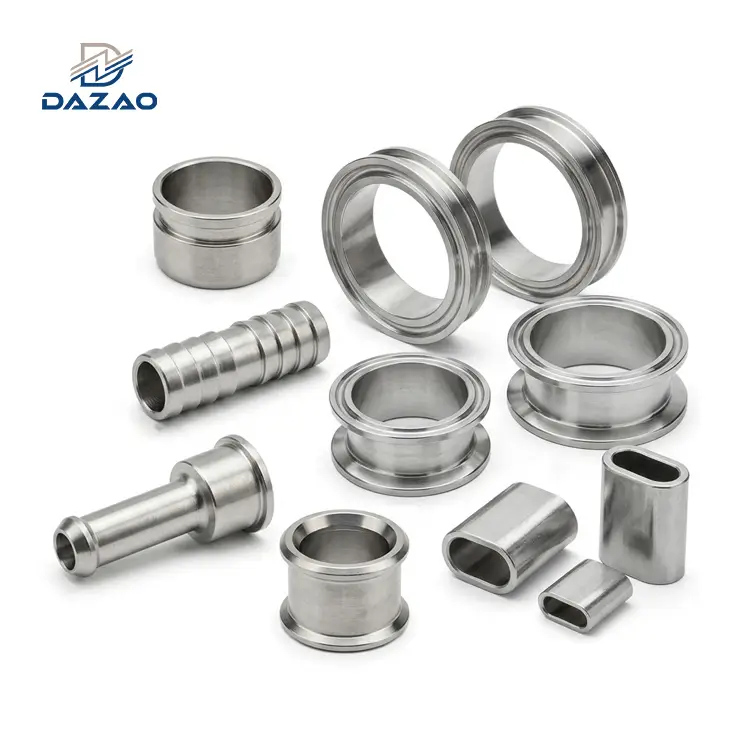
For motor mounts, folding hinges, and camera gimbal parts, we utilize 4-axis and 5-axis CNC milling. By using Al7075-T6, we provide the strength of steel at a fraction of the weight. All parts undergo rigorous dimensional inspection to ensure perfect fitment with carbon fiber components.

Selection Guide for a Professional UAV Parts Supplier
When evaluating a manufacturing partner for drone components, engineers should prioritize the following criteria.
● Multi-Material Proficiency: Does the supplier understand the interaction between composites and metals or are they simply a machine shop.
● Tolerance Control: Can they maintain ±0.01 mm for aluminum inserts while managing the variance inherent in carbon fiber thickness.
● Rapid Prototyping: The ability to deliver functional prototypes within 5 to 7 days for iterative flight testing.
● Quality Certification: Ensure the factory holds ISO9001:2015 or IATF16949:2016 certifications to guarantee material traceability.
Conclusion: Partner with Dazao for High-Performance UAV Structures
The transition to hybrid carbon fiber and aluminum structures represents the current peak of drone frame manufacturing. By solving the inherent challenges of galvanic corrosion, thermal expansion, and resonance, Dazao enables UAV manufacturers to build more durable, efficient, and reliable aircraft.
As a dedicated UAV parts supplier, Xiamen Dazao Machinery provides the technical expertise and manufacturing scale required to move from initial concept to mass production.

FAQ: Solving Professional UAV Engineering Challenges
01.How can I stop my drone frame from vibrating and messing up the IMU?
02.Why do the bolts on my carbon fiber frame keep coming loose after a few flights?
03.How do you prevent carbon fiber arms from snapping at the bolt holes?
04.Is it really necessary to seal the edges of my carbon fiber plates?
05.What is the best aluminum grade for drone motor mounts?
06.Can Dazao help me reduce the weight of my current drone frame?