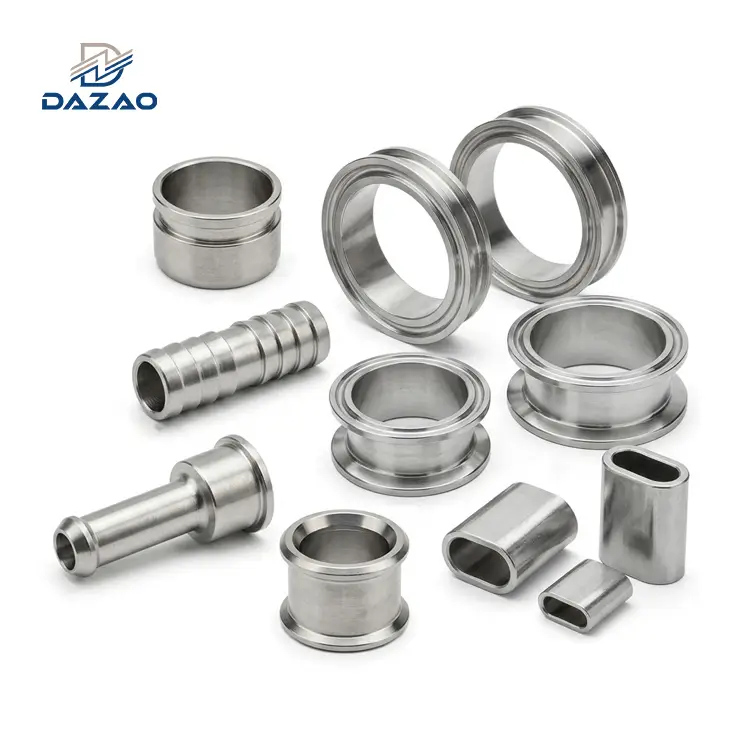

The evolution of humanoid robotics depends on the mechanical integrity of the joint actuator. As AI models drive more complex movements, the physical hardware must execute those commands with absolute fidelity. In this high stakes environment, robot parts machining has moved beyond simple fabrication into the realm of micro engineering. Achieving the required torque density and motion precision demands a specialized approach to custom gears CNC production and actuator housing manufacturing. At Xiamen Dazao Machinery, we eliminate the variables that lead to joint jitter and premature component failure.
Critical Challenges in Humanoid Actuator Hardware
The primary bottleneck in robotic locomotion is the cumulative error within the actuator assembly. As motor speeds increase, any microscopic deviation in the gear tooth profile or the concentricity of the housing leads to destructive vibrations. Dazao Machinery addresses these challenges by integrating sub ten micron tolerances directly into the robot parts machining workflow, ensuring that every joint moves with the intended fluidity of the control software.
Addressing Community Pain Points and Engineering Failures
Procurement teams and engineers frequently report three specific grievances:
Dynamic Backlash Accumulation: Components that pass static dimensional checks often exhibit excessive play when integrated into a high ratio gear set. This slop destroys positional accuracy.
Structural Creep and Deformation: Thin walled aluminum housings often lose alignment after several dozen thermal cycles, leading to gear binding or bearing failure.
Metrology Transparency Gaps: Many manufacturers provide basic pass or fail data but cannot provide the granular coordinate data needed to troubleshoot complex assembly issues.
Advanced Technical Pillars of Robot Parts Machining
Surface Topology and Resonance Suppression
Standard robot parts machining focuses on diameter and pitch, but Dazao engineering focuses on micro surface waviness. In high speed robotic joints, microscopic ridges left by traditional cutting tools act as excitation sources for high frequency harmonics.
We utilize advanced CNC grinding and honing to achieve a surface finish of Ra 0.4 or better on all gear teeth. This ultra smooth finish reduces the mechanical noise that typical high resolution encoders interpret as signal interference, allowing for perfectly stable low speed robotic navigation and fine motor control.
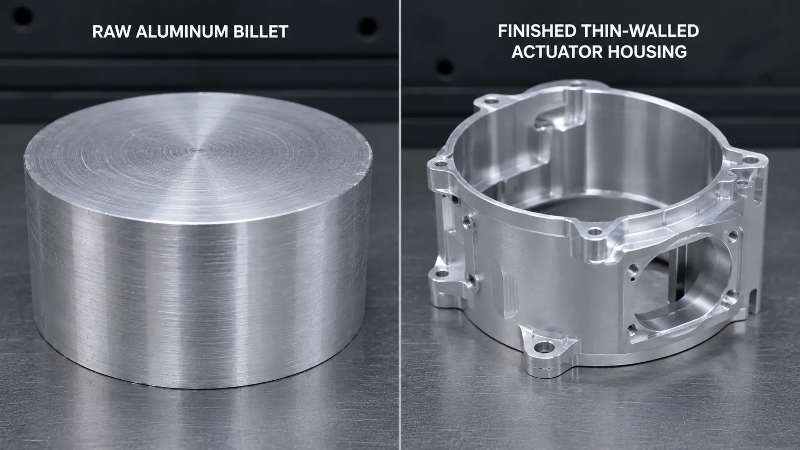
Stress Balance in Thin Walled Actuators
To achieve the lightweight goals of humanoid robotics, actuator housing manufacturing often involves wall thicknesses as thin as 0.5mm. Traditional machining locks internal stresses into these delicate structures.
Dazao solves this through a multi stage stabilization process. We perform initial rough machining, followed by controlled thermal annealing and a deep cryogenic treatment at minus 196 degrees Celsius. This re aligns the molecular structure of the Al7075 or Ti6Al4V alloys, ensuring the housing remains dimensionally stable even when subjected to the 80 degree Celsius operating temperatures of a high performance motor.
Predictive Tolerance Stack up Optimization
A gear is only as precise as the housing it occupies. Rather than machining components in isolation, Dazao offers a system level optimization service. By analyzing the complete assembly model, we can adjust the tolerances of the custom gears CNC to compensate for the actual measured bore locations in the housing.
This proactive correction eliminates the need for manual shimming during assembly and reduces internal friction, which directly extends the battery life and operational window of the robot.
Engineering Material Performance Comparison
|
Technical Property |
Al7075-T6 Aluminum |
17-4 PH Stainless Steel |
Ti6Al4V Grade 5 |
|
Tensile Strength |
503 MPa |
1000 MPa |
880 MPa |
|
Weight Efficiency |
Superior |
Poor |
High |
|
Machinability |
Excellent |
Fair |
Difficult |
|
Primary Application |
Lightweight Housings |
High Torque Gear Sets |
Structural Joint Frames |
|
Dazao Tolerance Cap |
±0.005mm |
±0.008mm |
±0.010mm |
Strategic Procurement Factors for Robotic Components
When evaluating a manufacturing partner for robot parts machining, senior procurement officers should prioritize process stability over unit price. Key performance indicators include:
CPK and Ppk Data: Demand statistical proof that the manufacturing process maintains a CPK of 1.33 or higher for all critical dimensions.
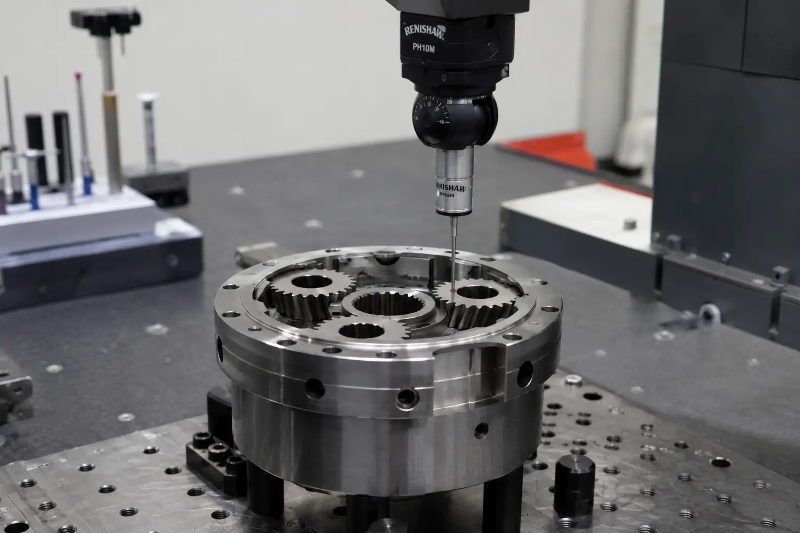
Climate Controlled Metrology: Ensure the supplier utilizes in process probing and 22 degree Celsius constant temperature CMM labs to verify dimensions.
Collaborative DFM: A high tier partner must identify thin wall instabilities in the design phase and suggest geometry modifications to improve rigidity without increasing the mass of the robot.
The Dazao Standard: Converting Complexity into Certainty
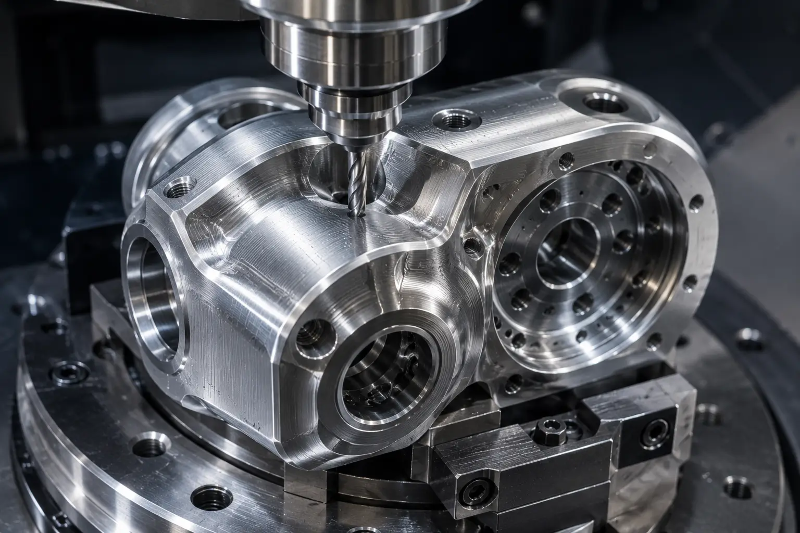
Xiamen Dazao Machinery brings 24 years of expertise and IATF16949:2016 certification to every robotics project. We specialize in the high precision world of humanoid hardware, combining 5 axis milling with specialized gear grinding. We do not just produce parts: we provide the mechanical certainty required for your robotic systems to perform reliably in unpredictable real world environments.
FAQs
01.How does Dazao solve the gear backlash issues discussed in robotics forums?
02.Why do my actuator housings warp after several weeks of field operation?
03.Can Dazao machine the thin walls required for lightweight humanoid joints?
04.How do you ensure the gear set fits perfectly inside the machined housing?
05.What surface treatments do you recommend for high wear robot joints?
06.Can Dazao provide the documentation required for aerospace grade robotics?