
In today's rapidly shrinking market, rapid iteration has become a core competitive advantage. Whether for a startup seeking breakthroughs or a well-established manufacturer, prototype manufacturing is a crucial step in product development.
A high-quality prototype quickly materializes an abstract design, providing teams with crucial opportunities for functional verification, user experience testing, and market feedback. This allows them to accurately identify and correct potential defects before committing to high tooling and large-scale production costs.
However, the core challenge lies in: how to identify and lock in a truly reliable manufacturing partner? This is far more than just a simple price comparison; it is also a comprehensive test of the supplier's technical adaptability, quality stability, project response speed, and communication efficiency. The following will combine industry practices to systematically explain how to select a partner to ensure that your product's journey from concept to mass production is smoother and more reliable.
Understanding The Value of Prototype Manufacturing
The Role of Prototyping in Product Development
In the entire product development process, prototyping serves as a crucial bridge between design and mass production. It not only allows designers and engineers to see real-world results beyond the drawing board but also enables essential functional testing at an early stage.
By creating functional prototypes, the team can confirm that the structure, assembly method and performance are as expected, thus avoiding costly modifications during mass production later.
Case Study: Rapid Functional Verification of Orthopedic Screws
We worked on a North American medical device project where the client urgently needed to perform functional verification on a new orthopedic screw to meet stringent clinical trial submission deadlines.
The difficulty lies in the extremely high requirements for the screw's micron-level thread accuracy and biocompatibility.
After evaluation, our engineering team developed a hybrid process solution combining CNC machining (for the main structure) with metal 3D printing (for complex internal features).
Ultimately, we delivered five sets of functional prototypes that fully met testing requirements within seven working days. The customer used this to quickly complete assembly matching, fatigue strength and torque tests, successfully meeting the clinical stage application deadline.
This case study highlights how a targeted rapid prototyping strategy can accelerate product development in highly regulated industries.
Types of Prototypes
Prototypes are not a single form and can be divided into many types according to their purpose.
Appearance display prototype
It mainly shows the appearance of the product design, emphasizing the visual and tactile experience, but may not have complete functions.


Functional prototypes
These verify structural strength, mechanical properties, or electrical functionality.
Production validation prototypes
These are manufactured using the same or similar processes and materials as the final product to test manufacturability and ensure a smooth transition to final production.

Common Prototype Materials
Different prototypes require different raw materials. Common ones include:
Plastics
ABS and polycarbonate (PC), commonly used for appearance prototypes and rapid prototyping.


Metal
Aluminum alloy, stainless steel, for functional prototypes with higher structural strength.
Resins and composite materials
for small batches and special performance testing.

Choosing the right material allows prototype parts to better simulate the characteristics of the final product and helps the team identify problems earlier.
Materials of Metric Roller Chain Sprocket
Digital manufacturing technologies have revolutionized the pace and cost structure of prototyping.
The choice depends on the specific stage of your project:
3D Printing: It excels at producing complex geometries that are impossible with traditional processes, with speed and cost-effectiveness.
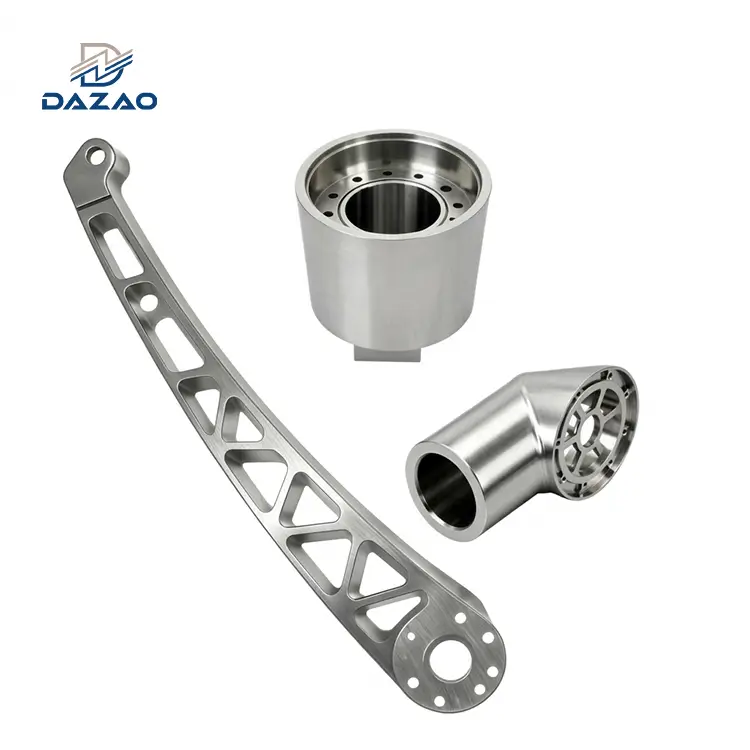
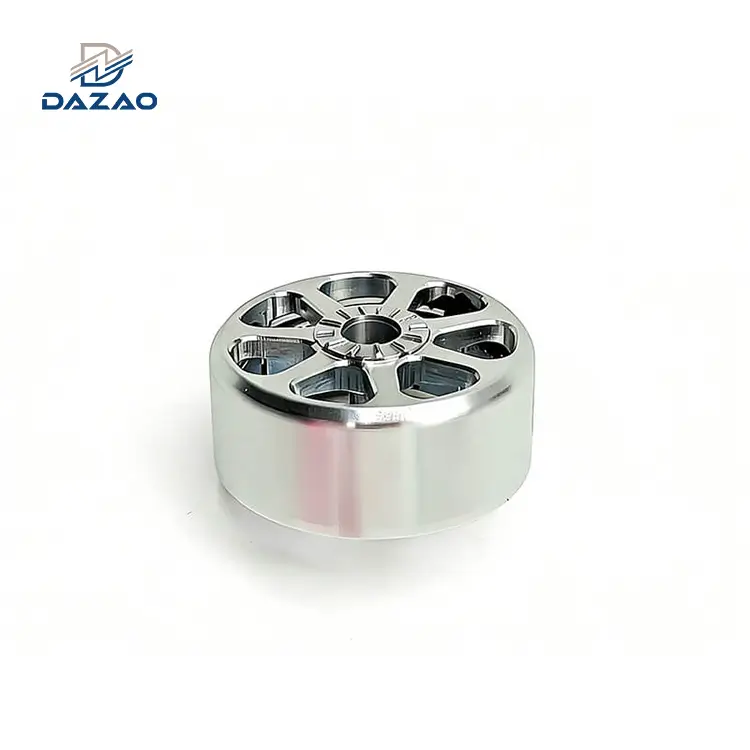
CNC Machining: When a prototype needs to have the same performance, dimensional accuracy, and material properties as the final product, CNC is the better choice. Using standard, block-like engineering materials (such as aluminum, POM, and PC), CNC machining offers properties closer to those of production parts, making it ideal for structural verification and pre-production testing.
A common misconception is that 3D printing can replace all processes. In fact, wise decisions often come from weighing the triangle of "speed, cost, and functional simulation."
The Value of Traditional Crafts
Although digital processes are highly efficient, traditional crafts remain important.
Injection Molding: Suitable for high-volume prototyping or near-production verification.
Vacuum Casting and Mold Trial Production: low cost, suitable for small and medium batch trial production.
Matching Process with Product Design
When choosing a process, you need to consider product designs, material properties, and budget.
An experienced manufacturing partner can recommend the most appropriate manufacturing method based on the needs of different stages to ensure an efficient and smooth prototyping process.
Key Criteria for Screening Manufacturing Partners
Technology and Capacity
· Can they offer a variety of prototyping services (such as 3D printing, CNC machining, and injection molding)?
· Can they scale from small-batch pilot production to mass production, minimizing the risks associated with switching suppliers?
Quality and Certification
· Does they have a strict quality management system, such as ISO certification?
· Willingness to provide samples for customer verification to ensure prototype parts meet requirements?
· Is their commitment to intellectual property protection evident by signing a Non-Disclosure Agreement (NDA)?
Response Speed and Project Flexibility
· A supplier's response speed to quotes is a key factor in evaluating a supplier.
· An efficient partner can usually provide a preliminary quotation and process analysis within 4-8 hours, rather than a simple automatic quotation.
· More importantly, do they have a mature contingency procedures to handle inevitable emergency orders, design changes, or temporary incremental requirements? This directly determines the project's resilience to risk in the face of uncertainty.
Customer Service and Communication
· Is there a dedicated project manager to manage communication, minimizing information transfer delays?
· Whether professional support can be provided from design optimization to manufacturing process suggestions.
· Whether it has a good reputation and success cases in the industry.
Transition from Prototype to Mass Production
Validation and Iteration
By continually tweaking functional prototypes, you can gradually refine your design during small-scale production, avoiding serious problems that may arise during mass production.
Mass Production Readiness
A qualified manufacturing partner should ensure a seamless transition from prototype to final production.
This includes:
· Using consistent or compatible materials and processes.
· Provide batch process (such as injection molding) support to ensure production consistency.
· Providing complete manufacturing services, including subsequent assembly and supply chain management.
A Practical Selection Process (Buyer's Reference Guide)
Clear Requirements and Budget
Before looking for a partner, you should have clear project goals and budget, and detail the specifications and quantity requirements in your RFQ (Request for Quote).
Supplier Comparison Methods
· Compare based on sample quality, delivery speed, and price transparency.
· Start with a small test order to test the supplier's reliability.
Risk Mitigation and Long-Term Partnership
· Build trust gradually through phased collaboration.
· Long-term partnerships allow manufacturers to better understand your product design, improving efficiency and stability.
Conclusion
In short, prototyping is a crucial exercise in transforming innovative ideas into market-winning products.
The value of this process is largely unlocked by your choice of manufacturing partner.
A truly aligned partner not only provides technical support but also serves as an extension of your project with extensive experience, helping you mitigate risks, shorten cycle times, and optimize costs.
If You're Evaluating a Prototyping Vendor, We Look Forward to Being Your Trusted Choice
You Can:
· Submit your design files for a detailed, transparent, and quick quote;
· Contact our engineering team for comprehensive technical support, from design review to manufacturing.
Let us help you bring your next big idea to life
FAQ
Q1: What is prototype manufacturing?
A1: Prototype manufacturing is the process of creating early models of a product to test design, function, and manufacturability before moving to mass production.
Q2: How long does prototype manufacturing take?
A2: Timelines vary based on complexity. Simple 3D printed parts can take 1–3 days, while CNC machined or injection molded prototypes may take several weeks.
Q3: How to choose prototype materials for functional testing?
A3: Materials should match the mechanical, thermal, or chemical properties required in final production to ensure accurate testing.