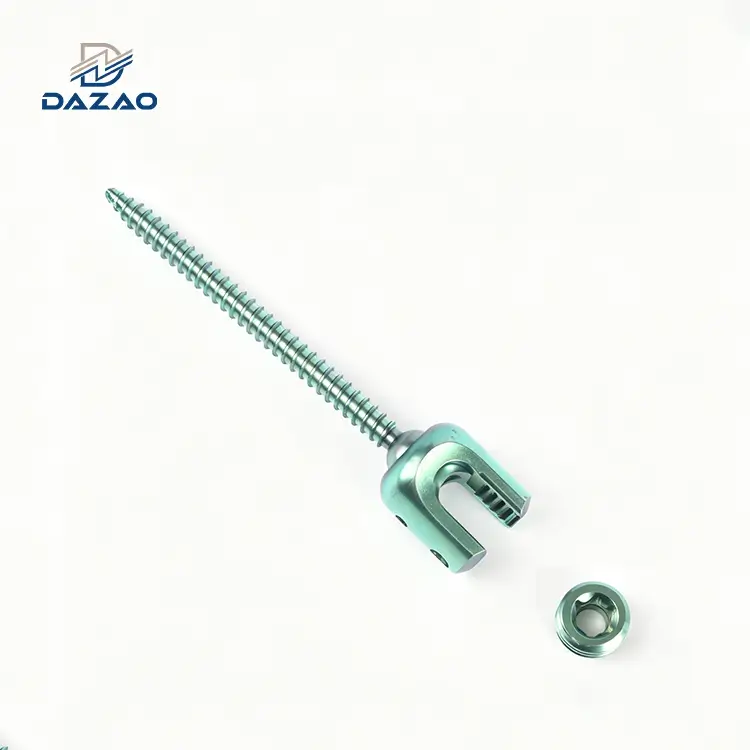
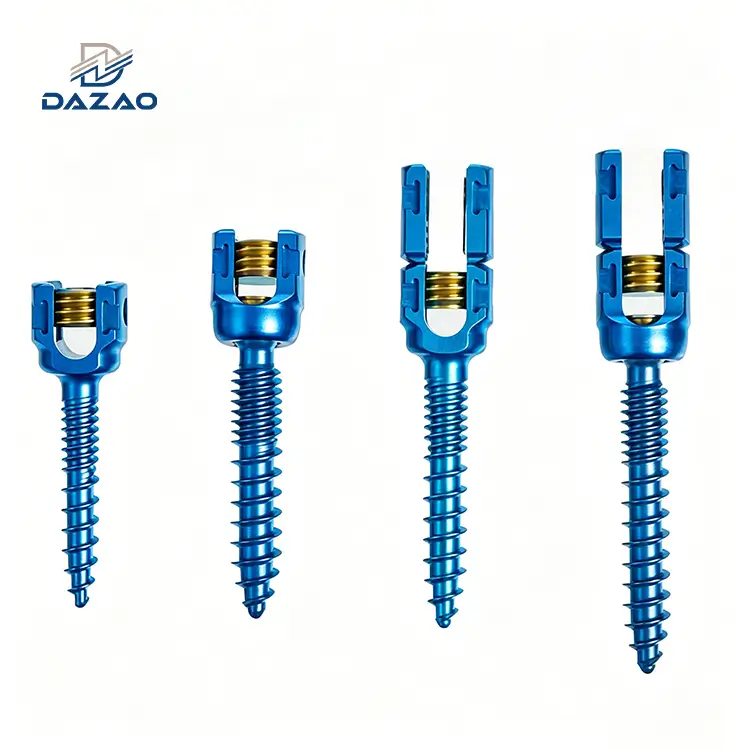
Ti-6Al-4V ELI Titanium Pedicle Screw Spinal Fixation
High-strength spinal stabilization components engineered for maximum pull-out strength and dynamic fatigue resistance through micron-level 5-axis manufacturing.
Our Advantages:
Material Integrity: Grade 23 Ti-6Al-4V ELI per ASTM F136 standards.
Precision Class: Dimensional tolerances strictly maintained at ±0.01mm.
Thread Profile: 4H medical grade precision threads for maximum purchase.
Machining Logic: 5-axis simultaneous milling for superior concentricity.
System Compliance: ISO 13485:2016 certified medical production line.
Surface Standard: Controlled Ra 0.4 - 0.8 μm for direct bone contact.

Technical Specifications for Spinal Fixation Screws
|
Parameter |
Technical Requirements |
|
Material Grade |
Ti-6Al-4V ELI (ASTM F136 / ISO 5832-3) |
|
Machining Process |
Simultaneous 5-Axis CNC Milling & Turning |
|
Diameter Range |
3.5mm, 4.0mm, 4.5mm, 5.0mm, 5.5mm, 6.0mm, 7.5mm |
|
Length Range |
10mm – 60mm (available in 2mm increments) |
|
Dimensional Tolerance |
±0.01mm (Critical fit zones ±0.005mm) |
|
Thread Accuracy |
Medical Grade 4H Precision Threads |
|
Surface Roughness |
Ra 0.4 - 0.8 μm (As machined or polished) |
|
Certifications |
ISO 13485:2016, full Material Test Reports (MTR) |

Subtractive 5-Axis Milling for Fatigue Resistance
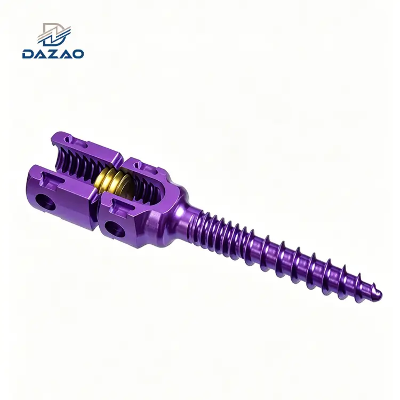
Our manufacturing process utilizes solid medical grade titanium bar stock, bypassing the structural risks associated with forged components. By leveraging the same high-precision technology used for 5-axis zygomatic implants, we maintain the longitudinal grain flow of the metal. This single-setup subtractive milling increases dynamic fatigue strength by 40%, preventing implant failure under the multi-axial stresses of spinal stabilization.
Precision Thread Geometry and Pull-out Strength
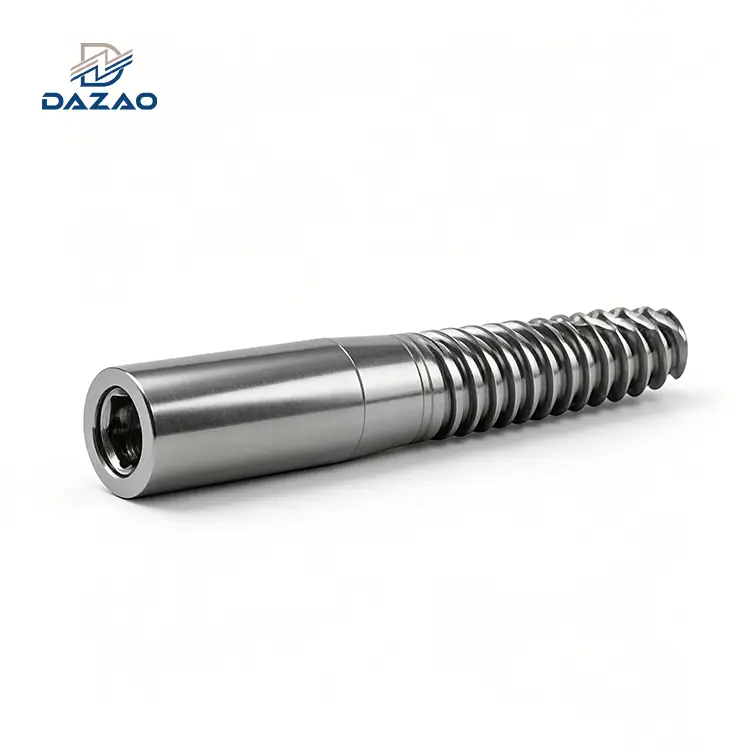
We utilize high-speed thread milling to achieve a 4H fit. The dual-lead thread design, combined with a tapered core, optimizes torque transmission and increases bone-to-implant contact (BIC), ensuring the orthopedic implants remain stable even in osteoporotic bone environments.
Metrology and Regulatory Validation Protocols
All production follows a rigorous validation cycle to ensure 100% compliance with surgical requirements for medical grade titanium components.
Dimensional Verification via CMM and Vision Systems
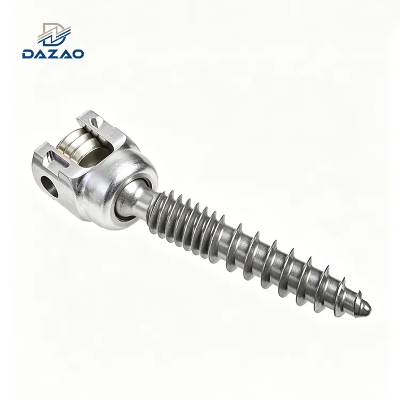
Post-machining, every lot undergoes coordinate measuring machine (CMM) analysis. We verify critical drive interfaces (Torx/Hex) and thread crest diameters to ensure zero-slip engagement with surgical instrumentation and locking nuts.
Material Traceability and Laser Identification
Full traceability is documented from the raw titanium heat lot to the final packaged unit. Each screw is laser-marked with a Unique Device Identifier (UDI) to meet global regulatory standards for implant tracking.
Industrial Applications in Orthopedic Implants
Our CNC machined pedicle screws are integral components for various orthopedic implants and spinal systems:
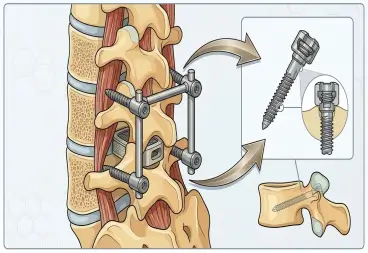
Degenerative Disc Disease
Rigid fixation for interbody fusion.
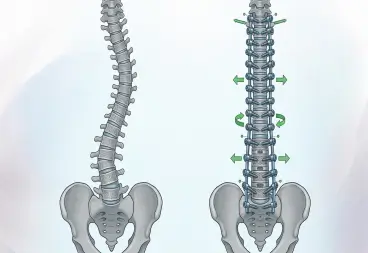
Scoliosis Correction
Multi-level stabilization for sagittal alignment.

Trauma Care
Posterior fixation for vertebral fractures.

Spinal Oncology
Structural support following tumor resection.
FAQs
01.Why is Ti-6Al-4V ELI required for spinal pedicle screws?
02.Does your CNC process eliminate the need for secondary finishing?
03.How do you ensure the concentricity of polyaxial screw heads?
04.Can you provide material certification for medical audits?
05.What surface treatments assist in osseointegration?
06.How does the ±0.01mm tolerance affect surgical outcomes?
Optimize your spinal fixation system with ±0.01mm precision.
Upload your 2D/3D CAD files (STEP, IGS, or DXF) for an immediate DFM review and technical quote. Our engineering team provides feedback within 24 hours.
Contact Us

Hot Tags: titanium pedicle screw,Ti-6Al-4V ELI,spinal fixation screw,medical CNC machining,ASTM F136