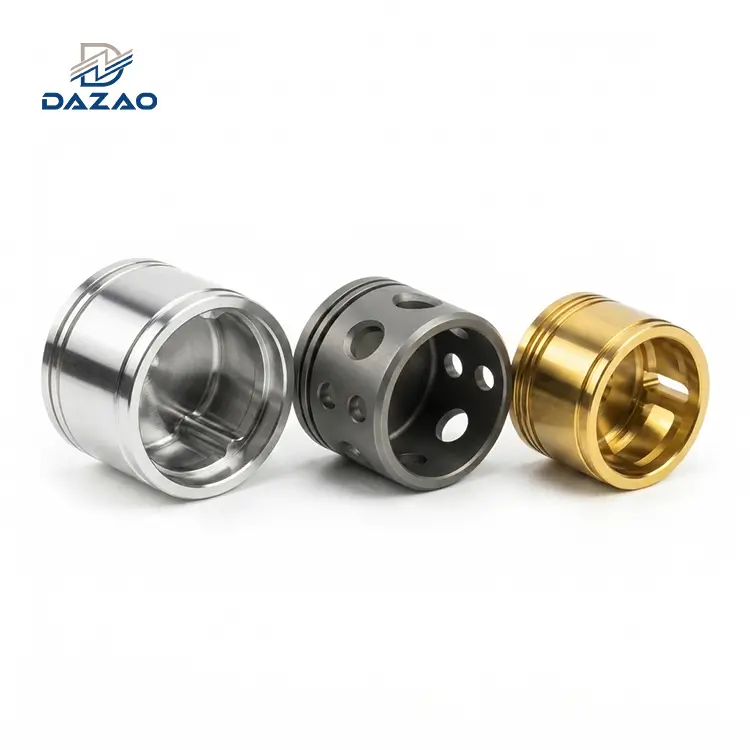

When evaluating material selection for high-volume turning and milling, engineering and procurement teams often default to aluminum Al6061-T6 due to its low raw material cost. However, the ultimate benchmark for spindle speed, tool life, and feed rates is UNS C36000, commonly known as Free-Machining Brass.
Many Sourcing Engineers hesitate when viewing the raw material quotation for C360, noting it is significantly more expensive than carbon steel and standard aluminum alloys. However, in the realm of copper alloy CNC machining, upfront material cost represents a fraction of the actual financial equation. For complex components requiring deep hole drilling, heavy threading, and tight tolerances (such as ±0.0005In), exceptional Brass C360 machinability directly reduces the Total Cost of Ownership (TCO).
As a certified custom parts manufacturer in China, Xiamen Dazao Machinery analyzes why C360 remains the undisputed king of material removal rates (MRR) and how optimized machining brass parts directly benefits your supply chain bottom line.
Decoding the 100% Benchmark: What Makes Brass C360 Machinability Superior?
In the machining industry, machinability ratings are indexed against Brass C360, which is universally assigned a score of 100%. All other metals are measured against this baseline. The metallurgical reason for this flawless rating lies in its chemical composition, specifically the inclusion of 2.5% to 3.7% lead (Pb).
During the cutting process, lead does not dissolve into the copper-zinc matrix. Instead, it disperses as microscopic particles. This provides two distinct mechanical advantages:
1.Solid Lubricant: The lead acts as a microscopic boundary lubricant at the tool-chip interface. This drastically reduces friction, lowering heat generation and spindle load.
2.Chip Breaker: The internal lead particles interrupt the structural integrity of the metal matrix during shear. Instead of forming long, continuous stringers that entangle tooling, C360 produces tiny, distinct chips.
3 Direct Engineering Benefits of Machining Brass Parts
· Aggressive Feed Rates: Operators can push Surface Feet per Minute (SFM) up to 300-1000+, completing drilling and tapping cycles at speeds 300% faster than 304 Stainless Steel.
· Extended Tool Life: The low friction coefficient means carbide and HSS tooling suffer minimal wear. A machine can run lights-out operations for days without requiring tool offsets or inserts replacement.
· Surface Finish: Achieving a Ra 0.8 surface finish directly off the machine is standard, entirely eliminating secondary polishing expenses.

The Scrap Economy: How Copper Alloy CNC Offsets High Raw Material Costs
The primary deterrent for C360 is its high initial purchase price. However, experienced procurement directors calculate the Net Material Cost by factoring in the Scrap Economy.
Because brass machines so rapidly, a significant volume of the raw bar stock is converted into chips (turnings). Unlike aluminum or steel chips, which yield marginal recycling returns, clean C360 turnings retain extreme market value. Manufacturers can typically sell pure brass scrap back to material suppliers, recovering 75% to 90% of the original raw material weight value.
Brass C360 vs. Aluminum 6061 vs. SS304: CNC Cost Matrix
To quantify the financial impact, review this standard machining parameter comparison:
|
Material Parameter |
Brass C360 |
Aluminum 6061-T6 |
Stainless Steel 304 |
|
Machinability Rating |
100% (Baseline) |
90% |
45% |
|
Average Cutting Speed (SFM) |
300 - 1000 |
250 - 800 |
80 - 150 |
|
Tool Wear Rate |
Extremely Low |
Low |
High |
|
Scrap Recovery Value |
75% - 90% |
20% - 30% |
10% - 20% |
|
Secondary Finishing Need |
None (Naturally smooth) |
Often requires anodizing |
Passivation required |
|
Net Machining TCO |
Low (High volume) |
Medium |
High |
By reducing the Cycle Time by 30% to 50%, the allocation of machine depreciation, overhead, and operator labor drops significantly. When combined with scrap recovery, the per-unit cost of a complex C360 part frequently undercuts the exact same part made from "cheaper" materials.
Shop-Floor Realities: 3 Hidden Pitfalls When Machining Brass Parts
If you browse industrial engineering forums like, you will notice consistent patterns of failure from inexperienced shops attempting to machine brass. As an IATF16949:2016 certified supplier, Dazao Machinery implements strict standard operating procedures (SOPs) to avoid these three primary manufacturing traps.
Pitfall 1: Tool Grabbing & Why Zero Rake Tooling is Required
A common nightmare on the shop floor involves an operator running an aluminum-specific positive rake endmill on a C360 part. Because brass cuts so easily, a positive rake tool will instantly grab the material like a screw. The tool pulls the workpiece violently out of the chuck, destroying the part, snapping the endmill, and potentially damaging the machine spindle.
The Engineering Fix: Machining C360 mandates custom or modified tooling featuring a zero rake or neutral rake geometry. This prevents the tool from feeding itself into the material, ensuring dimension stability and operator safety.

Pitfall 2: Coolant Staining & The Advantage of Dry Machining
Traditional sulfur-based cutting fluids or high-water-content coolants react chemically with copper alloys. If a brass part sits in the machine tray overnight covered in standard coolant, it will oxidize, turning black or brown. This destroys the aesthetic gold finish and results in immediate QA rejection.
The Engineering Fix: Capitalizing on the natural lubricity of C360, our factory utilizes Dry Machining techniques or Minimum Quantity Lubrication (MQL) with specialized inert oils. This protects the exact aesthetic of the part and eliminates heavy ultrasonic cleaning costs for the buyer.
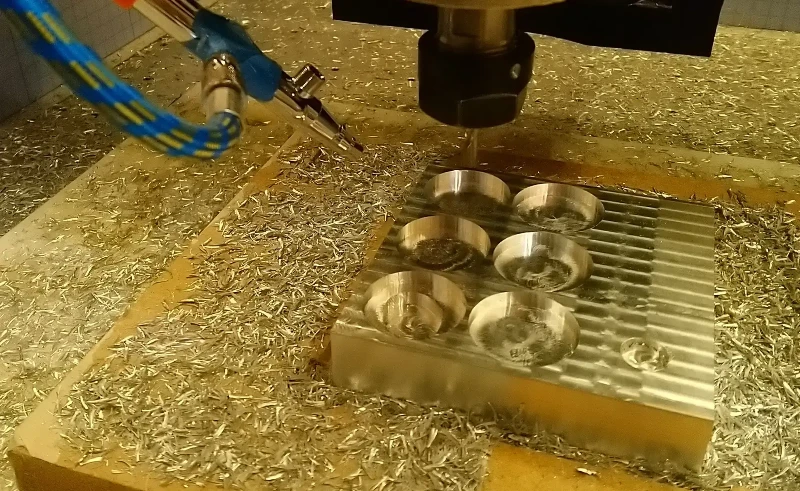
Pitfall 3: Mixed Chips & Maximizing Brass Recycling ROI
If a shop machines steel on Monday and brass on Tuesday without conducting a rigorous machine washdown, the brass turnings become contaminated with steel chips. Mixed chips cannot be sold at premium brass scrap rates. Inefficient shops pass this financial loss directly onto the customer via higher piece-price quotes.
The Engineering Fix: Dazao enforces strict "dedicated machine" scheduling and deep-cleaning SOPs. This guarantees our brass scrap remains 100% pure, maximizing recycling revenue and allowing us to quote highly competitive unit prices.
The Compliance Trap: RoHS, REACH, and Lead-Free Brass Alternatives
While the 3% lead content makes C360 a machining powerhouse, it introduces strict regulatory limitations. Mechanical engineers must map the material to the final application environment.
If your product is utilized in potable water systems governed by the Safe Drinking Water Act (SDWA), food-grade processing equipment, or consumer electronics requiring strict European RoHS/REACH compliance, utilizing standard C360 exposes your supply chain to customs seizures or product recalls.
For these specific applications, engineers must specify Lead-Free Brass alternatives, such as C46400 (Naval Brass) or C69300 (Eco-Brass). Procurement teams must note: removing the lead reduces the machinability rating from 100% down to approximately 30%-50%. Spindle speeds must drop, tool wear increases, and cycle times lengthen. Always update your cost projections when shifting from C360 to lead-free variants.
Conclusion: Partnering with a Custom Brass CNC Manufacturer
Brass C360 remains the undisputed standard for rapid material removal. Provided procurement teams understand the mechanics of the scrap economy and engineers avoid the compliance traps, C360 is the most cost-effective material for high-volume threaded inserts, fluid connectors, valve bodies, and electronic pins.
Evaluating a machining partner requires looking beyond the raw material index. Partnering with a custom factory that understands tool rake geometry, practices dry machining, and manages scrap purity dictates the final invoice. With decades of targeted experience in the machining brass parts sector, Xiamen Dazao Machinery executes strict DFM principles to squeeze every redundant cent out of your manufacturing cycle.

People Also Ask (FAQ)
01.Why do endmills snap or pull the brass part out of the vise during the first cut?
02.Why did my finished brass parts turn brown and tarnish overnight in the shop?
03.Why did the recycling yard downgrade our brass chips to "dirty scrap" pricing?
04.I am machining brass, but getting long, stringy chips that tangle the spindle. Why?
05.Can I run Brass C360 at the same speeds and feeds as Aluminum 6061?
06.Is there a lead exposure risk for CNC operators when dry machining C360?