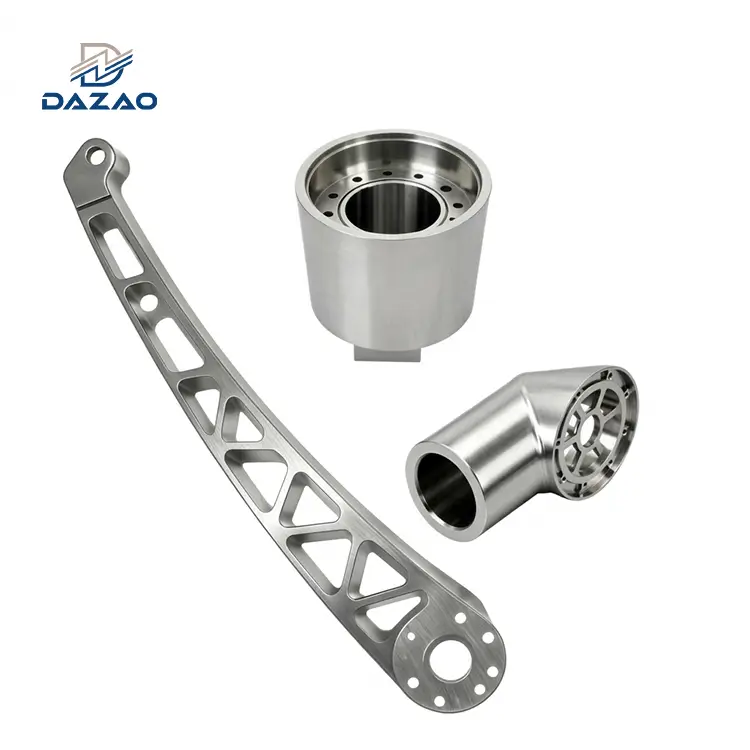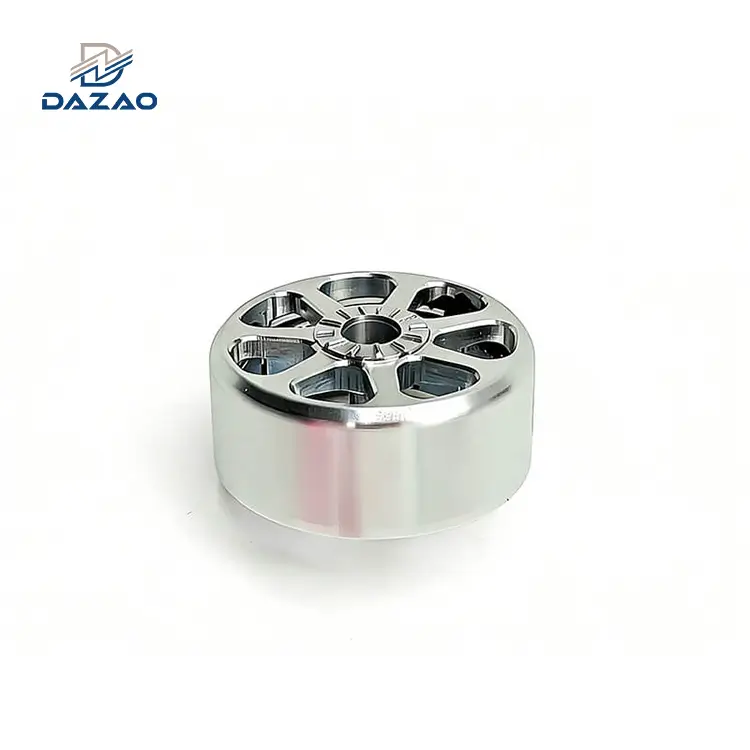

ABS (Acrylonitrile-Butadiene-Styrene) Is A Thermoplastic Engineering Plastic Widely Used In CNC Machining. With Its Excellent Mechanical Strength, Impact Resistance, Chemical Corrosion Resistance And Easy Processing Characteristics, It Has Become An Ideal Choice For Manufacturing Precision Functional Prototypes And Small Batch Parts. During CNC Machining, ABS Can Be Formed With High Precision Through Milling, Turning And Other Processes. Its Low Melting Point Requires Proper Control Of Cutting Speed And Cooling Conditions To Avoid Softening Or Deformation Of The Material. The Processed Surface Is Usually Smooth And Easy To Be Post-Processed Such As Polishing, Painting Or Electroplating To Meet Diverse Appearance And Functional Requirements.
Compared With 3D Printing, CNC-Processed ABS Parts Have Higher Dimensional Accuracy And Mechanical Properties, And Are Suitable For Scenes With High Requirements For Structural Strength And Durability. In Addition, The Lightweight Characteristics And Cost-Effectiveness Of ABS Make It A Preferred Material To Replace Metal Or Engineering Plastics (Such As Nylon), Especially In The Development Stage Where Rapid Iteration And Verification Of Design Are Required, Which Can Effectively Balance Performance And Production Costs.
Lead Time: < 10 Days
Tolerances: ±0.01mm ~ ±0.005mm
Max Part Size: 110 x 80 x 40 cm
Sample Time: < 3 Days
General
ABS
Abs Has Good Dimensional Stability, Excellent Impact Strength, And Is Easily Machined. This Makes CNC Machined Abs Ideal For Applications That Require Low-Cost And Hard-Wearing Parts Such As Tool Enclosures And Casings.
General ABS Properties
|
Tensile Strength, Yield (MPa) |
Elongation at Break (%) |
Hardness (Rockwell R) |
Heat Deflection Temperature (°C) |
Melting Point (°C) |
|
40.7 |
53.4 |
107 |
97.4 |
267 |