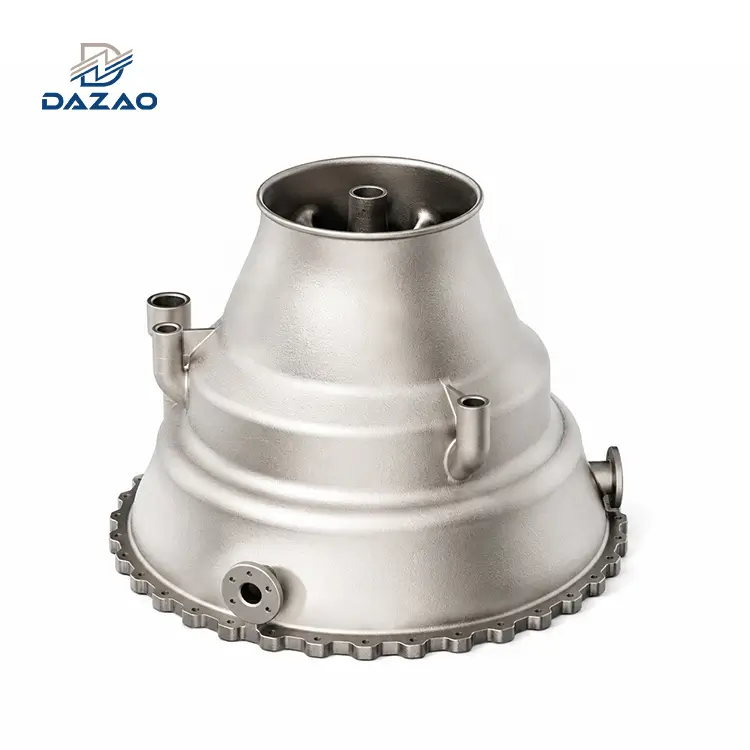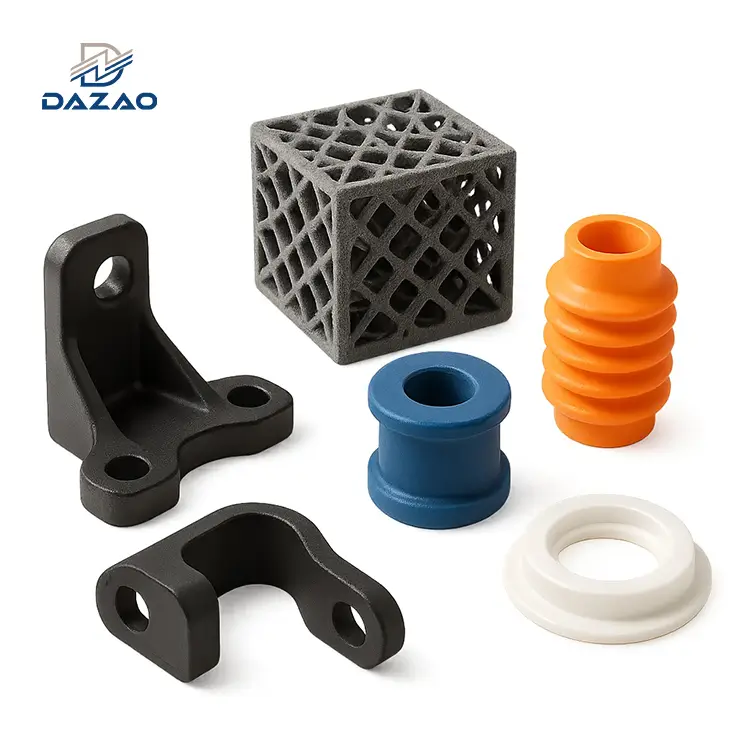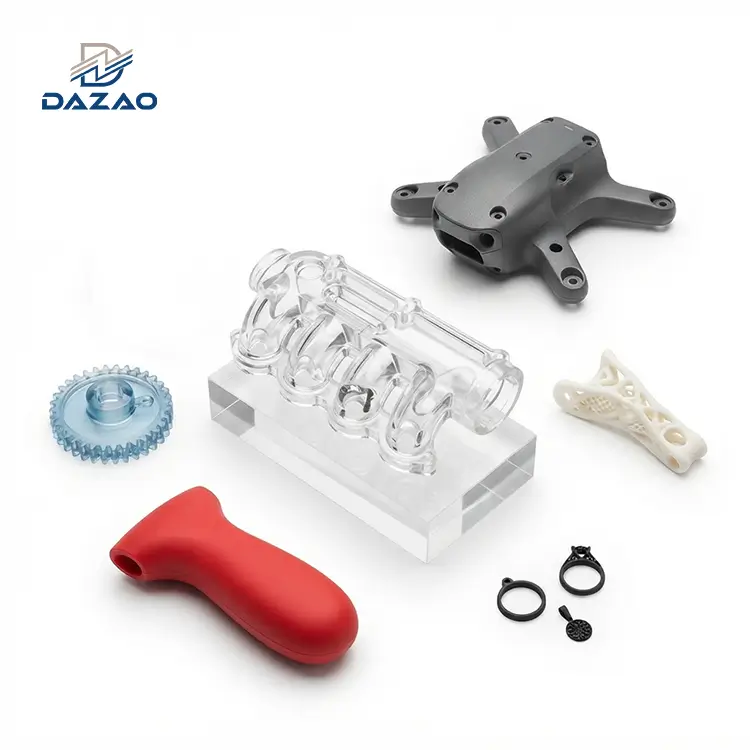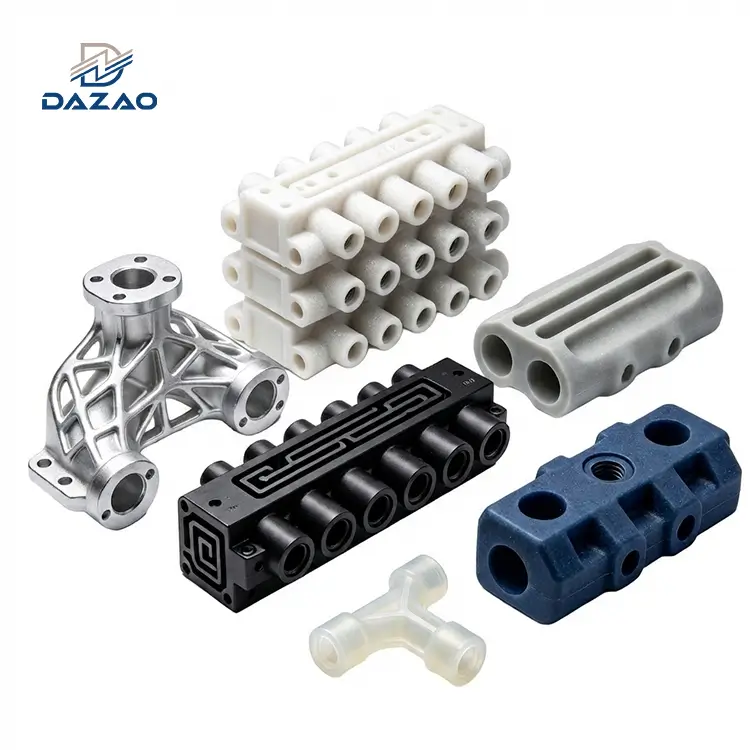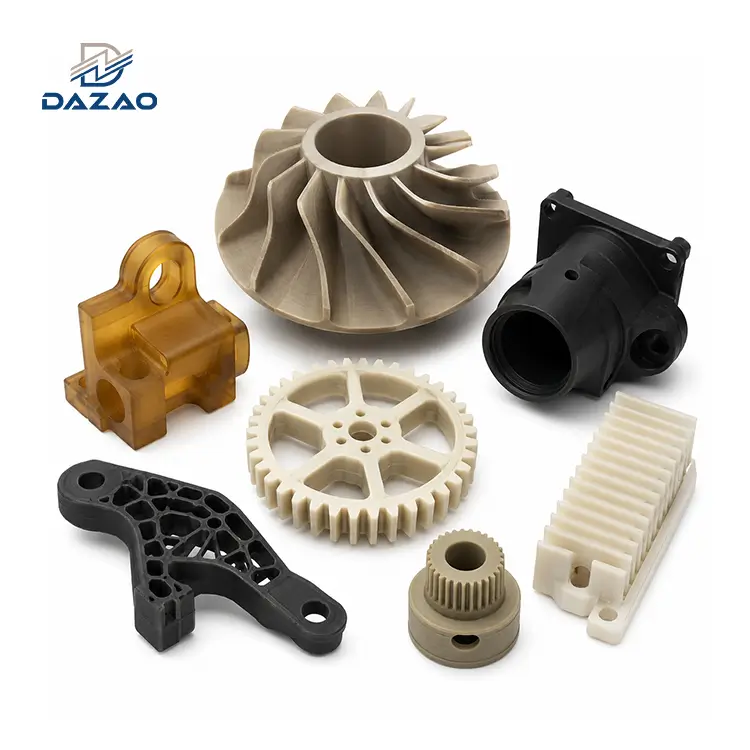

Metal 3D Printing Service For Obsolete Classic Car Spare Parts
Replicating rare and out-of-production metal components directly from worn samples.
Core Engineering Features:
No MOQ: Custom 3D printed obsolete car parts from 1 unit.
Fast Delivery: Metal AM replacement parts for classic cars in 7 days.
High Accuracy: Reverse engineering vintage auto parts to ±0.05mm.
Engineered Resins & Alloys: SLM 17-4PH classic car component manufacturing.
Industrial Heritage: Custom metal 3D printing for legacy systems.
Verified Durability: Full thermal tempering and CMM validation reports.
Global Shipping: Door-to-door delivery with DDP logistics options.

Product Overview and Additive Manufacturing Capabilities
High-density direct metal printing for historically accurate mechanical fitment.
We specialize in reproducing classic car obsolete spare parts where original drawings, tooling, and manufacturer stocks no longer exist. Utilizing industrial-grade metal additive manufacturing and selective laser melting (SLM), we convert physical, worn-out components into fully functional, high-density metal parts. For components requiring non-metallic physical models or polymer masters, we integrate high-precision SLA resin 3D printing services to assist in quick pattern replication. Our integrated service handles the entire lifecycle: from high-resolution optical scanning and wear-compensated CAD remodeling to precision laser sintering, thermal heat treatment, and final CNC machining. This structural approach ensures that every reproduced part fits into your vintage automotive chassis, engine assembly, or vintage industrial legacy system.
Real World Retrofitting Failures and Additive Process Corrective Actions
Analyzing early structural setbacks to engineer a completely zero-defect process.
Instead of generic promises of quality, we present three real engineering setbacks from our early years. These failures drove the development of our current validation protocols.
Case Study 1: Restoring Wear Tolerances for 1978 Porsche 911 Caliper Pistons
During our initial manufacturing runs for replacement caliper pistons, we followed the common industry practice of direct copy-printing. A client sent a physical brake piston that had been in active service for over 40 years, and we scanned and modeled its exact external geometry without factoring in surface wear. Within two months of installation, the piston suffered uneven wear and fluid leakage, resulting in soft brake pedal pressure and requiring complete disassembly of the assembly, which delayed the vehicle's restoration schedule.
Following this event, we restructured our reverse engineering workflow to establish a standardized wear analysis and compensation protocol. Every submitted part now undergoes systematic 3D scanning to quantify wear volume and geometric deviation. We then cross-reference these findings with original design parameters to reconstruct the nominal, factory-new dimensions in the CAD model prior to SLM production, ensuring zero fitment errors on subsequent brake and sealing components.
Case Study 2: Preventing Fatigue Fractures in 1982 Land Rover Series III Suspension Arms
A client requested a replicated front suspension arm for a Land Rover Series III off-road vehicle, specifying stainless steel. We printed the component according to standard processes but failed to evaluate the cyclic impact loads typical of off-road operation, and we did not apply a specific heat-treatment strategy. Within three months of active use, the root radius of the suspension arm cracked under moderate off-road conditions, requiring workshop disassembly and delaying the vehicle's preparation schedule.
We resolved this by establishing a load-to-material mapping standard. We now evaluate the loading conditions and operational environment for every structural member instead of accepting metal specifications without engineering review. For high-impact components, we recommend heat-treated SAE 4140 chromoly alloy steel, which provides higher tensile strength and impact toughness than the original OEM forging. Additionally, we modify root transition fillets during the design stage to minimize stress concentration and extend fatigue life.
Case Study 3: Eliminating Dimensional Variance in Legacy Armored Vehicle Valve Spools
An Australian defense equipment maintenance provider contracted us to manufacture a batch of 20 valve spools for a vintage armored transport unit. To meet a compressed delivery deadline, we bypassed our first-article calibration process and proceeded directly with batch manufacturing. During field installation, multiple spools exhibited geometric deviations of up to 0.12mm, causing valve seal failure and forcing the client to postpone their maintenance schedule.
This failure led to the implementation of our mandatory first-article inspection (FAI) and permanent digital archiving protocol. For every new part number, we print a single test article and perform complete dimensional validation on a coordinate measuring machine (CMM) before beginning production. Once approved, the scan data, optimized model, printing parameters, heat treatment records, and FAI report are saved in a permanent digital archive, allowing future repeat orders to be manufactured with consistent dimensional parameters without requiring new physical samples.

Three Technical Differentiations for Accurate Replication
Engineered wear compensation and material matching protocols that preserve performance.
Systematic Wear Compensation and Nominal Model Reconstruction
Most 3D printing bureaus copy the exact physical shape of your submitted sample, complete with its wear, dents, and deformations. Our engineering department uses high-resolution blue-light scanners to acquire the raw mesh data, which we then reconstruct in CAD. We calculate nominal mating clearances, measure shaft-and-hole tolerances, and restore worn areas back to original factory dimensions. We also analyze stress patterns and can enlarge transition fillets on historically weak spots to reduce the risk of future failures.
Metallurgical Alignment and Post Build Thermal Treatments
Using the correct alloy powder is only half the battle; without correct thermal processing, printed parts lack mechanical strength. We maintain a database of historical metallurgical properties for cast iron, forged carbon steels, and bronzes.
For brake and valve components replacing grey cast iron, we print 17-4PH stainless steel followed by solution annealing and H900 aging. This matches the hardness of cast iron while adding corrosion resistance.
For load-bearing chassis parts replacing forged steel, we print SAE 4140 alloy steel followed by quenching and tempering to achieve high yield strength and fatigue resistance.
Traceable Digital Part Archiving for Batch Consistency
Classic vehicle and industrial legacy restorations often require replacement parts at irregular intervals. To prevent dimensional drift between orders separated by years, we assign a permanent digital archive to every part number. This archive stores the original scan data, the compensated CAD model, specific laser vector paths, powder batch numbers, thermal oven profiles, and CMM inspection records. When you reorder a spare part five years later, the replacement will match the first batch.
Selective Laser Melting vs Traditional Mold Tooling
Eliminating expensive tooling setups to enable profitable low-volume production.
|
Comparison Metric |
Traditional Mold Casting / Forging |
SLM Metal 3D Printing (Dazao) |
|
Initial Tooling Cost |
$5,000 – $25,000 USD (pattern & mold fees) |
$0 USD (direct-from-CAD production) |
|
Minimum Order Quantity (MOQ) |
100 to 500 units to amortize tooling |
1 unit |
|
Lead Time |
4 to 8 weeks for mold design and trial casting |
7 days for finished prototype delivery |
|
Internal Defects |
Risk of casting shrinkage cavities and gas porosity |
Density ≥99.9% with optimized laser vectors |
|
Design Flexibility |
Limited by mold draft angles and slide cores |
Complex internal oil galleries and hollow structures |
|
Low-Volume Unit Cost |
High (due to setup amortization) |
Low (linear cost per unit) |
Materials Selection Guide for High Stress Environments
Selecting the precise alloy and heat-treatment cycle for dynamic mechanical loads.
Mechanical Characteristics of SLM 17 4PH Stainless Steel
· Mechanical Profile: Tensile Strength: ≥1100 MPa | Yield Strength: ≥1000 MPa | Hardness: 35–42 HRC (Post-H900 Aging Treatment).
· Optimal Use Cases: Hydraulic brake pistons, water pump impellers, fuel system fittings, carburetors, decorative exterior trim brackets, and fluid control valves.
· Engineering Limitations: Not suitable for components operating continuously above 340°C. Lower impact toughness compared to SAE 4140, making it unsuitable for high-shock steering linkages.
Fatigue Resistance of Heat Treated SAE 4140 Chromoly Steel
· Mechanical Profile: Tensile Strength: ≥950 MPa | Yield Strength: ≥850 MPa | Hardness: 28–34 HRC (Post-Quench & Tempering).
· Optimal Use Cases: Suspension control arms, steering knuckles, splined driveshafts, transmission gear selectors, and engine mount brackets.
· Engineering Limitations: Poor inherent corrosion resistance; printed parts require subsequent surface finishing (zinc plating, black oxide, or liquid nitriding) to prevent atmospheric rusting.

Component Applications and Target Industrial Sectors
Restoring classic road, military, and legacy industrial machinery to active service.

Chassis & Suspension Assemblies
Reconstructed control arms, sway bar links, steering knuckles, and leaf spring shackles.

Powertrain & Engine Accessories
Vintage water pump housings, thermostat housings, oil filter adapters, and custom rocker arms.

Brake System Components
Hard-to-find caliper cylinders, parking brake levers, and distribution blocks.

Industrial Legacy Systems
Obsolete steam valves, pneumatic actuator pistons, and drive gears for historical manufacturing machinery.
Quality Assurance Protocols and Inspection Standards
Ensuring dimensional precision and material density through rigorous inspections.
To verify that every part matches or exceeds the performance of the original component, we enforce an end-to-end quality check:
1. Powder Chemistry Control: Every batch of 17-4PH and SAE 4140 metal powder is verified by inductively coupled plasma optical emission spectrometry (ICP-OES) to confirm alloy composition before loading into our SLM systems.
2. Laser Process Monitoring: Laser power, oxygen levels in the build chamber (maintained below 100 ppm), and layer-by-layer recoater distribution are tracked in real-time.
3. Dimensional Verification: Every component undergoes coordinate measuring machine (CMM) testing or structured blue-light scanning. Post-print subtractive operations, including high-tolerance precision CNC milling and surface turning, are completed to guarantee mating clearances. We provide a detailed 3D deviation map comparing the printed part against the approved digital reference.
4. Density & Integrity Testing: Representative test bars are printed alongside every batch. These undergo Archimedes density testing to verify porosity levels are under 0.1% (total density ≥99.9%), followed by tensile and Charpy V-notch impact verification.
FAQs

01.Can you produce 3D printed obsolete car parts without original design blueprints?
02.What materials are used for metal AM replacement parts for classic cars?
03.How does your reverse engineering vintage auto parts workflow handle wear?
04.Is SLM 17-4PH classic car component manufacturing suitable for high-stress areas?
05.Do you provide custom metal 3D printing for legacy systems or military machinery?
06.What are the lead times and minimum order quantities for obsolete metal spares?
Do you need to reproduce a discontinued mechanical component?
Upload your 2D drawings or 3D CAD files (STEP, IGS, or STL format) along with a physical photo of your worn part.
Our engineering team will review your geometry, suggest the correct alloy and heat treatment, provide design-for-manufacturability (DFM) feedback, and deliver a formal B2B quotation within 24 hours.
Contact Us

Hot Tags: classic car obsolete spare parts,3D printed obsolete car parts,metal AM replacement parts for classic cars,reverse engineering vintage auto parts