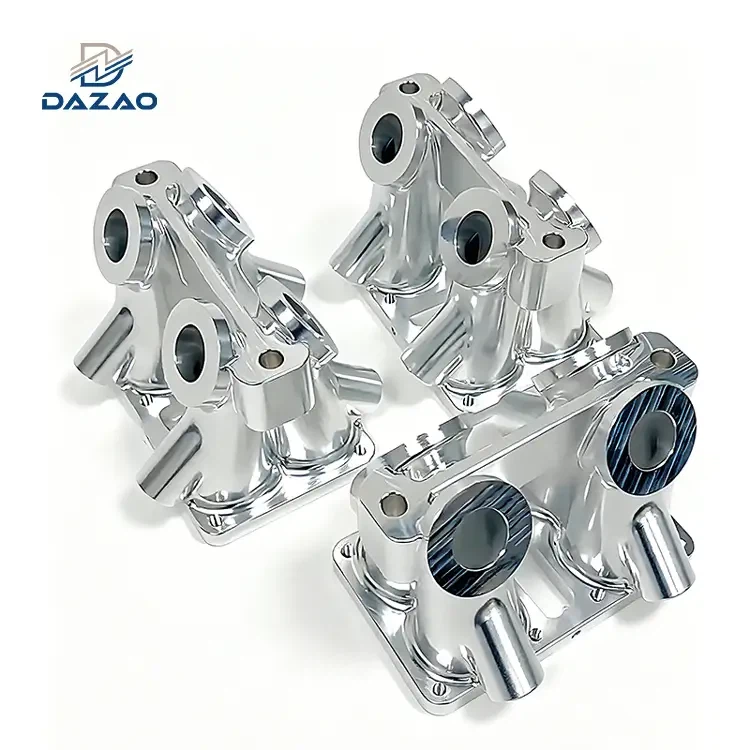

Lightweighting has evolved from an aerospace niche to a cross-industry mandate. Magnesium alloys, being 33% lighter than Al6061, are the logical choice for robotics, UAVs, and medical devices. However, the industry-wide fear of the magnesium fire hazard often leads to compromised material choices or inflated supply chain costs. At Xiamen Dazao Machinery, we believe that machining magnesium safety is a function of engineering discipline.
The Industry Reality: Why Engineering Teams Are Skeptical of Magnesium Suppliers
If you monitor engineering forums like, the consensus on magnesium machining is often polarized. Many project managers report stories of shop fires caused by improper chip management or the catastrophic mistake of using water-based extinguishers on a metal fire. These concerns are valid; a fire doesn't just destroy a part-它 effectively halts your entire product launch and risks sensitive design IP.
For a procurement head, the risk isn't just the fire; it is the lack of a robust safety infrastructure at the factory. Many Tier-2 shops attempt to machine magnesium using standard aluminum protocols, which is a fundamental violation of IATF16949 safety principles.
3 Advanced Safety Protocols Dazao Uses That Competitors Ignore
To transform magnesium machining from a high-risk gamble into a stable industrial process, Dazao implements three technical layers that go beyond standard shop-floor safety.
1. Chemical Suppression of Hydrogen Gas (The Invisible Threat)
A common pain point is the hidden danger of hydrogen gas. When magnesium reacts with water in standard coolants, it releases H2. In an enclosed CNC cabinet, this can lead to a pressure-wave explosion even without a visible flame.
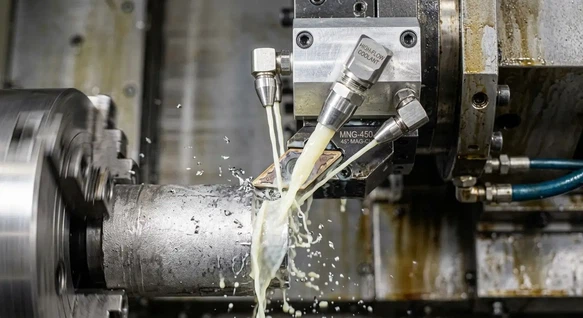
The Dazao Solution: We utilize specialized synthetic coolants with built-in hydrogen inhibitors. Our maintenance team performs daily pH-level audits to ensure the chemical barrier remains active. By maintaining a high-flow, low-pressure delivery, we prevent the stagnation of gases in machine pockets.
2. Engineering the Chip: Morphology Control via DFM
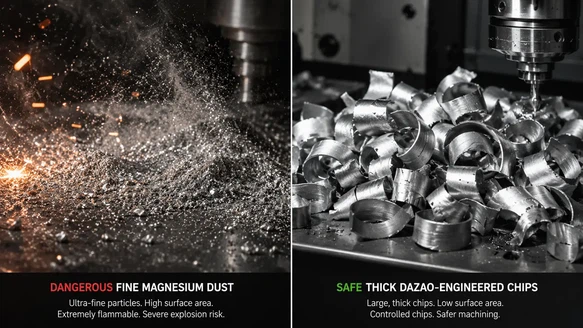
Most fires start with fine dust or thin, ribbon-like chips that have low thermal mass and high reactivity.
The Dazao Solution: Our 5-axis programming focuses on chip morphology. By optimizing feed rates and utilizing specific rake angles on carbide tooling, we force the material to form thick, heavy chips. These chips act as a heat sink rather than a fuel source. We avoid tool dwell time at all costs, as friction is the primary ignition trigger.
3. ATEX-Compliant Grounding and Extraction Audits
Static electricity in dust collection pipes is a frequent cause of facility-wide fires in less sophisticated shops.
The Dazao Solution: Our facility uses a dedicated, ATEX-compliant negative pressure system. Every joint in our extraction ducting undergoes a grounding link audit to ensure zero static buildup. This system is integrated with spark detection and automatic isolation valves that can truncate a fire path in milliseconds.
Auditing Your Magnesium CNC Supplier: A Procurement Checklist
When evaluating Xiamen Dazao or any other supplier for lightweight metal parts, use this technical audit checklist:
|
Audit Point |
Requirement for Magnesium |
Dazao Factory Standard |
|
Coolant Type |
Hydrogen-Inhibited / Anhydrous |
Synthetic with H2 Inhibitors |
|
Fire Suppression |
Class D Specialized Agent |
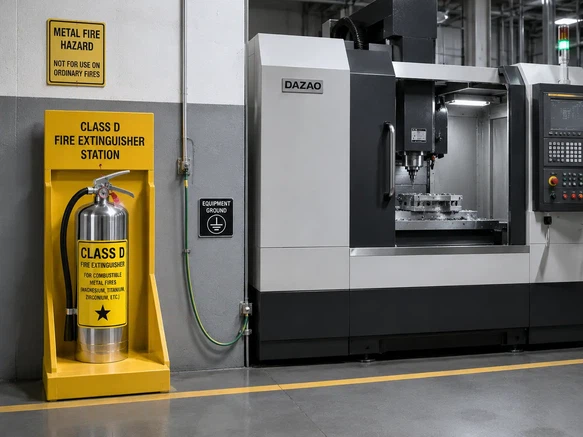
Dedicated Class D at each Mg-station |
|
Chip Removal |
Sealed, Ventilated Containers |
Bi-hourly evacuation protocol |
|
Tooling Protocol |
Sharp Carbide / No Dwell |
Automatic tool-life monitoring |
|
Certification |
Fully Certified & Audited |
Conclusion: Reliability as the Core of Lightweight Manufacturing
Magnesium offers unparalleled performance for the next generation of robotics and aerospace components. At Xiamen Dazao Machinery, our mission is to remove the 'fear factor' from this material. By integrating advanced chemistry, chip morphology engineering, and rigorous grounding audits, we provide a safe harbor for your most ambitious lightweighting projects.

FAQ: Addressing Magnesium Machining Concerns
01.How does Dazao prevent the 'Hydrogen Bubble' explosion risk?
02.What happens if a magnesium fire actually starts?
03.Why do most shops charge a 'danger premium' for magnesium?
04.How do you handle the risk of a technician using the wrong extinguisher?
05.Does magnesium machining create 'Invisible Dust' in the shop?
06.Can you machine magnesium to the same ±0.001in tolerance as aluminum?