
You send a 3D CAD file to a machining supplier, expecting a standard quote. The design is simple, the material is standard Al6061-T6, yet the returned price is triple your engineering budget. The culprit is rarely the geometry. In 80% of DFM (Design for Manufacturing) reviews at Xiamen Dazao Machinery, the budget-killer is a default +/- 0.01mm callout sitting quietly in the drawing's title block.
As a certified ISO9001:2015 and IATF16949:2016 factory in China since 2000, we analyze thousands of prints monthly. We see buyers paying extreme premiums for precision that adds zero functional value. This technical paper breaks down the exact mechanics of CNC tolerance cost, explains how standard machining tolerances alter manufacturing operations, and provides a definitive ISO 2768-m guide to help you slash up to 50% off your machining spend without sacrificing part performance.
Why Machinists Hate Blanket Tight Tolerances?
If you browse manufacturing sub like, the disconnect between CAD screens and the shop floor is a daily operational friction point.
· The "Sitting in the Air" complaint: "I regularly see prints from junior engineers where every single face is marked +/- 0.005mm, even if that face is literally just sitting in the air doing nothing." - High-voted comment on r/Machinists.
· The Aerospace Tax: "If your print demands aerospace tolerances for a bracket, do not act shocked when we hand you an aerospace price tag."
Why do designers default to extremely tight custom tolerances? It often stems from an over-reliance on CAD software default export settings or a defensive engineering mindset-applying tight limits everywhere "just to be safe." However, this safety net forces the manufacturer to adopt aggressive, high-cost production protocols for features that only require clearance.
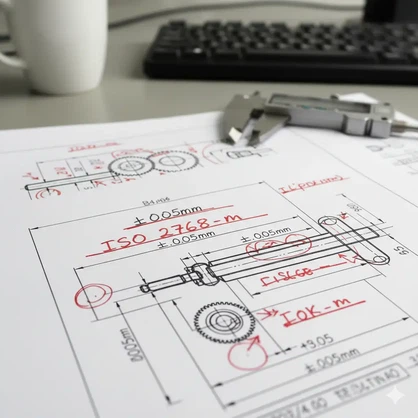
The Hard Math Behind CNC Tolerance Cost: Why Custom Specs Inflate Quotes
Understanding the gap between standard machining tolerances and extreme precision requires looking at machine kinematics and tooling degradation. A transition from +/- 0.1mm to +/- 0.01mm is not linear; it is exponential in effort.
Exponential Increases in Machine Cycle Times
To hold a +/- 0.01mm limit, a 5-axis CNC milling machine cannot simply run at optimal feed rates. The spindle must slow down to prevent tool deflection. Programmers must add multiple "spring passes" (running the tool over the same path without increasing the depth of cut) to eliminate residual material caused by machine flex. A part that takes 12 minutes to rough and finish under standard limits can easily take 45 minutes under strict custom specs.
The Invisible Cost of CNC Tool Wear
Cutting tools wear down micrometers at a time. If the tolerance band is +/- 0.1mm, an end mill can run for hours before the wear affects the final dimension. If the band is +/- 0.01mm, the tool might only be viable for 20 parts before the microscopic wear pushes the feature out of spec. Frequent tool changes mean higher tooling costs and increased machine downtime.
Cost Breakdown: ISO 2768-m vs. +/- 0.01mm
|
Cost Factor |
ISO 2768-m (+/- 0.1mm) |
Custom Spec (+/- 0.01mm) |
Financial Impact |
|
Spindle Speed & Feed |
100% Optimized |
Reduced by 40-60% |
Triples machine hour rates |
|
Tool Life |
1000+ units per end mill |
50-100 units per end mill |
Massive tooling overhead |
|
Setup & Fixturing |
Standard vise / soft jaws |
Custom zero-point fixtures |
Increases NRE setup fees |
|
Inspection Time |
Calipers / Micrometers (1 min) |
CMM in 20°C room (15 mins) |
Adds distinct QA bottleneck |
The ISO 2768-m Guide: The Sourcing Standard for Custom Parts
The most effective method to control CNC tolerance cost is replacing blanket custom numbers with an established international framework. ISO 2768 dictates general tolerances for linear and angular dimensions without individual tolerance indications.
The "m" stands for medium class, which is the absolute sweet spot for 90% of industrial components.
How to Apply Standard Machining Tolerances on Prints?
By placing "General Tolerances: ISO 2768-m" in your title block, you send a clear signal to your manufacturer: "We are experienced buyers. We do not want to pay for unnecessary machining cycles."
This standard scales the allowed deviation based on the nominal dimension size. For example:
· Dimensions from 0.5mm to 3mm: ± 0.1mm
· Dimensions from 30mm to 120mm: ± 0.3mm
· Dimensions from 400mm to 1000mm: ± 0.8mm
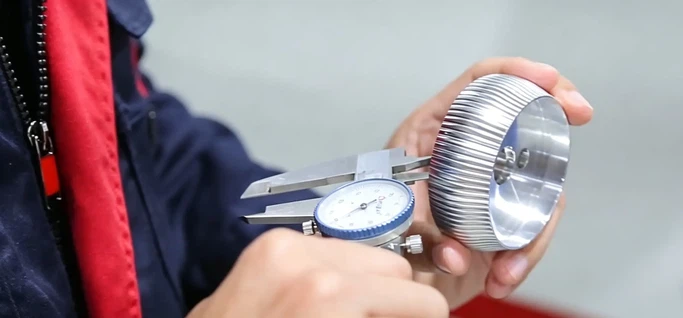
Dazao Machinery's Engineering Directive: Apply ISO 2768-m globally. Only override this by explicitly calling out tight tolerances (e.g., +0.015 / -0.000) on specific mating surfaces, such as H7/g6 bearing press fits, dowel pin holes, or O-ring sealing grooves.
3 Manufacturing Traps Driving Up Your Custom Machining Quotes
Beyond standard machining practices, hardware teams frequently fall into physics and QA traps that artificially inflate their quotes. As a seasoned custom parts factory, Dazao engineers consistently flag these three issues during our DFM reviews.
Trap 1: The Material-Tolerance Mismatch (Thermal Expansion in Al6061 & Plastics)
Many buyers request tight tolerances without considering the Coefficient of Thermal Expansion (CTE). Specifying +/- 0.01mm on a POM (Delrin) or an Al6061-T6 part is often physically meaningless outside of a laboratory.
Aluminum has a CTE of roughly 23 µm/(m·°C). If a part is 100mm long, a temperature change of just 5°C (such as a machinist holding the part in their bare hands for two minutes, or ambient heat during transit) will cause the part to expand by 0.0115mm. The part immediately falls out of the +/- 0.01mm spec simply by existing in room temperature air. Forcing a supplier to hold metal-grade tolerances on plastics or high-CTE metals yields high scrap rates and wasted money.
Trap 2: The Hidden CMM Metrology & Scrap Tax
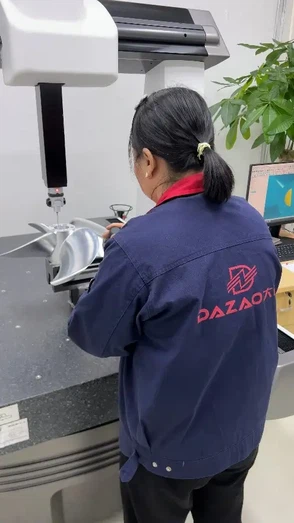
The heaviest financial burden of a tight tolerance is not cutting the metal-it is measuring the metal. To legally certify a +/- 0.01mm feature, the manufacturer cannot use standard calipers. The part must be moved to a temperature-controlled metrology lab, allowed to reach thermal equilibrium (which takes hours), and probed using an expensive Coordinate Measuring Machine (CMM).
Furthermore, to protect their margins against the inherent risk of tight limits, estimators automatically bake a "scrap buffer" into the quote. If you demand +/- 0.005mm, the factory assumes a 30% scrap rate and charges you for it upfront, regardless of the actual outcome. Relaxing the spec to standard machining tolerances instantly removes this paranoia tax.
Trap 3: Linear Tolerancing vs. GD&T (True Position)
Designers often attempt to align two holes perfectly by compressing the linear distance tolerance to +/- 0.01mm. This forces a rigid square tolerance zone.
Replacing this with properly applied GD&T (Geometric Dimensioning and Tolerancing), specifically True Position, creates a diametric tolerance zone that offers 57% more acceptable area. More importantly, combining True Position with the Maximum Material Condition (MMC) modifier provides "bonus tolerance." As the hole diameter gets larger (within its allowed limit), the positional tolerance can shift, ensuring perfect assembly while allowing the machinist a much wider, cheaper manufacturing window.
The Dazao DFM Strategy: 3 Steps to Optimize Your Next Drawing
Stop letting arbitrary numbers consume your operational budget. Before sending your next RFQ to China, run your CAD drawings through this 3-step checklist:
· Global Default: Ensure the title block explicitly states ISO 2768-m. Remove all blanket +/- X.XXX values.
· Targeted Precision: Use CAD highlighters to isolate actual critical mating faces (Dowel pins, bearing fits, shaft journals). Apply tight custom limits only to these isolated features.
· Material Physics Check: Verify that your requested tolerance is physically stable given the thermal properties of the raw material.
At Xiamen Dazao Machinery, we do not blindly push start on inefficient files. Our engineering team conducts rigorous DFM analyses, identifying these tolerance traps before the first chip is cut. By aligning your design intent with raw manufacturing realities, we engineer the cost out of your supply chain.
FAQs
01.Why do machinists complain when I put 4-place decimals (e.g., 0.0000") on my drawings?
02.My POM (Delrin) part failed CMM inspection at the factory but my drawing said ±0.01mm. Why?
03.Can a standard CNC machine hit ±0.005mm if I really need it?
04.Will I get a cheaper quote if I use GD&T True Position instead of linear tolerances?
05.What does "Sitting in the air" mean when machinists review my tolerances?
06.Why is the factory charging a "Scrap Buffer" for my tight tolerance parts?