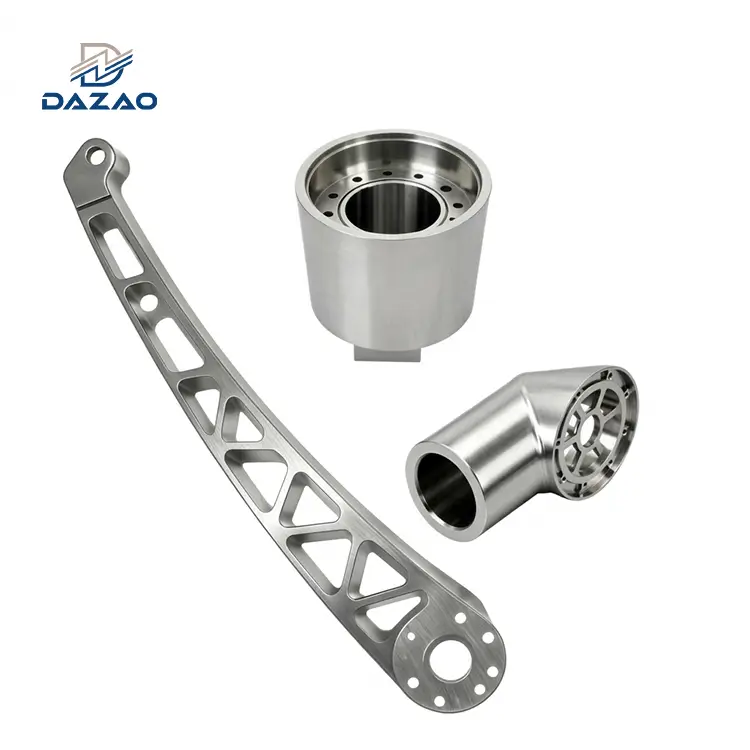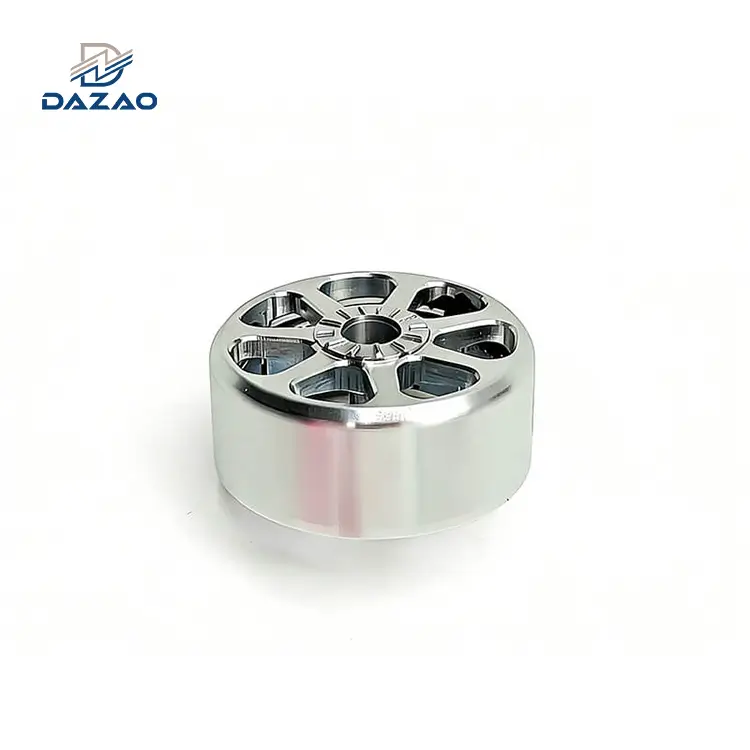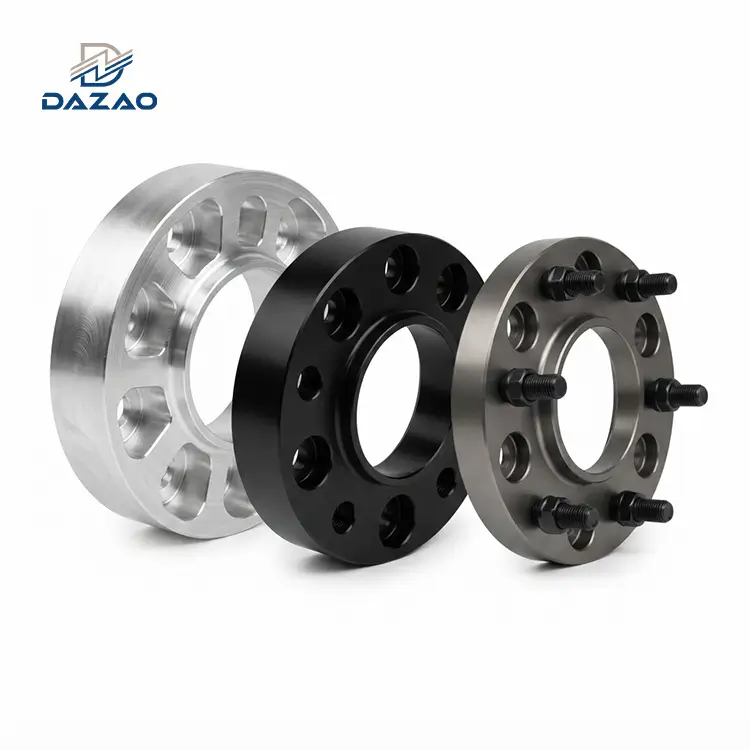

If you have ever sent the same CNC drawing to three different suppliers and received drastically different quotes, the root cause is often not the material or the order quantity-but a frequently underestimated yet critical factor: CNC machining tolerances.
In real manufacturing, a tolerance is never just a "± number."
It is a statement of manufacturing boundaries-how much variation you allow, and whether the part remains functional when that variation occurs.
For buyers and engineers who are still building their understanding of CNC machining fundamentals, tolerances are often one of the first areas where design intent and manufacturing reality start to diverge.
Many projects begin with a seemingly logical assumption: the tighter the tolerance, the higher the quality.
In practice, however, this mindset often drives up manufacturing costs, extends lead times, and increases the risk of rework or scrap.
There Is No Such Thing as "Zero Tolerance" in CNC Machining
Whether it's a 3-axis mill, a 5-axis machine, or a high-precision CNC lathe, dimensional variation is unavoidable in physical machining. Even parts produced on the same machine, with the same program and material batch, will never be 100% identical.
That is exactly why machining tolerances exist.They define an acceptable range, not absolute perfection.
Typical reference values include:
· Standard tolerance for metal parts: ±0.005" (≈ 0.13 mm).
· For comparison, the diameter of a human hair is about 0.002" (0.05 mm).
For most metal parts, this level of variation has no impact on function or assembly.
The problem is that many drawings specify tight tolerances not because the function requires them, but simply as a form of "insurance."
Why Tight Tolerances Are Often Overused in CNC Drawings?
In CNC machining projects, tight tolerances are frequently applied for reasons unrelated to actual functional needs, such as:
· Reusing legacy drawings without reassessing changes in structure or application
· Engineers tightening tolerances due to uncertainty about functional limits
· Exporting dimensions directly from CAD models without manufacturability review
The result is that a part which could have been produced efficiently through professional CNC machining services is unnecessarily pushed into a high-precision manufacturing route-adding cost without improving real-world performance.
And tighter tolerances do far more than increase machining time-they systematically affect the entire production process:
· Faster tool wear, requiring frequent compensation or replacement
· Reduced material removal per pass, slowing cycle times
· Inspection upgrades from calipers to CMM measurement
· Significantly higher scrap and rework risk
All of these factors are ultimately reflected in the final price and delivery schedule.

Not Every Dimension Deserves Tight Control
When an experienced manufacturing engineer reviews a drawing, the first question is rarely "Can this be made?"
Instead, it is: Which dimensions actually need to be controlled?
In most products, functional requirements are concentrated in only a few critical features, such as:
· Holes and shafts involved in assembly fits
· Datums that affect true position
· Areas directly related to load, sealing, or alignment
Many other dimensions are purely cosmetic or non-functional.
This is why, in CNC machining, applying engineering tolerances only to critical features often results in more stable and repeatable production than covering the entire drawing with tight tolerances.
Bilateral, Unilateral, and Limit Tolerances: They Express Intent, Not Style
Tolerance notation is often underestimated. But to a manufacturer, different formats communicate very different intentions.
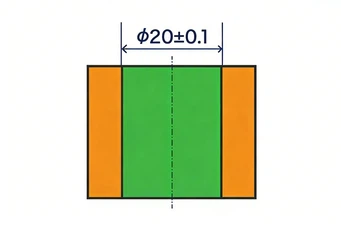
Bilateral tolerances
Allow variation on both sides of the nominal dimension; suitable for most structural components.
Unilateral tolerances
Common for fit-sensitive parts, such as shafts that may shrink but must not grow.

Limit tolerances
Specify maximum and minimum values directly. They simplify inspection but clearly restrict manufacturing freedom.
Choosing the right method is not about drafting preference-it reflects how you want the factory to balance manufacturing flexibility against functional risk.

Why GD&T Is Often More Rational Than Simply Tightening ± Values?
Many designs attempt to solve assembly issues by continually tightening size tolerances. A more mature approach is to use Geometric Dimensioning and Tolerancing (GD&T).
The value of GD&T is not complexity-it shifts control from individual dimensions to form, orientation, and positional relationships.
In many assemblies, the real concern is not whether a hole is exactly 10.00 ±0.01, but whether its true position relative to the datum is reliable.
Proper use of GD&T often improves assembly consistency and functional stability without significantly increasing machining difficulty.
Tolerances Cannot Be Separated from Material Behavior
Another frequently overlooked reality is that materials themselves change during machining.
· Aluminum may release internal stress after cutting
· Stainless steel is more prone to thermal deformation
· Plastics are highly sensitive to temperature and fixturing
The same standardized tolerances can vary greatly in difficulty depending on the material. This is why experienced engineers adjust tolerances based on material behavior rather than applying them mechanically.
The Question You Should Ask Is Not "How Precise Can You Be?"
During RFQs or technical discussions, more valuable questions than "Can you hold ±0.01?" include:
· Which features do you recommend keeping tight?
· Where can tolerances be relaxed without affecting function?
· If we loosen this tolerance by 0.01, what is the real impact on cost and lead time?
· how tolerances affect CNC machining cost?
A CNC supplier worth long-term cooperation will not blindly accept "tighter is better," but will help you analyze the real functional needs behind tolerances in CNC machining.
A Simple but Often Ignored Rule of Thumb
Only when a dimensional deviation causes assembly failure, functional loss, or significantly reduced service life are tight tolerances truly necessary.
Everywhere else, reasonable tolerances respect both manufacturing reality and your budget.
Conclusion
Professional CNC Tolerance Design Is Always "Just Enough"
Mature CNC machining tolerance design is not about proving expertise with overly restrictive drawings.
It is about making clear, disciplined decisions between function, manufacturability, and cost.
When a factory proactively tells you, "This tolerance doesn't need to be this tight," it is usually not a sign of limited capability-but of genuine manufacturing understanding.
At Dazao, we work daily with overseas purchasing and engineering teams to discuss not how tight tolerances can be, but which tolerances truly matter-and which quietly inflate cost.
If you are evaluating the manufacturability of CNC machined parts or questioning whether your current machining tolerances are reasonable, feel free to send us your drawings.
Our engineering team will review critical dimensions from a functional, assembly, and process-stability perspective-rather than quoting strictly by the drawing.

FAQ | CNC Machining Tolerances
Q1: When are tight tolerances truly necessary?
When dimensional variation directly affects assembly, sealing, alignment, or service life.
Q2: Does tighter tolerance always mean higher quality?
Not necessarily. Overly tight tolerances often increase cost and lead time without improving real-world performance.
Q3: What are typical tolerances for standard CNC machining?
For metal parts, around ±0.005" is common. Plastics are usually looser, depending on material and geometry.
Q4: Is GD&T always better than traditional size tolerances?
For positional, form, or assembly-related control, GD&T is often more effective than simply tightening size limits.
Q5: How can buyers avoid unnecessary tolerance-driven cost increases during RFQs?
Identify which dimensions truly affect function and proactively discuss where tolerances can be relaxed with the manufacturer.